

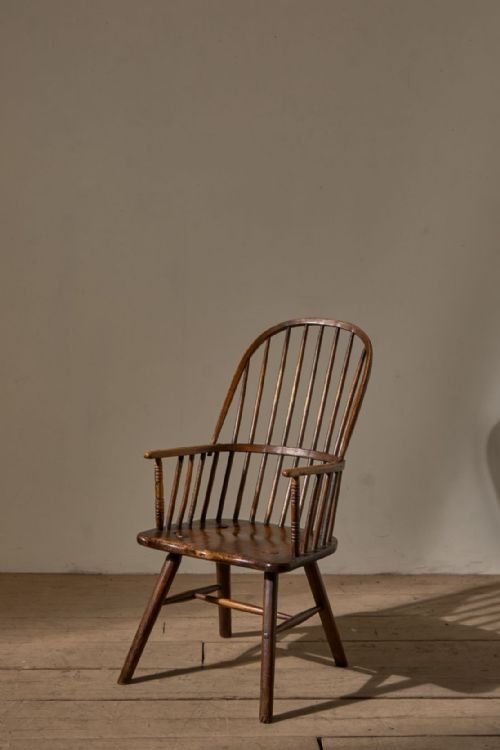


Georgian Ash Windsor Chair
A georgian ash windsor chair is a sturdy timber seat built for country life, prized for its sculpted elm seat and bentwood back.
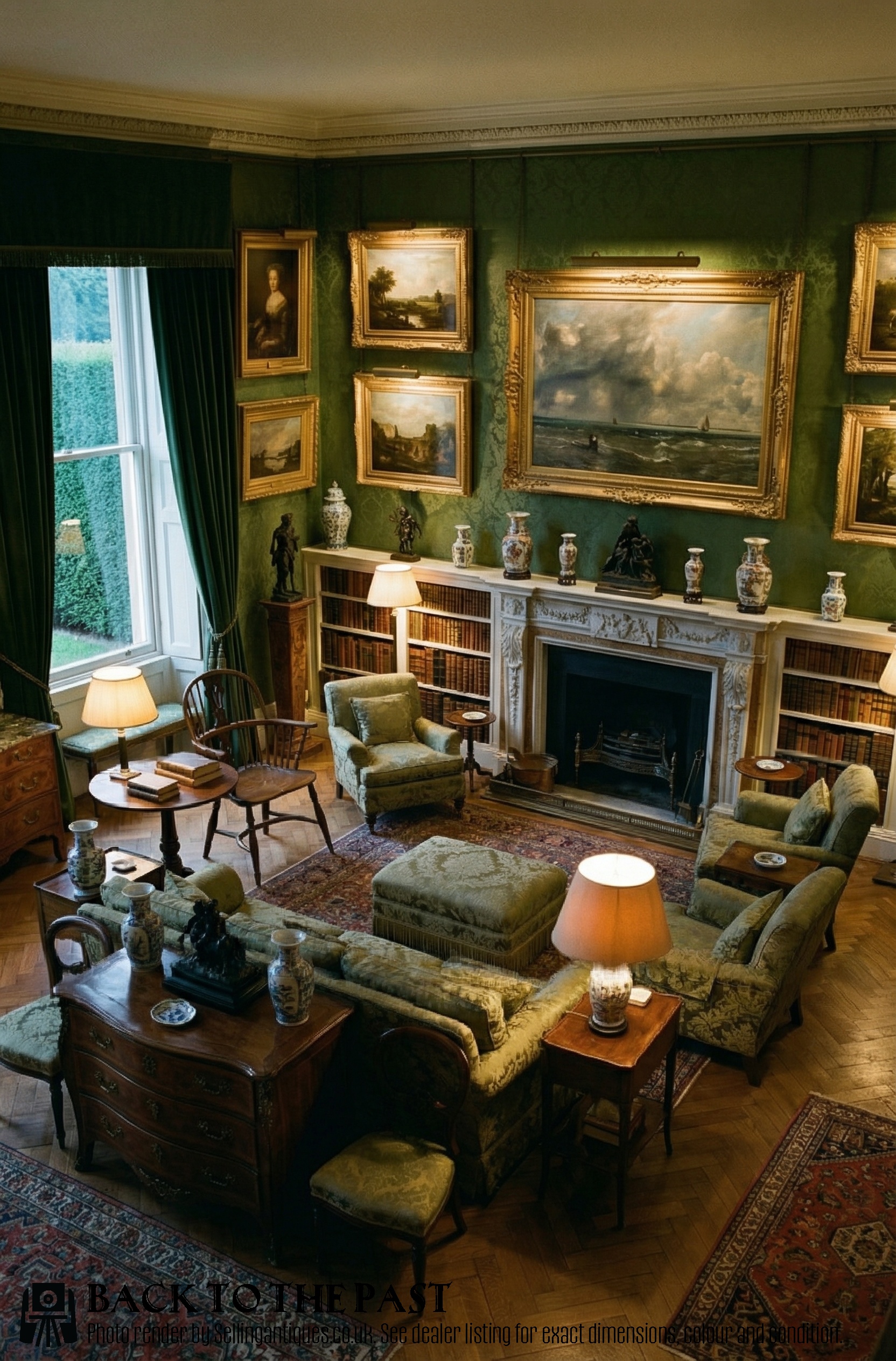
Georgian Ash Windsor Chair
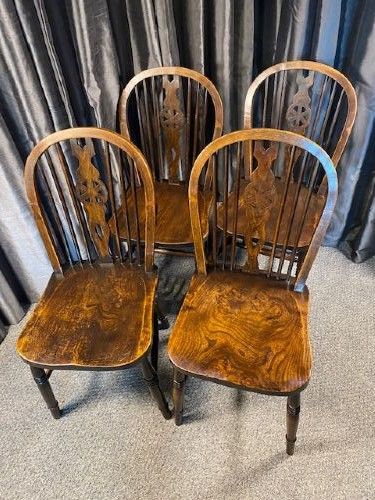
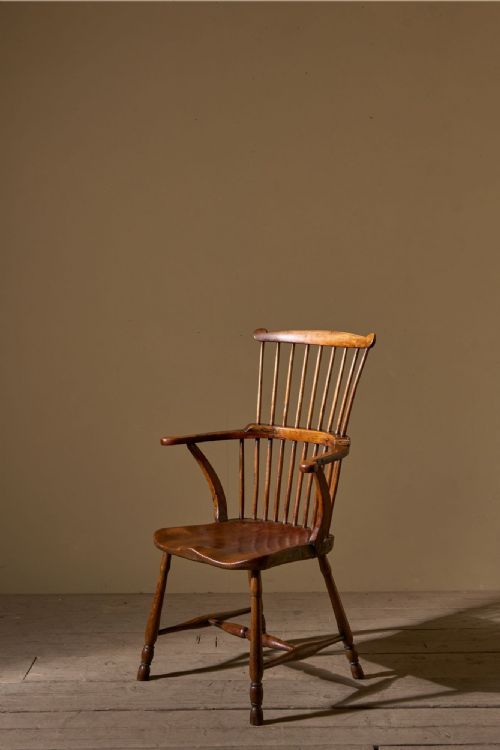
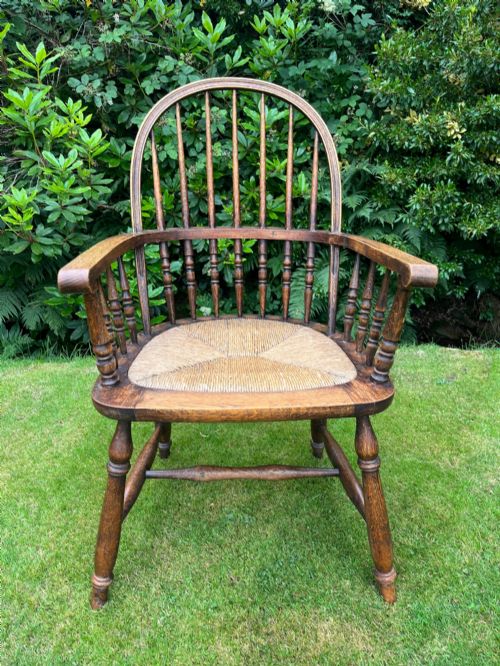
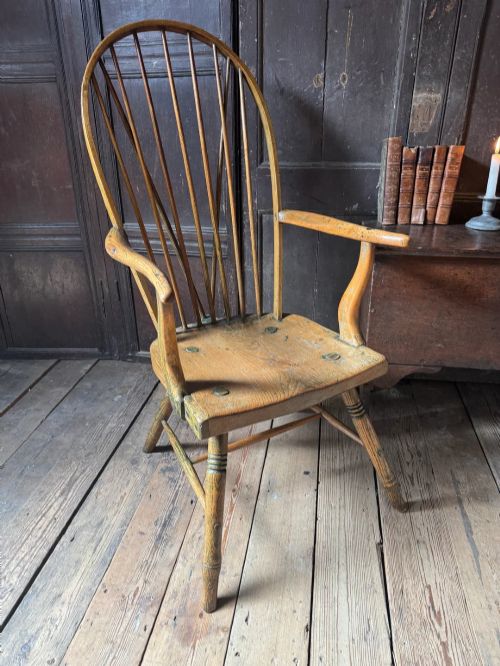
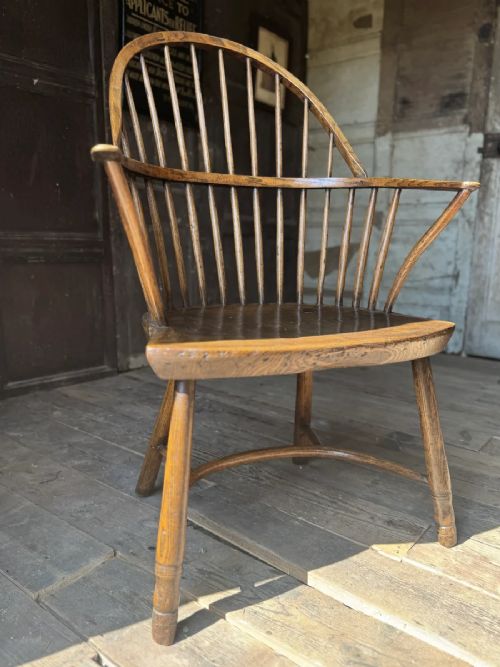
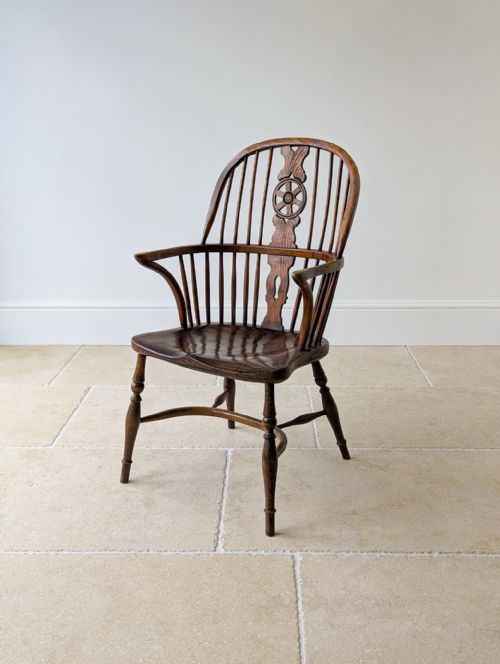
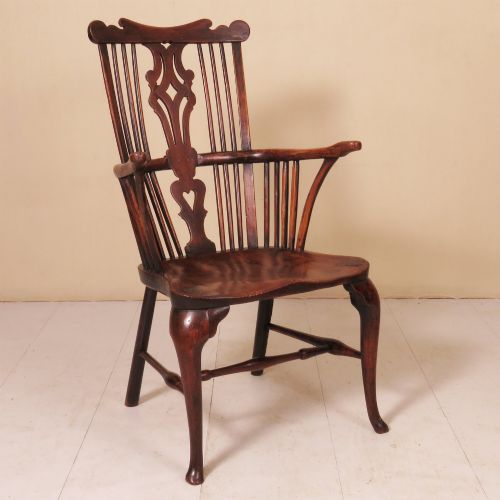
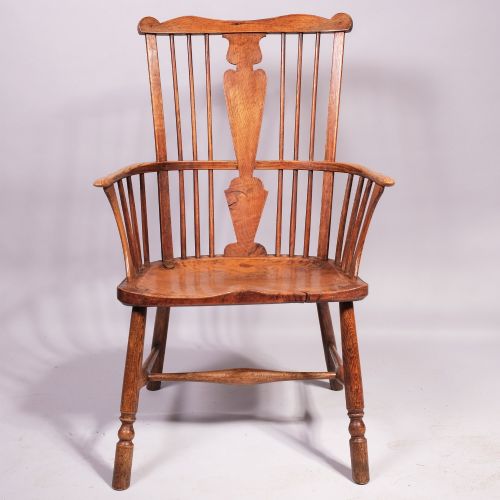
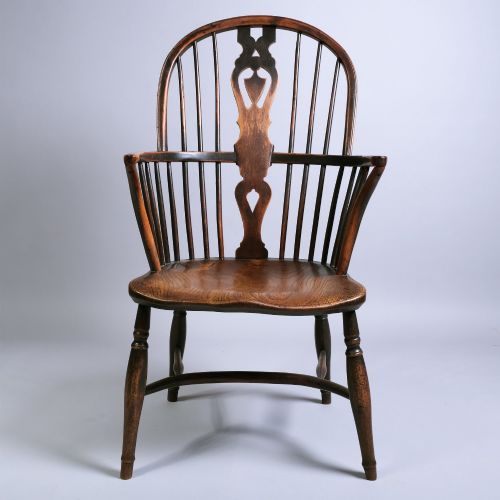
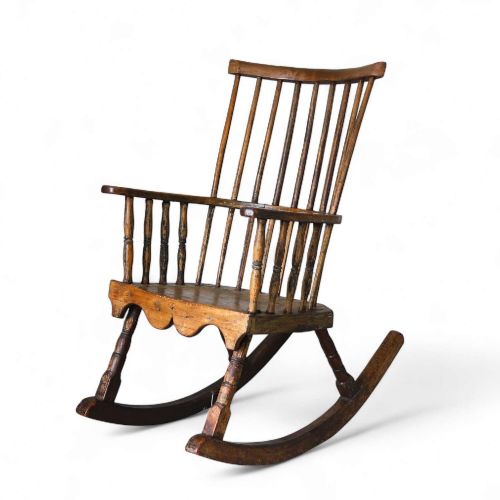
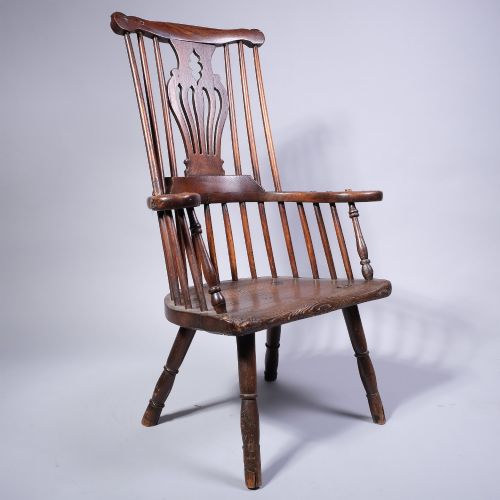
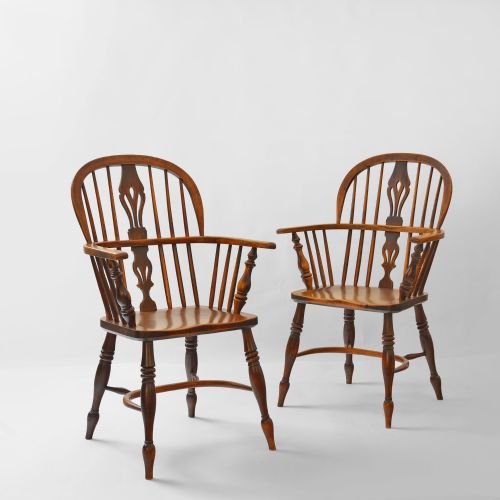
A georgian ash windsor chair combines a carved wooden seat with spindles and bentwood components shaped to support the sitter. The pieces on this page span the eighteenth and nineteenth centuries, taking forms such as comb backs, high hoops, wheelbacks, and low backs.
Most examples pair an ash frame with an elm seat, creating a contrasting timber structure designed for domestic utility. Regional variations from the West Country and Yorkshire appear alongside vernacular country pieces and smaller child seating.
Makers built these chairs for everyday farmhouse and cottage use rather than formal drawing rooms, relying on stick construction and pegged joints. The survival of these pieces demonstrates the durability of traditional English country craftsmanship.
What varies in quality
The degree of sculpting in the elm seat distinguishes finer seating, where deeper spooning provides greater comfort. Elegant proportions in the bentwood hoop and well-turned arm supports elevate the visual balance of a piece.
Survival of original surface finishes and timber patination dictates the integrity of a chair. Examples retaining untouched joinery and minimal replacement parts hold greater architectural coherence than heavily restored items.
Georgian Ash Windsor Chair Retail Price Guide 2026
Typical asking prices for georgian ash windsor chair among the pieces listed under this phrase on Sellingantiques today, from the lower quarter to the upper quarter. They describe what is for sale here now, not the wider market.
Listings feature ash, elm, yew, sycamore, oak, and burr elm across eighteenth-century and nineteenth-century periods.
The Georgian Ash Windsor Chair Glossary
- Comb back
- A Windsor chair design where the upright spindles extend through a horizontal top rail, resembling the teeth of a comb.
- Hoop back
- A continuous bentwood bow forming the back and arms of the chair in a single curved element.
- Crinoline stretcher
- An arched underframe connecting the legs of a Windsor chair to provide structural stability.
- Saddle seat
- A wooden seat scooped and shaped to resemble a horse saddle for ergonomic seating.
- Vernacular
- Objects made by local craftsmen following regional traditions rather than strict academic style guidelines.
Georgian Ash Windsor Chair: Frequently Asked Questions
What is a georgian ash windsor chair?
A traditional wooden seat featuring a solid carved timber seat with inserted spindles and bentwood back rails. These chairs originated in rural workshops and evolved through various regional styles during the eighteenth and nineteenth centuries.
Makers selected ash for its flexibility in the upper frame and elm for the heavy base. They remain popular for their robust construction and distinct country aesthetic.
How were these chairs used?
Families utilised them as everyday seating around farmhouse tables, kitchen hearths, and writing desks. Their sturdy build suited heavy daily domestic service.
Children's versions and smaller low-back models served specialised seating needs within the home. The design prioritized utility and comfort over formal display.
How do I live with one?
Place the chair away from direct heat sources and rapid temperature shifts to protect the timber and glue joints. Normal indoor humidity keeps the wood stable.
Maintain the surface with appropriate wax rather than modern polishes to preserve the patination. Use them as accent seating in living spaces or halls.
How do I tell styles apart?
Examine the back construction to identify comb backs, wheelbacks, or continuous hoops. Regional traits like West Country curves or Yorkshire stick details help pinpoint origins.
Look at the turning of the legs and arm supports for clues regarding the period of manufacture. Elm seats combined with ash frames point towards traditional English country construction.