


Georgian Armorial Ceramics
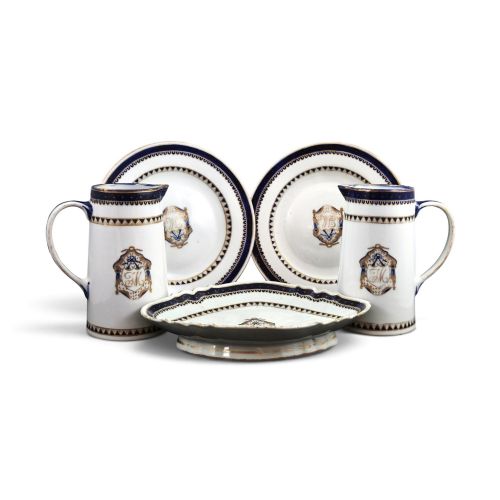
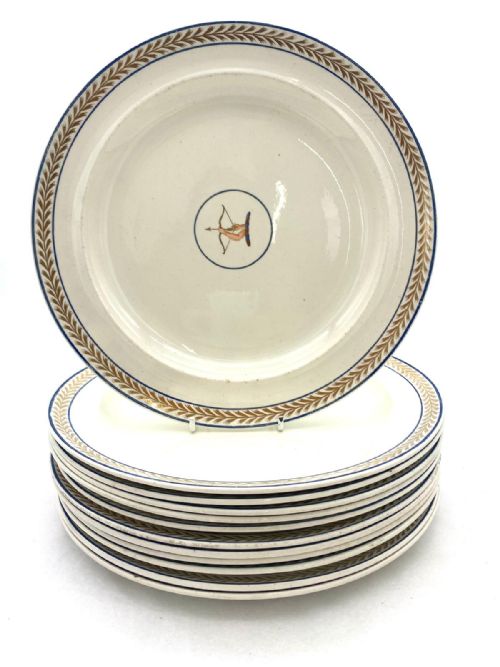
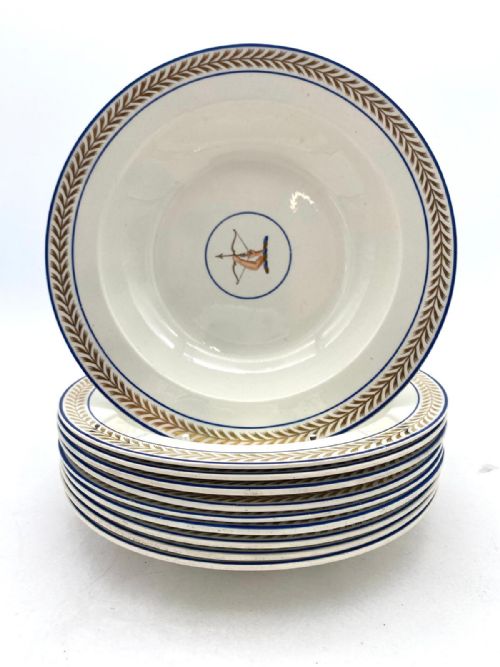
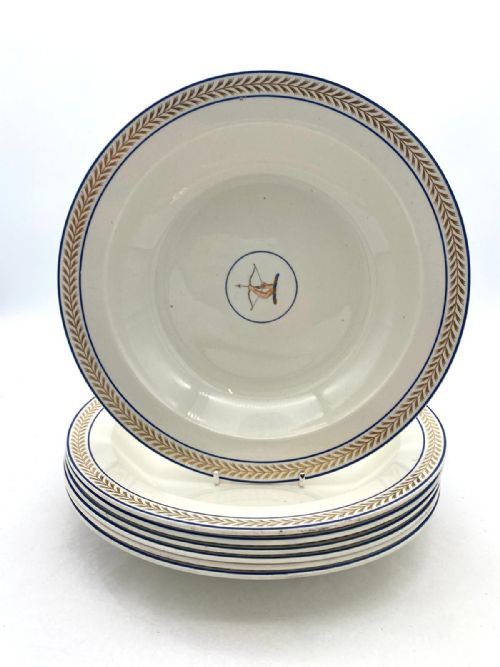
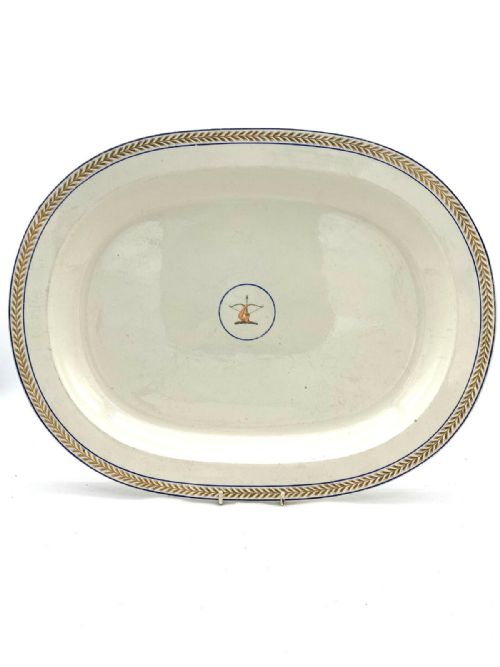
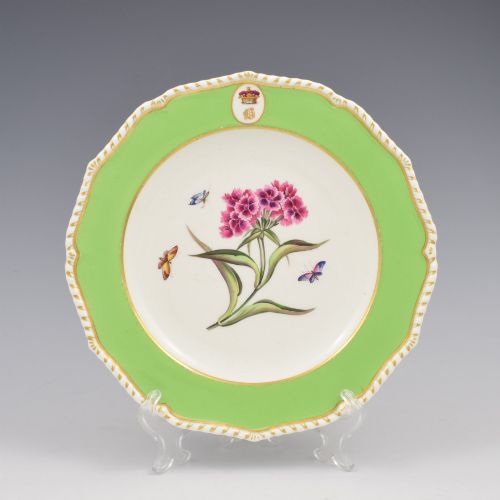
Georgian armorial ceramics display hand-painted family crests and coats of arms upon porcelain, creamware and earthenware made for dining tables.
Georgian Armorial Ceramics
Georgian armorial ceramics comprise tableware created for noble households, bearing specific heraldic achievements, crests and coats of arms. When exploring georgian armorial ceramics, buyers encounter plates, platters, bowls, jugs and tureens painted with family insignia.
The objects originate from English factories such as Wedgwood, Minton, Bloor Derby and Chamberlain Worcester, alongside Chinese export porcelain ordered for European and British patrons. Production spans the eighteenth century, the Regency period and the early nineteenth century.
Dinner plates, soup bowls and serving platters form the core of surviving table services, often decorated with enamels, gold leaf and underglaze blue. Pieces range from large meat platters with drainers to dessert plates and pudding bowls.
What varies in quality
The precision and detail of the hand-painted armorial crest separate standard production from superior examples. Master painters achieved greater depth in heraldic tinctures and animal supporters.
The quality of the ceramic body, glaze stability and the preservation of gilt and enamel decoration determine overall distinction. Finely potted creamware and translucent porcelain reflect superior factory standards.
Listings feature eighteenth-century and nineteenth-century pieces, spanning the Regency period and the Georgian era.
Wedgwood·Bloor Derby·Chamberlain Worcester·Flight Barr and Barr·Minton
The Georgian Armorial Ceramics Glossary
- Armorial
- Bearing a coat of arms or heraldic crest belonging to a specific family or institution. These motifs were commissioned to assert lineage and status upon dining services.
- Creamware
- A fine-potted earthenware developed in the eighteenth century, possessing a pale yellowish cream glaze. Wedgwood became particularly noted for this refined ceramic body.
- Enamel
- Opaque coloured glass fused to the ceramic surface through secondary firing. It provides the vibrant pigments found in heraldic shields and floral borders.
- Gilt
- A thin layer of gold leaf or gold paint applied to ceramic rims and handles. It accentuates the decorative edges of plates and tureens.
- Porcelain
- A vitrified ceramic material made from kaolin and petuntse, fired at high temperatures. Both Chinese export workshops and English factories utilised it for tableware.
Georgian Armorial Ceramics: Frequently Asked Questions
What are georgian armorial ceramics?
Georgian armorial ceramics are plates, platters, bowls and tureens painted with the heraldic crests or coats of arms of specific families.
Potteries in England and export workshops in China produced these table services for aristocratic dining rooms throughout the eighteenth and nineteenth centuries.
How were armorial services used?
These ceramics formed part of large dinner and dessert services utilised during formal meals and banquets in wealthy households.
Displaying family insignia on plates and soup bowls reinforced the lineage, wealth and social standing of the host to dining guests.
How do I identify Chinese export armorial pieces?
Chinese export pieces typically feature hard-paste porcelain bodies decorated with famille rose enamels and precise heraldic painting executed overseas.
European families sent engraved bookplates or sketches to Chinese workshops, where artisans copied the armorial bearings onto porcelain blanks.
What materials did English factories use?
English makers utilised creamware, earthenware and fine porcelain bodies coated in glossy glazes.
Decorations combined hand-painted enamels, gilding with gold leaf, and occasionally underglaze blue painting or transfer printing.
How do I care for these ceramics?
House these antique items safely in display cabinets or on stable shelving away from direct sunlight and rapid temperature shifts.
Clean them gently by hand using mild solutions when necessary, avoiding modern dishwashers to protect fragile enamels and gold leaf.