



Georgian Adjustable Fire Screen
A georgian adjustable fire screen protects parlour occupants from hearth glare and excessive heat while offering a sliding panel for height control.
Georgian Adjustable Fire Screen
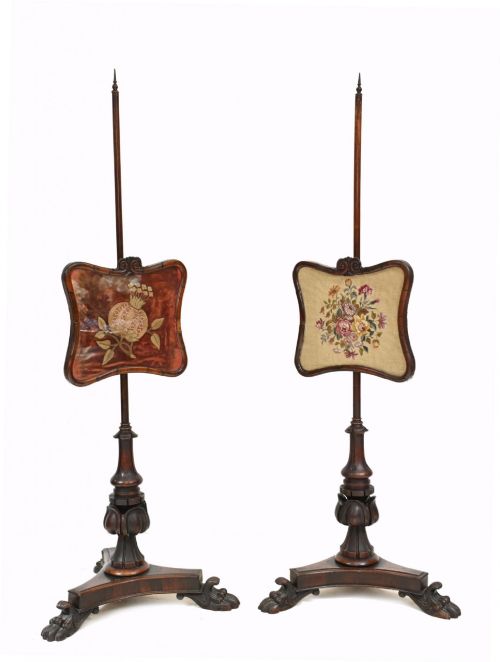
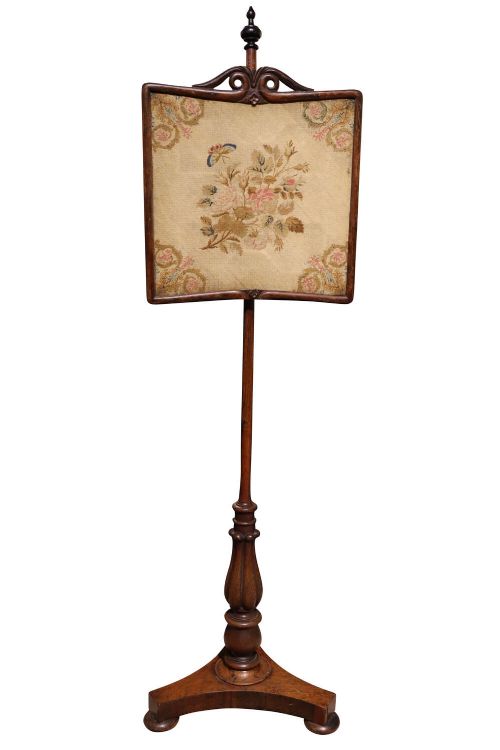
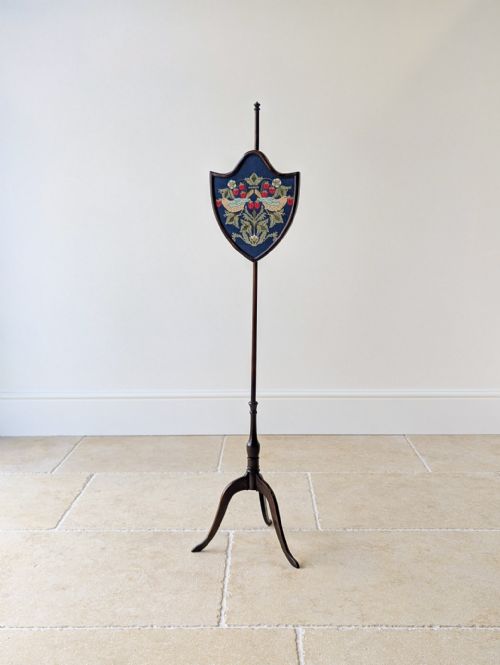
A georgian adjustable fire screen usually takes the form of a pole screen, featuring a vertical upright supported by a tripod or spade-footed base. These pieces date across the Georgian, Regency, and William IV eras, spanning the late eighteenth and early nineteenth centuries.
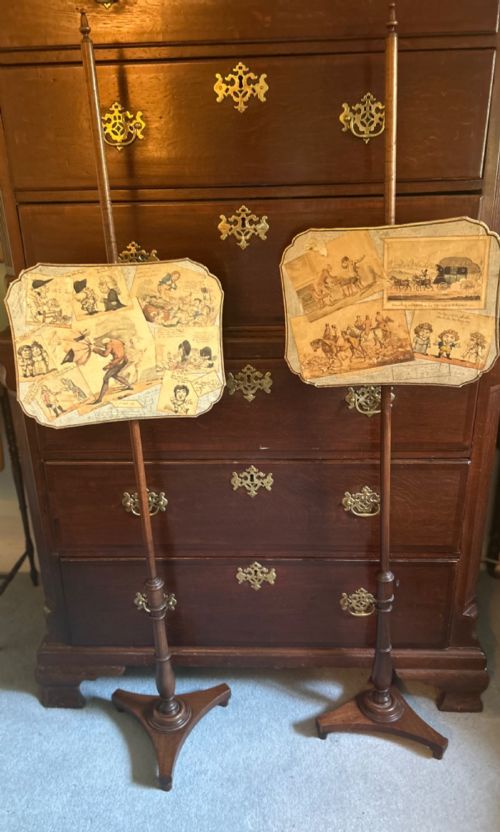
Makers designed these screens with sliding panels mounted on brass mechanisms to raise and lower the shield as needed. The most common survivals on this page pair mahogany or rosewood frames with hand-worked textile panels.
Materials and construction
Cabinetmakers utilised dense timbers such as mahogany, rosewood, and goncalo alves to turn slender uprights and carve sturdy tripod bases. Brass hardware enables the vertical adjustment of the screen, sliding smoothly along the pole.
The decorative panels often display intricate needlepoint, silk, wool, or tapestry work. In some instances, makers incorporated glass or satirical prints protected behind glazing.
Georgian Adjustable Fire Screen Retail Price Guide 2026
Typical asking prices for georgian adjustable fire screen among the pieces listed under this phrase on Sellingantiques today, from the lower quarter to the upper quarter. They describe what is for sale here now, not the wider market.
The listings span the Georgian, Regency, and William IV periods, executed predominantly in mahogany and rosewood.
Judging execution and detail
Quality rests in the crispness of the turned woodwork and the stability of the base supporting the tall upright. Finer examples display refined carving on the legs and secure brass fittings that hold the heavy panel without slipping.
The needlework or inserted print dictates visual merit, with hand-stitched needlepoint panels showing greater care than simpler textiles. Original glass and intact adjustment mechanisms elevate the integrity of the piece.
The Georgian Adjustable Fire Screen Glossary
- Pole screen
- A freestanding firescreen with a vertically adjustable panel mounted on a central pillar. This format dominates the selections found here.
- Tripod base
- A three-legged support providing stability to the slender vertical pole. These often terminate in pad, spade, or carved feet.
- Needlepoint
- Stitched yarn worked over a stiff canvas mesh to create pictorial or geometric designs. These textiles form the primary shields of many screens.
- Goncalo alves
- A dense exotic hardwood valued for its striking dark figuring and durability. Cabinetmakers utilised this timber for high-status Regency frames.
- Spade foot
- A square-tapered foot associated with Hepplewhite and later Georgian furniture designs. It grounds the tripod base with a neat geometric profile.
Georgian Adjustable Fire Screen: Frequently Asked Questions
How do you adjust the panel height?
A concealed or visible brass collar grips the central pole and allows the screen to slide up and down.
Tightening the mechanism secures the panel at the desired eye level.
Where were these placed in a room?
Occupants positioned them directly between seating areas and the open fireplace to block radiant heat.
They also protected ladies' wax makeup from melting near the flames.
Are the needlework panels original?
Many retain their period wool or silk needlepoint worked specifically for the frame.
Some examples feature later textile replacements fitted during nineteenth-century restorations.
How do I identify a Regency screen?
Regency pieces often display rosewood or goncalo alves timbers with bolder brass mounts and heavier turned columns.
They frequently date from the early decades of the nineteenth century.