

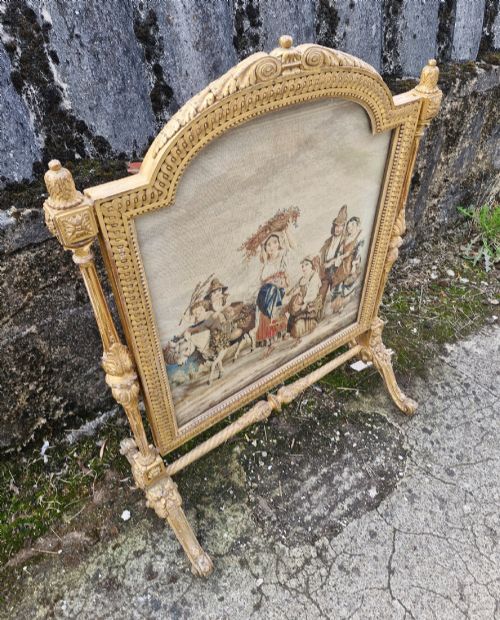
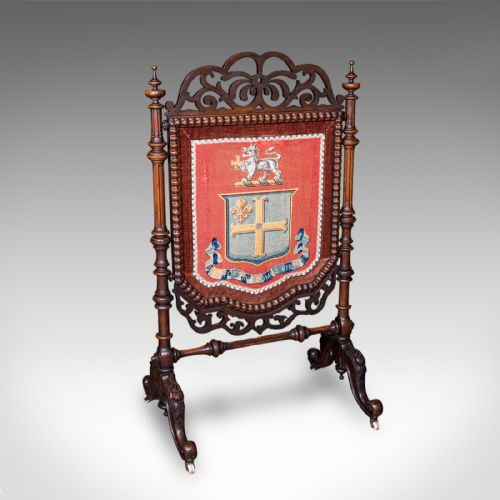
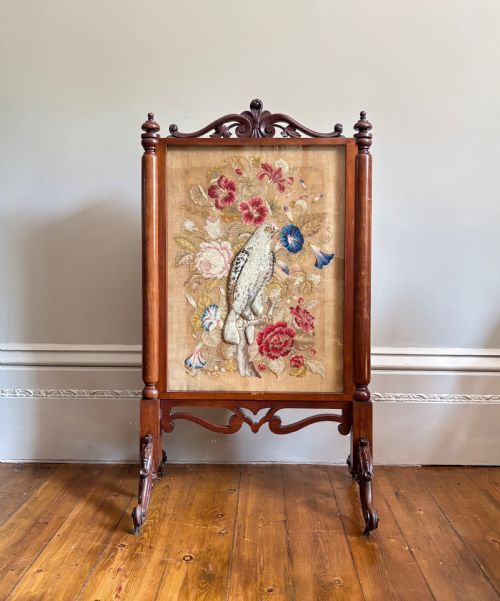


Embroidered Panel Fire Screen
An embroidered panel fire screen combines practical warmth deflection with intricate textile artistry, forming a striking focal point in a period room.
Embroidered Panel Fire Screen
An embroidered panel fire screen serves to protect those seated near a hearth from excessive radiant heat while concealing an unlit grate during warmer months. These items appear across several distinct forms, including freestanding floor models, wall-mounted textile art, table-top variants, and vertical pole screens.
The pieces available originate primarily from the Georgian, Regency, and Victorian eras, alongside a selection of twentieth-century examples. Common formats include sturdy mahogany, rosewood, and walnut frames supporting textile inserts created through needlework, woolwork, tapestry, and silkwork techniques.
Materials and construction
Cabinet makers utilised dense hardwoods such as mahogany, rosewood, walnut, and occasional exotic timbers like goncalo alves or giltwood to construct stable support structures, cheval frames, and slender poles. These frames often incorporate turned columns, carved scrolling supports, or wide bases to prevent tipping.
The internal panels feature textile surfaces worked in wool, silk, canvas, and metallic threads using needlepoint, Berlin work, or traditional tapestry methods. Protective glass fronts occasionally overlay these fragile fabrics to shield them from soot and dust.
Embroidered Panel Fire Screen Retail Price Guide 2026
Typical asking prices for embroidered panel fire screen among the pieces listed under this phrase on Sellingantiques today, from the lower quarter to the upper quarter. They describe what is for sale here now, not the wider market.
Current selections include pieces utilising mahogany, wool, silk, glass, rosewood, textile, canvas, and walnut across Georgian, Regency, and Victorian periods.
Factors determining quality
The distinction between standard examples and superior specimens lies in the precision of the timber framing and the density of the textile work. Master craftsmen produced tight joinery, balanced proportions, and detailed carving that complemented the interior decoration of the period.
Textile quality depends on the complexity of the design, the variety of stitches employed, and the preservation of the original fibres. Armorial bearings, pictorial scenes, and intricate floral motifs executed with fine wools or silks indicate higher standards of craftsmanship.
The Embroidered Panel Fire Screen Glossary
- Berlin work
- A style of colourful needlepoint popular during the nineteenth century that used charted patterns printed on grid paper. This method allowed makers to create complex pictorial and floral designs with ease.
- Pole screen
- A type of fire screen featuring a vertical wooden shaft upon which an adjustable embroidered panel slides up and down. This mechanism allowed users to position the textile shield at the exact height required.
- Cheval screen
- A freestanding floor screen supported by two stable side pillars and feet rather than a central pole. The design provides a wider viewing area for larger tapestry panels.
- Needlework
- General term encompassing various decorative stitching techniques applied to a canvas or fabric ground. It forms the primary decorative element across the majority of surviving screens.
- Armorial
- Design incorporating a coat of arms or heraldic symbols. These embroidered panels often denote specific family lineages and historical alliances.
Embroidered Panel Fire Screen: Frequently Asked Questions
What is an embroidered panel fire screen?
An embroidered panel fire screen is a decorative furnishing designed to shield people from the intense heat of an open hearth. They were positioned in front of fireplaces when fires were not burning to hide the empty grate.
Over time, these objects evolved from purely functional items into decorative centerpieces that displayed the needlework skills of the household.
How were pole screens used?
Pole screens stood near fireplaces or seating areas where occupants could adjust the height of the needlework panel along a vertical wooden shaft. This allowed individuals to block radiant heat from the fire or shield their faces from the glow of candles and lamps.
The adjustable panel made these items versatile accessories in nineteenth-century drawing rooms.
Which woods are common in these screens?
Makers constructed the frames of these screens using sturdy timbers such as mahogany, walnut, and rosewood. Lighter or gilt woods also appear in Regency and Georgian examples to match changing interior design fashions.
These durable woods provided the necessary weight at the base to support the framed textiles safely.
How do I date a fire screen?
Dating a fire screen involves examining the timber species, joinery methods, and the style of the frame relative to known design periods like Georgian, Regency, or Victorian. Carving details, such as Chippendale motifs or Victorian baroque revival elements, offer further chronological clues.
The textile panel itself often reflects the dominant needlework fashions of its specific decade of production.