

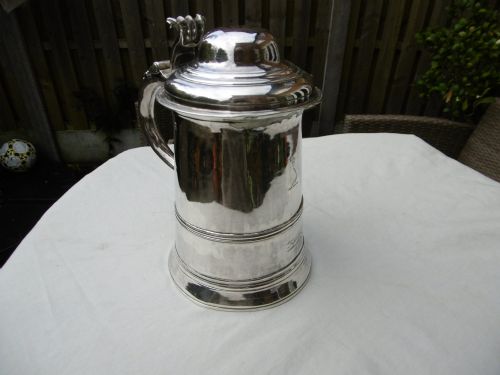
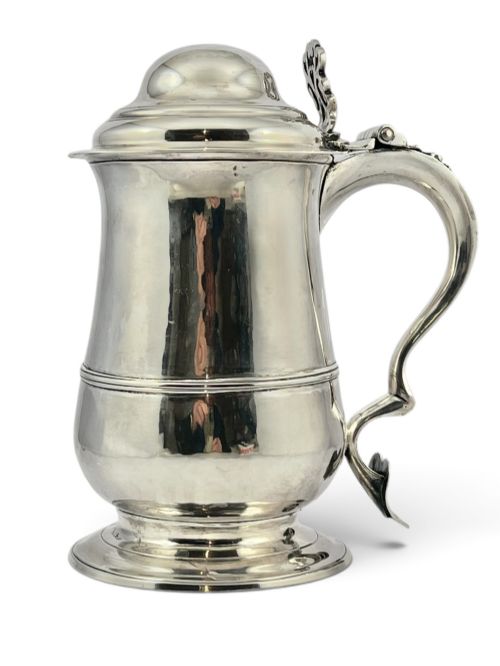
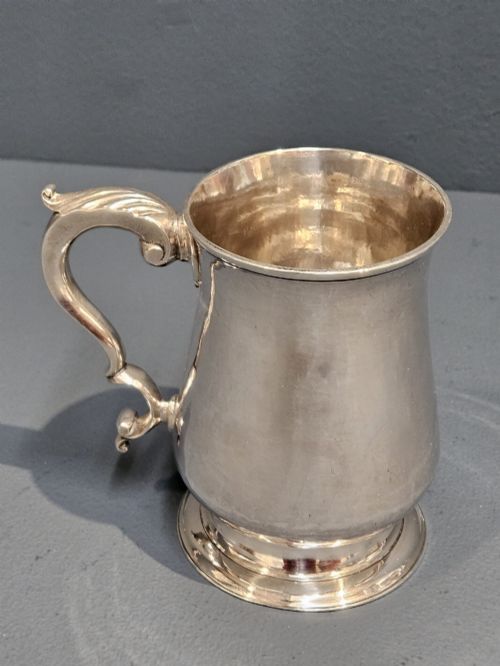
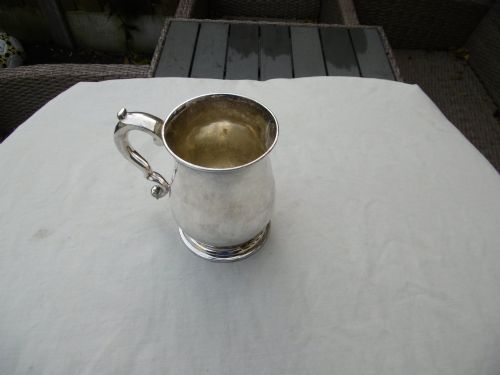
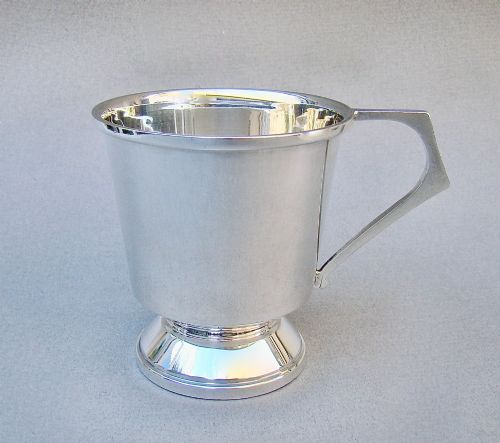
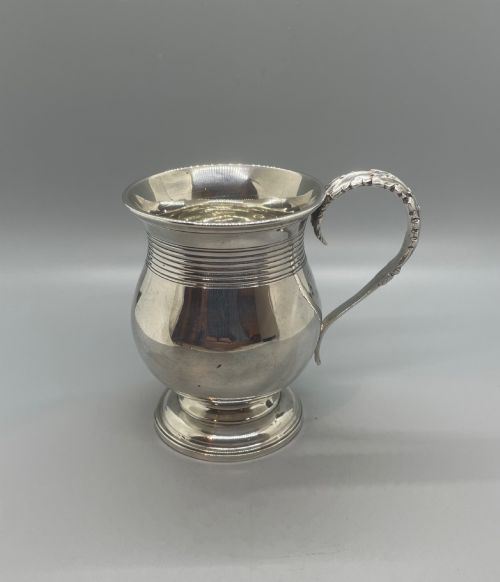
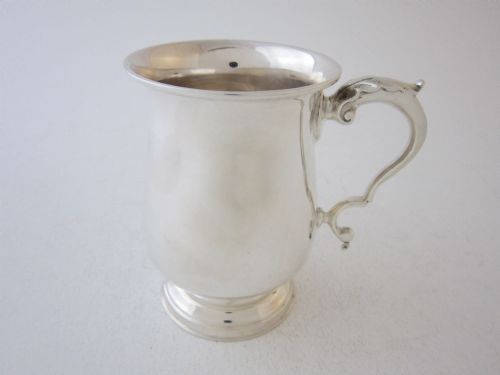
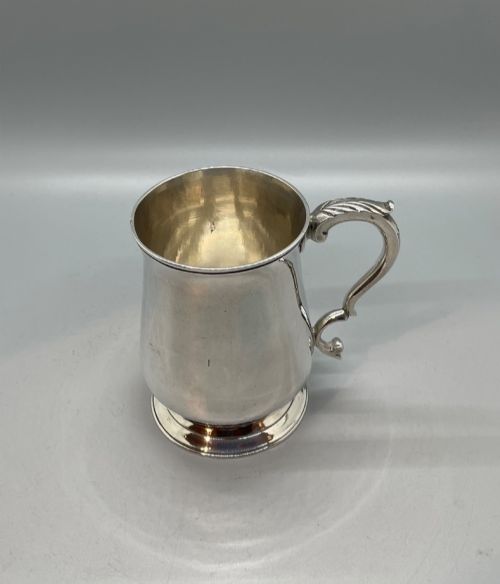
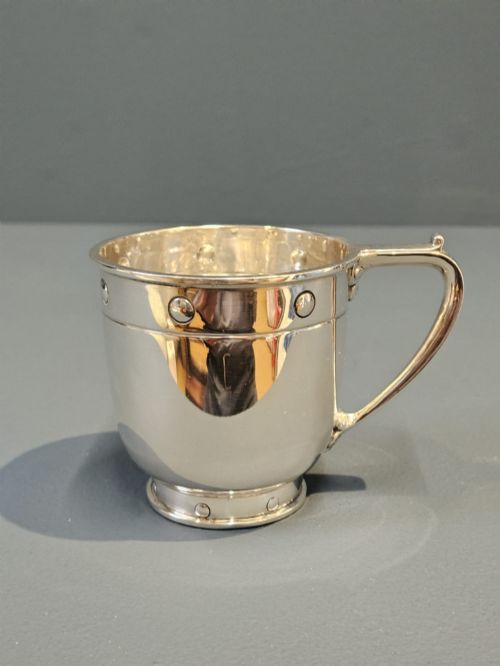
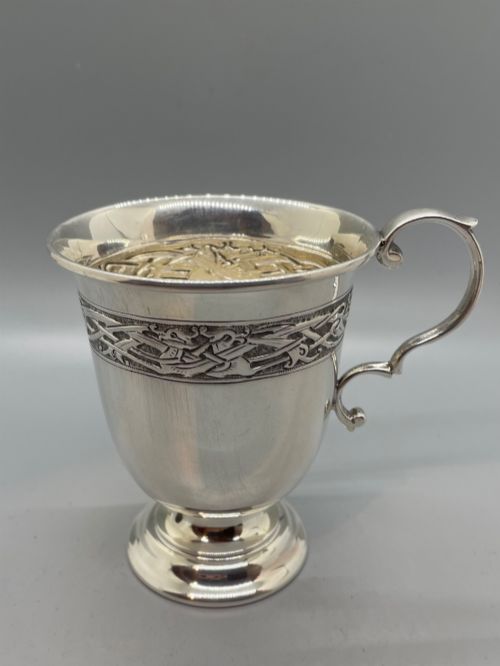
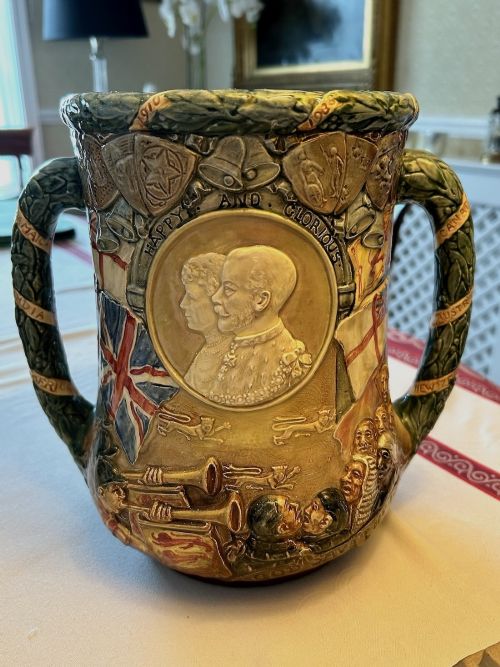
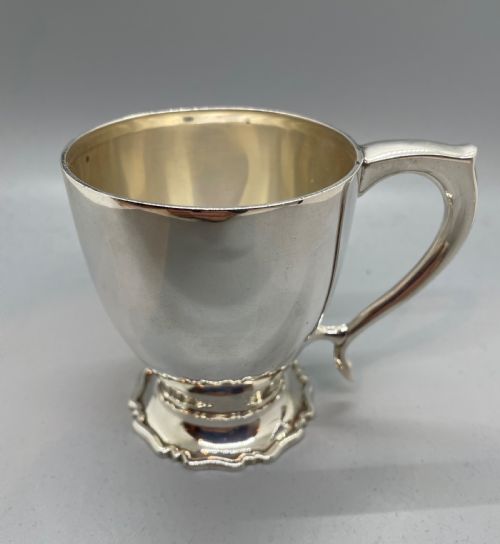

George V Tankard
These pieces known as a george v tankard span multiple reigns and materials, offering a solid addition to a collection.
George V Tankard
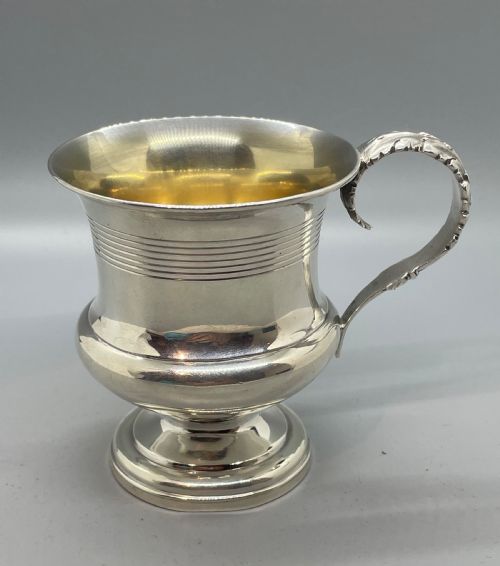
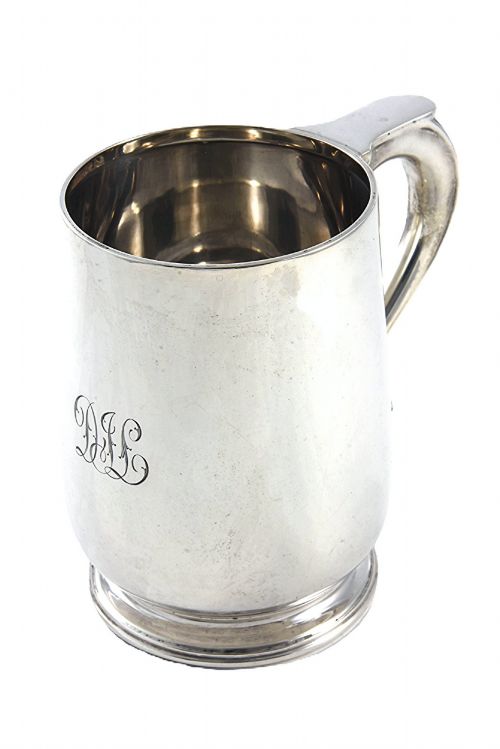
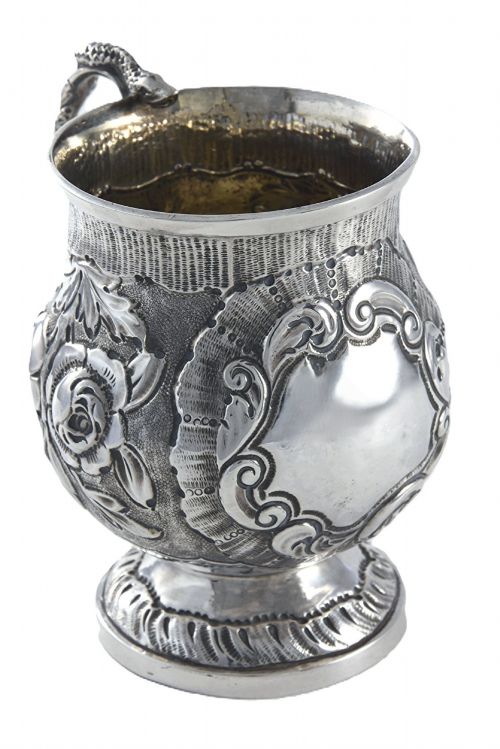
A george v tankard encompasses sturdy drinking vessels and christening mugs originating from the early twentieth century alongside earlier Georgian examples. These pieces serve practical barware functions and commemorative purposes, frequently turning up as pint or half-pint vessels.
The selection on this page leans heavily into sterling silver and silver-gilt items, while including notable earthenware, glazed ceramic, and pewter pieces. Buyers meet diverse forms ranging from plain communion and christening cups to flat-lid flagons and commemorative loving cups.
Makers from various towns and cities across Britain stamped their work during the reigns spanning from the eighteenth century through the twentieth. This assortment covers distinct regional hallmarks and stylistic touches typical of the Arts and Crafts and Art Deco movements.
How They Were Made
Silversmiths shaped sterling silver and Britannia standard silver through hammering and soldering techniques, often incorporating gold gilt interiors and detailed engraving. These methods produced durable drinking vessels intended for daily tavern use or ceremonial gifting.
Potters shaped earthenware and glazed ceramic bodies on wheels or in moulds before firing and applying decorative glazes or commemorative transfers. Pewterers cast tin alloys into rigid metal flagons designed with flat lids for secure storage.
Workshops utilised hallmarking stamps to record the assay office, city, and year of production directly onto the metal surface. Engravers added monograms and decorative flourishes by hand using sharp gravers.
George V Tankard Retail Price Guide 2026
Typical asking prices for george v tankard among the pieces listed under this phrase on Sellingantiques today, from the lower quarter to the upper quarter. They describe what is for sale here now, not the wider market.
What Varies in Quality
The weight of the metal and the crispness of the hallmarks determine the baseline quality of silver tankards. Thicker gauge silver retains its structural integrity better over centuries of handling.
Engraved ornamentation demonstrates the skill of the individual artisan, where clean, deep lines distinguish superior items from shallow, hurried work. Ceramic items show quality through the evenness of the glaze and clarity of the printed commemoration.
Barker Bros·William Bateman·George Ernest Hawkins
The George V Tankard Glossary
- Hallmark
- Official stamps applied to precious metals indicating the standard of purity, assay office, and year of manufacture. These marks provide the primary evidence for dating British silver.
- Britannia Standard
- A higher grade of silver purity introduced by law in England to prevent the melting of coinage for plate. This alloy contains more pure silver than sterling standard.
- Gilt
- A thin layer of gold applied to the interior or exterior surface of a silver vessel. It prevents the metallic taste of silver when drinking acidic liquids.
- Tyg
- A large drinking cup featuring multiple handles designed to be passed around a group. Early examples often appear in ceramics or silver.
- Flagon
- A large drinking vessel with a handle and lid, frequently used for holding ale or wine. Pewter and silver versions were common in domestic and tavern settings.
George V Tankard: Frequently Asked Questions
How do I date a silver tankard?
Dating a silver tankard relies on reading the stamped hallmarks located on the body or base of the vessel. Each assay office used specific letter punches to denote the exact year of manufacture.
Comparing these punches against standard hallmarking reference tables establishes the production period with certainty.
What is the difference between a mug and a tankard?
A mug generally refers to an open-topped drinking vessel with a single handle, used for everyday consumption of ale or beer. A tankard often implies a heavier, larger vessel, occasionally fitted with a hinged lid.
Both forms overlap significantly in historical records, particularly within eighteenth and nineteenth-century silver categories.
Were pewter tankards used daily?
Pewter tankards served as standard drinking vessels in taverns, inns, and domestic households across Britain for centuries. Their durable alloy construction made them ideal for robust daily use.
Over time, handling developed a distinct dull patina across the surface of the metal.