


George V Silver Cup
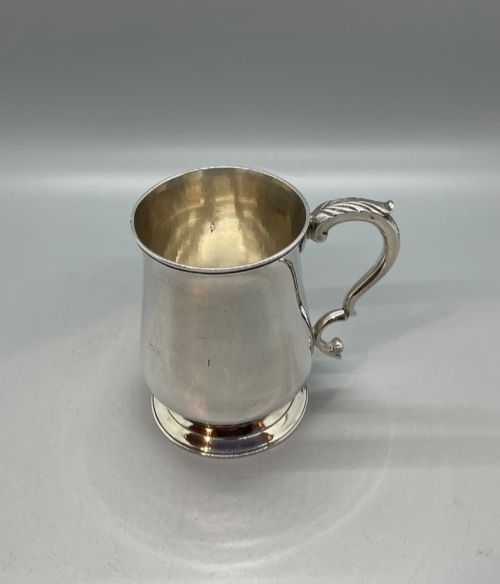
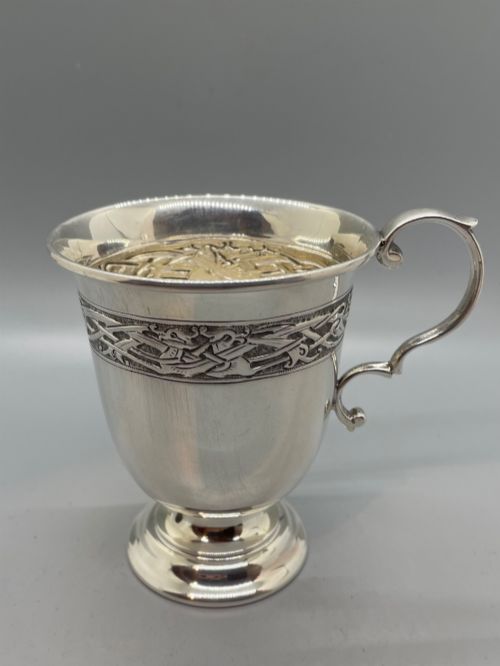
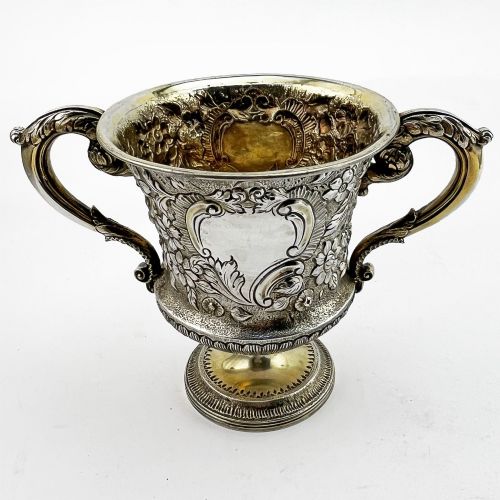
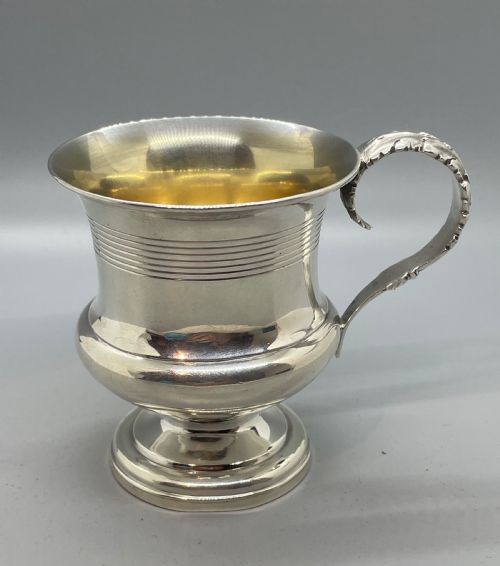
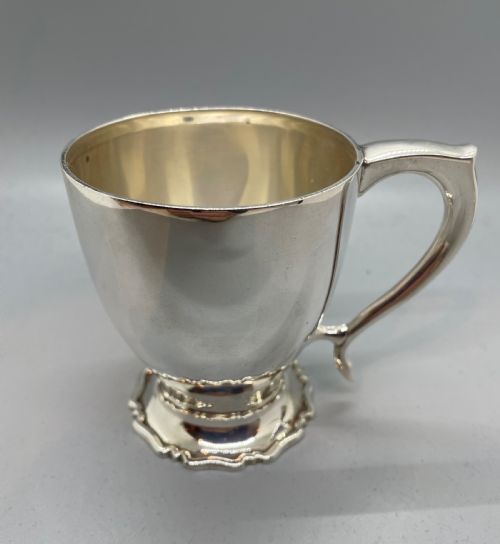
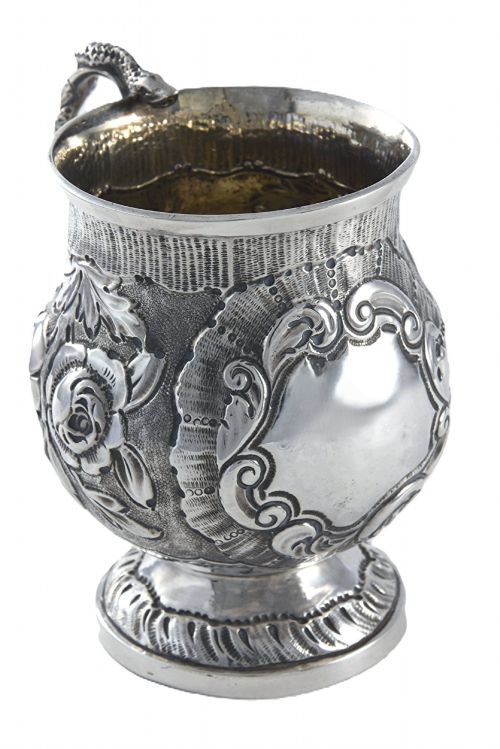
When you search for a george v silver cup, you uncover solid silver tankards, christening mugs, trophy cups, and goblets spanning the early twentieth century.
George V Silver Cup
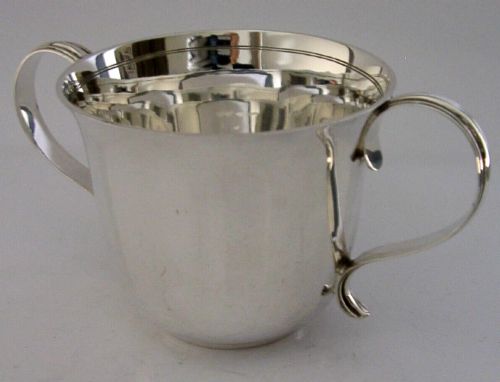
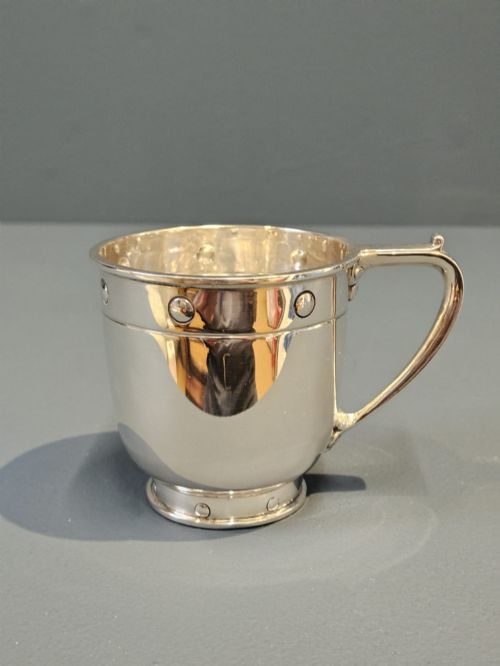
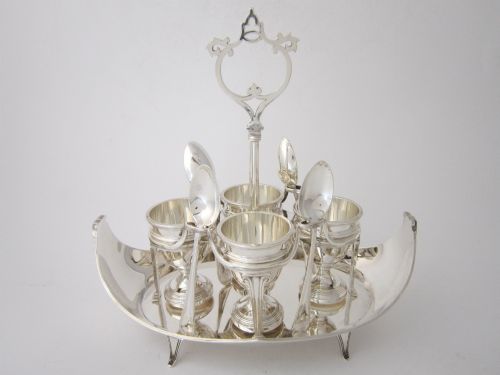
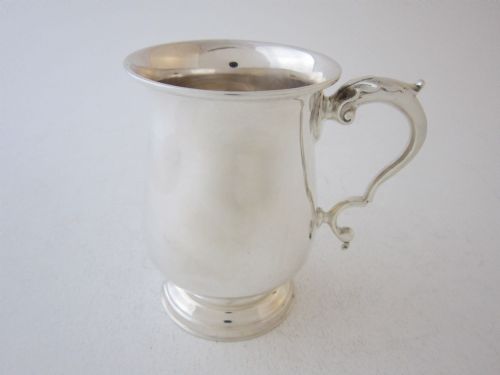
A george v silver cup encompasses various forms produced during the reign of King George V, alongside related Georgian, Victorian, and later pieces seen in these archives. The selection spans utilitarian vessels like christening mugs, spirit flasks with cups, egg cruets, and formal presentation pieces including heavy trophy cups and two-handled bowls.
Most items you encounter date from the 1910s and 1930s, reflecting active manufacturing periods in major assay towns like London, Birmingham, and Sheffield. Alongside dedicated drinking vessels, the category broadens to include quaichs, loving cups, and small goblets utilised for presentation or daily domestic service.
How they were made
Silversmiths constructed these vessels primarily from sterling silver, occasionally applying silver-gilt finishes or pairing the metal with cut glass for items such as flasks and tygs. Construction methods combined traditional hand-raising and spinning techniques with crisp hallmarks stamped directly into the metal to indicate the assay office, date letter, and standard.
Detailing often involved hand engraving, cast handles soldered securely to body walls, or applied borders in styles ranging from plain utilitarian surfaces to decorative Arts and Crafts interpretations.
Listings feature sterling silver and silver-gilt forms ranging from 18th-century Georgian tankards to 1930s George V trophy cups and flasks.
What varies in quality
Quality reveals itself in the gauge of the silver and the structural weight of the vessel, where heavier items resist denting and maintain crisp rim profiles. Masterful finishing on handles, clean chasing, and clear, deeply struck maker marks separate standard commercial output from finer workshop productions.
Barker Bros·James Deakin & Sons·George Ernest Hawkins·William Bateman·William Eaton·Thomas Mason·William Cripps·John Locker·J Langlands·Abraham Peterson·Peter Podio·A & J Zimmerman·Mappin & Webb·Jacob Rosenzweig·George Maudsley Jackson·Patrick Robertson·George Adams·George Unite
The George V Silver Cup Glossary
- Sterling silver
- A silver alloy containing 92.5 percent pure silver and 7.5 percent other metals, usually copper, ensuring durability for hollowware and drinking vessels.
- Hallmark
- An official stamp or series of marks applied to precious metals indicating the standard of purity, the assay office, and the year of production.
- Porringer
- A shallow, two-handled bowl or cup used historically for porridges, broths, or small portions of food, frequently appearing in heavy silver.
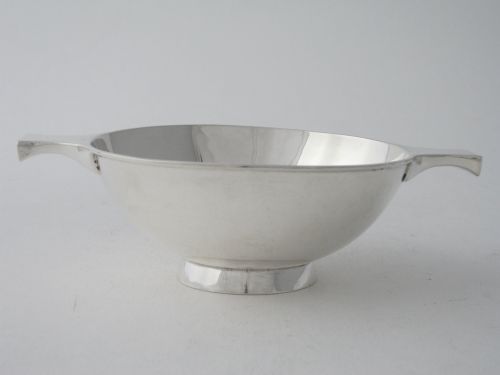
- Quaich
- A traditional shallow two-handled drinking vessel of Scottish origin, designed for sharing a dram of spirits.
- Tyg
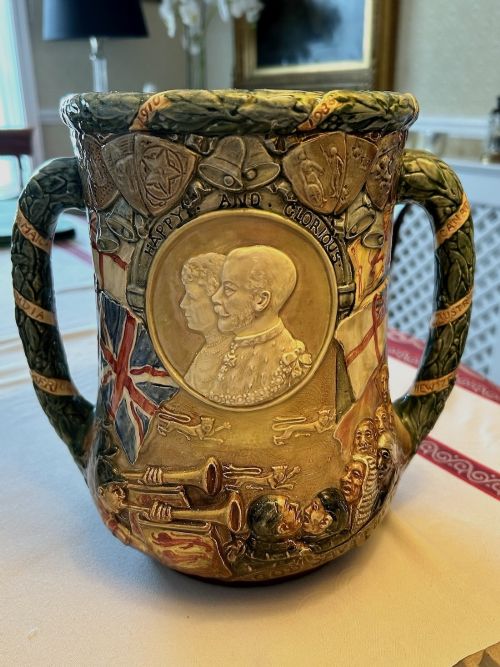
- A large drinking cup featuring multiple handles, allowing it to be passed around a company.
George V Silver Cup: Frequently Asked Questions
What is a george v silver cup used for?
These vessels served diverse functions ranging from formal athletic and civic presentation trophies to personal domestic items. Many smaller examples were commissioned as christening gifts or daily drinking mugs.
Over time, collectors have prized them both as historical mementos of the early twentieth century and as decorative objects for display in domestic interiors.
How can I tell the date of my silver cup?
Dating relies primarily on the stamped hallmarks found on the body or rim of the piece. Each assay office utilised specific date letter punches alongside town marks to record the exact year of testing.
Comparing these punches against standard silver hallmark tables reveals the precise year and location of manufacture.
Are these cups made of solid silver?
The pieces recorded in these archives consist predominantly of solid sterling silver or silver-gilt, with occasional items incorporating glass liners or cut-glass bodies. Standard hallmarking laws guaranteed the minimum purity of the metal used.
Weight offers a reliable initial indicator of solid construction, with many items listing specific gram measurements.
How do I care for a silver cup?
Maintaining silver requires gentle cleaning with appropriate non-abrasive polishes specifically formulated for precious metals. Regular handling helps prevent heavy tarnish accumulation while preserving the crispness of engraved details.
Storing pieces away from direct sunlight and damp environments protects both the silver surface and any original fitted cases.