



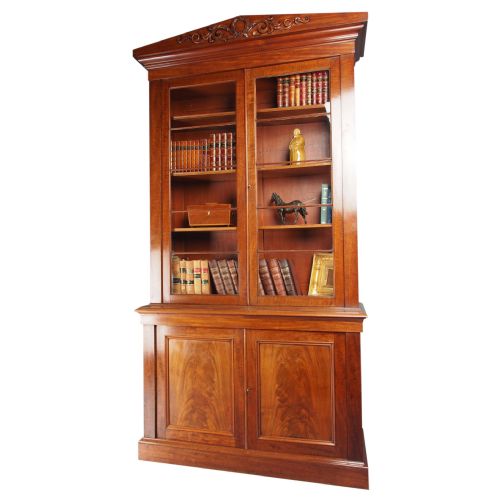


George IV Mahogany Bookcase
A george iv mahogany bookcase brings heavy timber and fine glazing together in a commanding piece of furniture built for serious libraries.
George IV Mahogany Bookcase
A george iv mahogany bookcase combines upright storage with display space, often pairing glazed upper doors with a lower cupboard or a pull-out writing drawer.
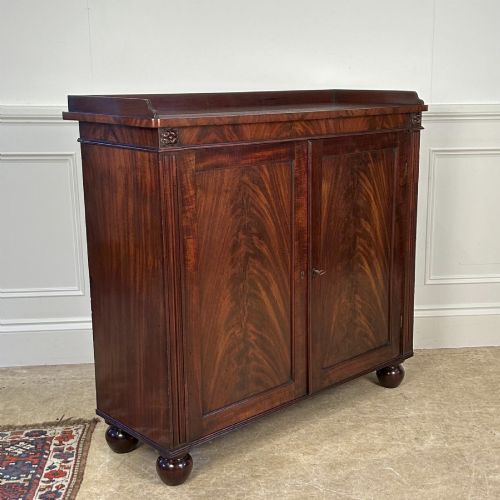
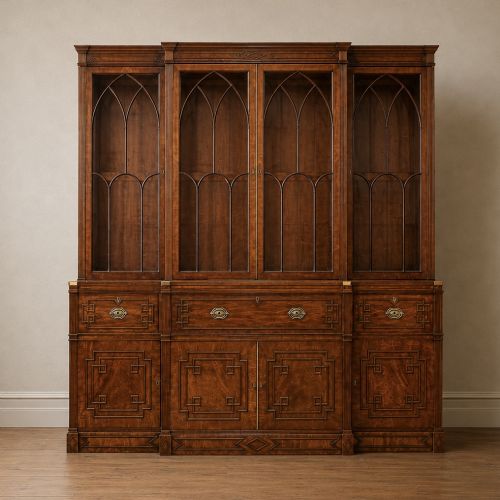
The versions most commonly met here span the Georgian and Regency periods of the early nineteenth century, taking forms that range from low dwarf units to large breakfront library pieces.
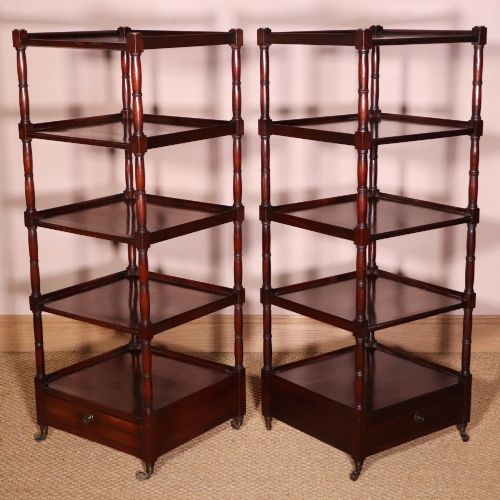
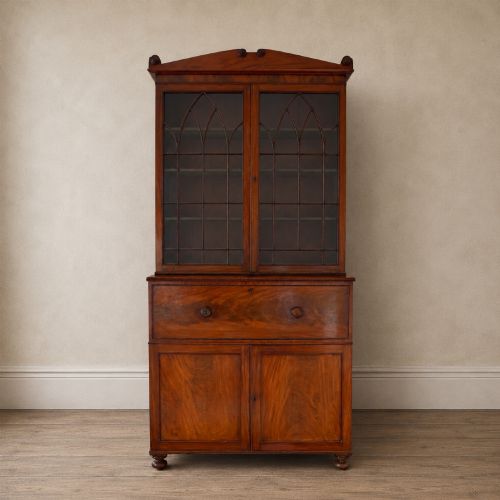
Makers of the era utilised distinct formats such as secretaire cabinets and graduated open shelves, providing functional workspace alongside tall tiers for volumes.
Materials and construction
Cabinet makers built these pieces using solid mahogany and flame mahogany veneer, selecting figured timber for drawer fronts and cabinet doors to create striking grain patterns.
Glass panels were fitted into wooden lattice frames for the upper sections, while brass hardware such as drop handles and hinges provided structural and decorative detail.
George IV Mahogany Bookcase Retail Price Guide 2026
Typical asking prices for george iv mahogany bookcase among the pieces listed under this phrase on Sellingantiques today, from the lower quarter to the upper quarter. They describe what is for sale here now, not the wider market.
Several pieces conceal miniature pigeonholes behind drop-front drawers, built for letters penned when inkwells ruled.
Evaluating quality
Quality rests in the selection of the timber and the depth of the grain, particularly where figured or flame mahogany veneer covers large expanses of cabinet work.
The precision of the joinery in the glazed door frames and the handling of proportions in breakfront library forms separate standard production from exceptional pieces.
Gillows
The George IV Mahogany Bookcase Glossary
- Secretaire
- A cabinet incorporating a pull-out drawer with a fitted writing surface and small pigeonholes. This hybrid design conceals a desk within the upper or middle section of the bookcase.
- Breakfront
- A piece of furniture where the central section projects forward from the flanking wings. This architectural arrangement creates shadow and depth across large library cabinets.
- Dwarf
- A low bookcase or cabinet standing beneath counter height rather than reaching towards the ceiling. These compact units appeared frequently during the early nineteenth century.
- Waterfall
- A set of open shelves that steps back progressively from bottom to top, creating a cascading profile. The design gained popularity during the Regency period.
George IV Mahogany Bookcase: Frequently Asked Questions
How do I use a secretaire bookcase?
The drop-front drawer pulls down to reveal a writing surface accompanied by small drawers and compartments for letters. It serves as an integrated desk without taking up extra floor space in a room.
When closed, the secretaire drawer looks identical to standard drawers, maintaining the formal symmetry of the bookcase front.
Where should I place a large breakfront bookcase?
These imposing library pieces require a substantial wall with enough length to display the projecting central section and side wings properly. Placing them away from direct heat sources protects the timber and veneer.
Good natural light helps reveal the figured grain of the mahogany panels without exposing the glass to constant harsh sunlight.
Are the shelves adjustable in these bookcases?
Many examples from this era include adjustable shelving supported by wooden bearers or brass track systems. This adaptability allows the interior to accommodate books of varying heights.
Early open and glazed versions often retain their original graduated or fixed shelf arrangements.
What is the difference between a dwarf and a standard bookcase?
Dwarf bookcases stand low to the ground, keeping the top surface within easy reach and leaving the wall space above entirely clear. Standard standing bookcases rise much higher, requiring full-height ceilings and sometimes library steps to reach the top tiers.
Both types utilise mahogany and glass construction but serve different spatial scales.