


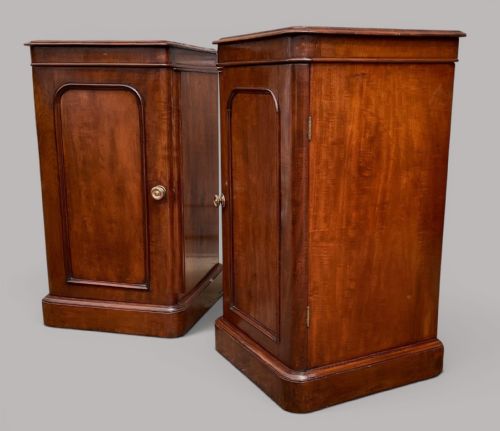
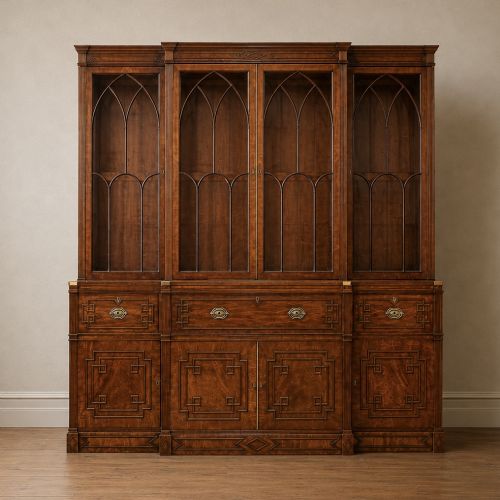


George IV Cabinet
These george iv cabinet examples combine architectural dignity with rich timbers, offering practical storage alongside the elegance of the Regency and Georgian eras.
George IV Cabinet
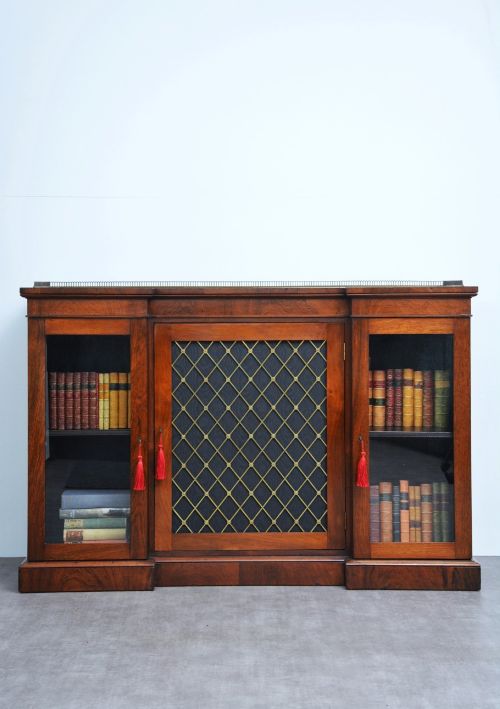
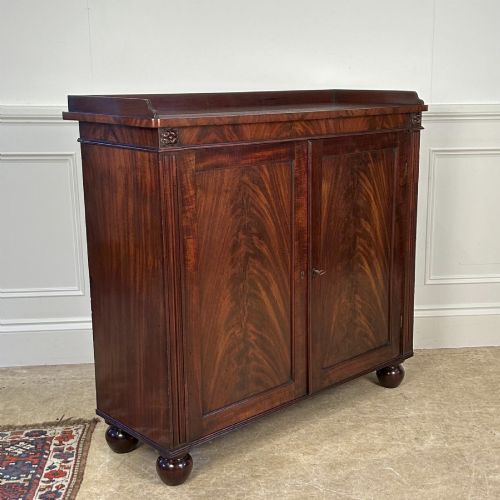
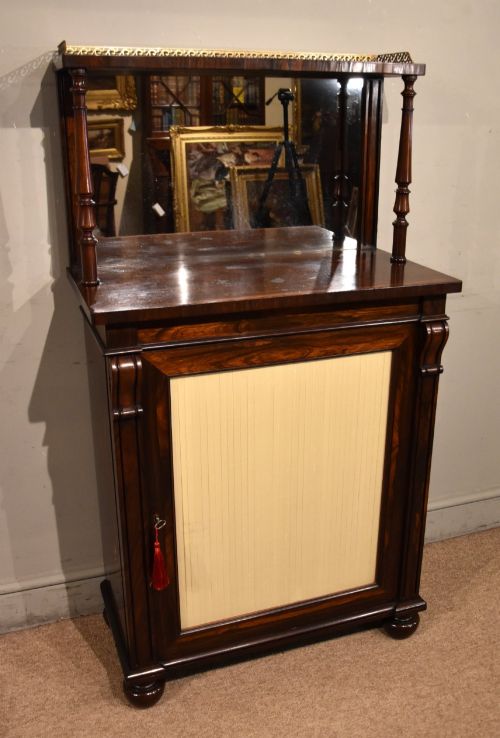
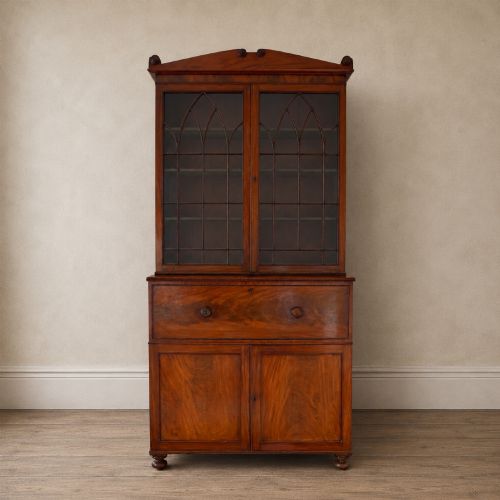
A george iv cabinet encompasses a variety of refined forms, including side cabinets, chiffoniers, secretaire bookcases, and bedside cupboards originating from the early nineteenth century. Mahogany and rosewood dominate the listings, frequently enriched with flame veneers, brass details, and glass doors.
The version most commonly met on this page is the mahogany or rosewood side cabinet or bookcase, often reflecting the robust yet sophisticated taste associated with the period and makers such as Gillows. Pieces range from grand breakfront library bookcases down to small dwarf cabinets and sewing tables.
Makers and workshops of the era utilised structural timbers like mahogany alongside exotic veneers such as thuya wood, Goncalo Alves, and burr elm. Stylistic influences span standard George IV and Regency designs to Gothic Revival and Grand Regency interpretations.
Materials and construction
Cabinet-makers relied heavily upon solid mahogany and rosewood, frequently applying highly figured veneers to drawer fronts and door panels to create rich optical depth. Secondary timbers were chosen for internal drawer construction, while brass featured extensively in hardware, grilles, and galleries.
Surface ornamentation involved fine brass inlay, parcel-gilt highlights, and occasionally painted simulations such as faux porphyry marble tops. Glazed doors utilised timber framing to house glass panes for library bookcases and display cabinets.
Construction techniques balanced architectural scale with portability where appropriate, seen in pedestal bedside cupboards, breakfront library bookcases, and fitted writing cabinets featuring secretaire drawers.
George IV Cabinet Retail Price Guide 2026
Typical asking prices for george iv cabinet among the pieces listed under this phrase on Sellingantiques today, from the lower quarter to the upper quarter. They describe what is for sale here now, not the wider market.
Listings feature woods including mahogany, rosewood, Goncalo Alves, thuya wood, and burr elm across forms such as bookcases, chiffoniers, and bedside cabinets.
Judging quality and character
Quality separates through the selection and matching of timber veneers, where symmetrical flame mahogany or richly grained rosewood indicates superior workshop standards. The precision of cabinet joinery, original brass hardware, and intact gilt-brass galleries further distinguish finer pieces.
Proportion and scale dictate the desirability of forms, with unusually small scale chiffoniers or compact dwarf cabinets showing exceptional craftsmanship. Attribution to known workshops like Gillows or Holland & Sons elevates the standing of individual items within the historical record.
Gillows·Holland and Sons·Thomas King
The George IV Cabinet Glossary
- Secretaire
- A cabinet or desk incorporating a pull-down writing drawer fitted with small drawers and pigeonholes. This clever mechanism conceals writing materials behind a standard drawer facade.
- Chiffonier
- A small sideboard or low cabinet typically fitted with enclosed shelving below and raised tiers above. The upper shelves were often used for displaying china or books.
- Breakfront
- A piece of furniture whose central section projects forward from the flanking wings. This architectural arrangement creates depth and shadow across large library bookcases and side cabinets.
- Goncalo Alves
- A dense exotic hardwood featuring striking dark brown and warm reddish-brown figuring. Cabinet-makers utilised this timber for decorative contrast on Regency and George IV furniture.
- Gilt-brass gallery
- A decorative open metal railing mounted on the top surface of a cabinet or sideboard. It prevented items from sliding off marble or timber tops.
George IV Cabinet: Frequently Asked Questions
How do I identify a george iv cabinet?
Look for the characteristic combination of early nineteenth-century proportions, rich mahogany or rosewood timbers, and architectural details like brass inlay or glazed doors. Construction methods and stylistic cues typically point to the 1820s and 1830s.
Evidence in the listings shows variations from dwarf side cabinets to large breakfront bookcases, often reflecting Regency or George IV design idioms.
What is a secretaire bookcase used for?
A secretaire bookcase combines upper shelving for book storage with a dedicated writing drawer that folds down to reveal small compartments. It served as a functional piece for correspondence and estate management in nineteenth-century homes.
The drop-front drawer conceals the writing surface, allowing the piece to maintain the appearance of a standard bookcase when closed.
Where should I place a side cabinet?
Side cabinets suit dining rooms, libraries, or living spaces where surface display and enclosed storage are required. Their compact footprint allows them to sit against walls or beneath pier mirrors.
Pieces with marble tops or brass galleries offer durable surfaces for serving or displaying decorative objects.
How do mahogany and rosewood differ?
Mahogany provides a stable, reddish-brown structural timber that takes figure well, especially in flame veneer variants. Rosewood offers a darker, heavily grained surface with distinct purplish-brown tones favoured for formal reception rooms.
Both timbers define the primary aesthetic of the period, often enhanced with brass inlay or gilt mounts.