

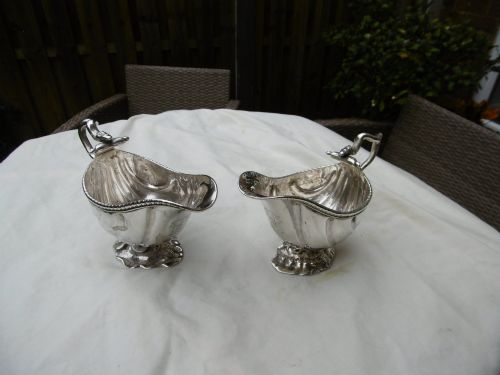


George III Silver Hollowware
George iii silver hollowware brings domestic silver containers of tea, coffee, cream, mustard and sauce from the Georgian period into daily use.
George III Silver Hollowware
When buyers search for george iii silver hollowware, they examine hollow vessels designed for beverage service and table condiment deployment. These pieces include teapots, coffee pots, cream jugs, mustard pots, sauce boats and tureens.
The versions most commonly met on this page span the Georgian era alongside later revival interpretations, utilising sterling silver forms shaped for eighteenth and nineteenth century dining.
Objects range from plain mustard pots to large antique coffee pots, showing how domestic silver served both formal dining rooms and morning tea tables.
How george iii silver hollowware was made
Silversmiths formed these vessels from sterling silver, shaping sheet metal into hollow bodies for teapots, coffee pots, tureens and cream jugs. Handles frequently integrated insulating materials such as wood and ebony to manage heat during beverage service.
The manufacturing process combined hand-raising and hammering techniques with decorative detailing characteristic of Georgian and Neoclassical styles. Makers stamped hallmarks onto the silver to record origin, standard and date of production.
George III Silver Hollowware Retail Price Guide 2026
Typical asking prices for george iii silver hollowware among the pieces listed under this phrase on Sellingantiques today, from the lower quarter to the upper quarter. They describe what is for sale here now, not the wider market.
Ebony handle inserts saved many an 18th-century morning tea drinker from scorched fingers.
What varies in quality
Quality in george iii silver hollowware rests upon the crispness of form, the weight of the sterling silver sheet, and the balance of handles made from wood or ebony. Early Georgian examples demonstrate precise hand-hammering and restrained Neoclassical ornament.
The distinction between standard domestic items and top tier pieces lies in the authority of the silversmith's mark and the integrity of original proportions. Plain surfaces require exact metalwork because imperfections hide nowhere.
Robert Hennell I·William Grundy·Robert Hennell II·William Bennett·Birchall and Hayne
The George III Silver Hollowware Glossary
- Hollowware
- Tableware containers that are hollow rather than flat, including teapots, coffee pots, cream jugs, mustard pots, sauce boats and tureens. These pieces form the core of domestic silver service.
- Sterling silver
- A silver alloy containing ninety-two point five percent silver by mass and seven point five percent other metals, usually copper. This standard alloy provides the durable material for Georgian hollowware.
- Neoclassical
- A style drawing inspiration from the classical art and culture of ancient Greece and Rome. This design movement heavily influenced George III silver shapes and ornamentation.
- Hallmark
- An official stamp or marks struck on items made of precious metals, certifying their purity and origin. These marks identify the maker, assay office and year of assay.
George III Silver Hollowware: Frequently Asked Questions
How were these silver vessels used?
These vessels functioned primarily at the dining table and the tea table for holding and serving liquids and condiments.
Teapots and coffee pots served hot beverages, while mustard pots, sauce boats and tureens held table accompaniments during meals.
How do I live with antique silver?
Living with antique silver involves regular gentle cleaning and careful handling to preserve the metal finish and wooden handle components.
Many owners incorporate these functional vessels into modern dining settings or display them on sideboards.
How do I tell periods apart?
Periods are identified through hallmarks stamped into the sterling silver, alongside stylistic indicators like Neoclassical ornament.
Georgian pieces contrast with later revival items through the specific punch marks of makers and assay offices recorded on the metal.