





George III Serpentine Sideboard
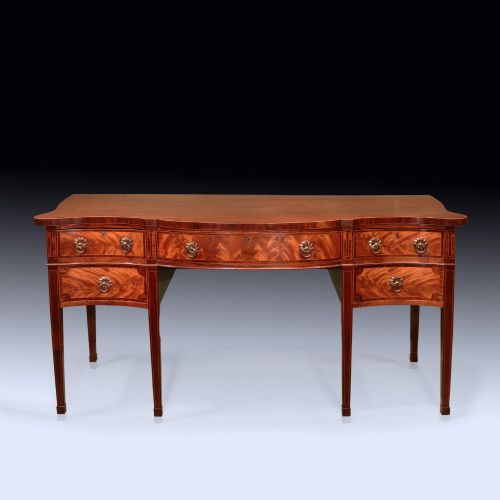
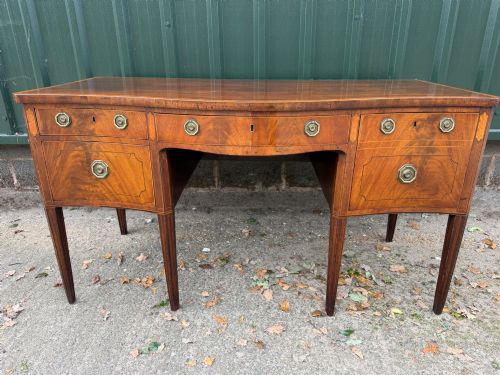
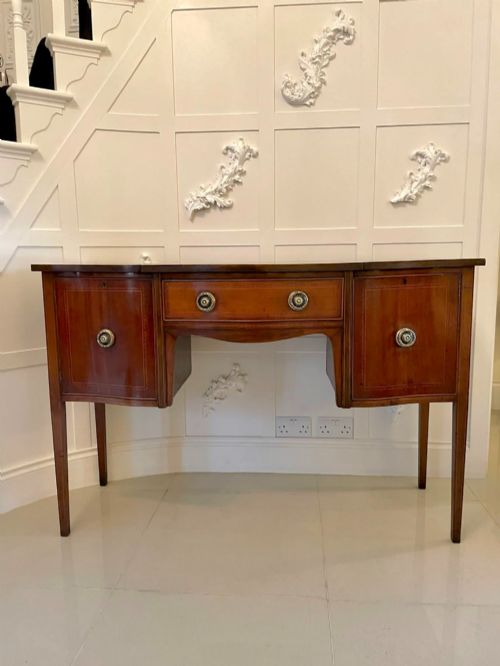
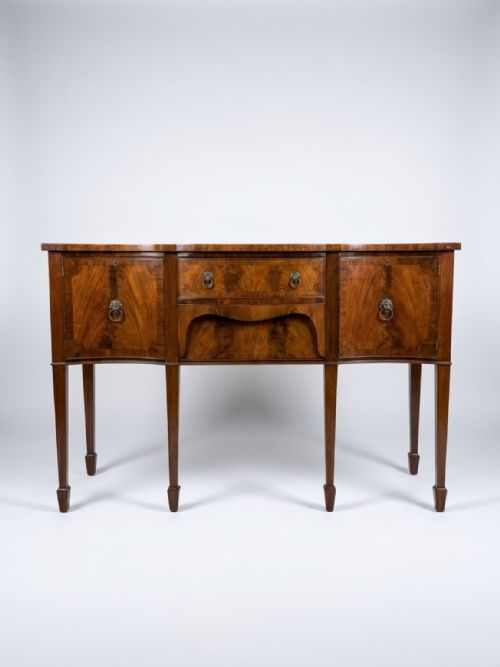
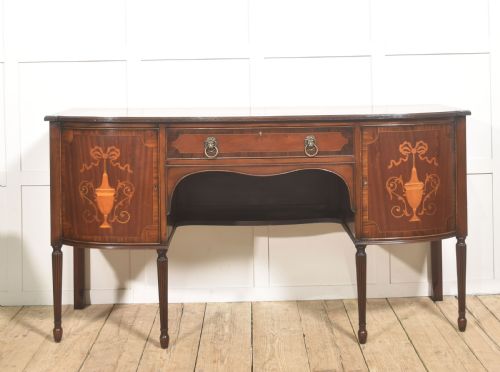
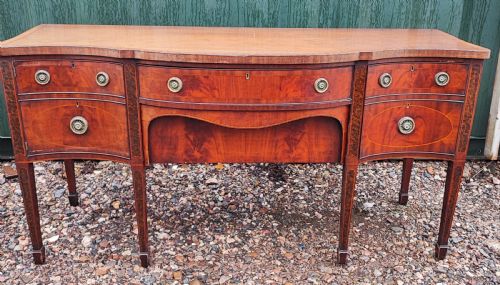
A george iii serpentine sideboard brings fluid eighteenth-century curves and rich mahogany timber into a dining room.
George III Serpentine Sideboard
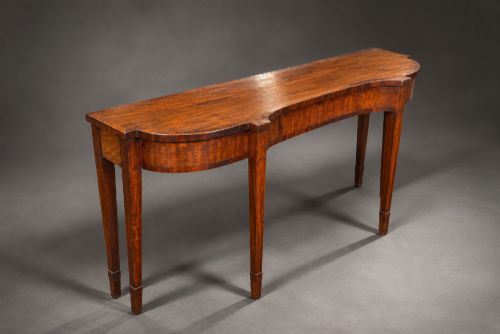
A george iii serpentine sideboard presents a distinctive undulating front that swells gently outward at the centre and curves inward toward the ends. These formal serving pieces emerge primarily from the eighteenth century, during the Georgian period, alongside related serving tables and knife boxes.
The pieces available on this page encompass authentic eighteenth-century examples as well as later interpretations from the Edwardian era and the nineteenth century. Most feature solid mahogany construction enhanced by decorative stringing and veneered surfaces.
The form functions to hold dining silver and linen while providing a broad surface for serving food. Variations span narrow formats, grander proportions, and iterations executed in the later Regency style.
How they were made
Cabinet makers constructed these pieces using solid mahogany and flame mahogany veneers laid over secondary timbers. The undulating serpentine curve required precise timber selection and careful shaping of the front rails and drawer fronts.
Inlaid decoration in satinwood and boxwood creates contrasting geometric lines and delicate borders around the drawer fronts and top edges. Original brass hardware, including handles and escutcheons, secures the drawers and completes the façade.
Joinery methods of the period relied on hand-cut dovetails for drawer construction and pegged mortise and tenon joints for the main frames. Finishers applied shellac polishes to bring out the natural grain and deep brown tones of the wood.
George III Serpentine Sideboard Retail Price Guide 2026
Typical asking prices for george iii serpentine sideboard among the pieces listed under this phrase on Sellingantiques today, from the lower quarter to the upper quarter. They describe what is for sale here now, not the wider market.
Listings span multiple eras, encompassing Georgian originals from the eighteenth century alongside Edwardian and nineteenth-century revivals.
What varies in quality
The choice of timber sets the visual standard, with highly figured flame mahogany veneer commanding greater attention than plain grain. Crispness in the execution of boxwood and satinwood inlay separates standard production from finer cabinet work.
Proportion and the handling of the serpentine curve dictate the elegance of the silhouette. Pieces that maintain clean lines across the undulating front without distortion reflect superior workshop skill.
The retention of original brass handles, working locks, and secondary woods adds to the integrity of a piece. Subtle details such as fine cockbeading around the drawers indicate the level of care invested by the original maker.
The George III Serpentine Sideboard Glossary
- Serpentine
- A front contour that curves outward in the middle and inward at the sides. This shape requires skilled carpentry to achieve smooth, continuous lines.
- Flame mahogany
- A veneer cut from timber where the grain resembles flickering flames. It provides a highly decorative surface on drawer fronts and top panels.
- Inlay
- The technique of embedding contrasting woods such as boxwood and satinwood into the primary mahogany surface. It creates fine decorative borders and geometric motifs.
- Serving table
- An open-frame dining table precursor to the enclosed sideboard. These examples lack central drawers or cupboards beneath the top surface.
- Knife box
- A specialised wooden container designed to hold cutlery upright. These pieces often share the serpentine profile and inlaid mahogany decoration of the larger sideboards.
George III Serpentine Sideboard: Frequently Asked Questions
How do I spot a later reproduction?
Examine the timber in hidden areas such as drawer linings and backboards to check for age and tool marks consistent with eighteenth-century production. Later Edwardian and nineteenth-century interpretations often utilise different secondary woods and machine-cut elements.
Look closely at the finish and the wear patterns around the handles and feet. Authentic period pieces show natural patination accumulated over generations of use.
How do I care for mahogany surfaces?
Keep the timber away from direct sunlight and heat sources to prevent the wood from drying out and the veneer from lifting. Maintain a stable indoor climate to protect the antique glue and joinery.
Apply a traditional beeswax polish occasionally and buff with a soft cloth to nourish the grain. Avoid modern silicone sprays that build up and dull the finish over time.
Where were these placed in a Georgian dining room?
These pieces stood against the main dining room wall to display silver platters and assist during large meals. They acted as a central station for serving dishes before food reached the dining table.
Matched knife boxes often sat directly on top of the sideboard or on accompanying pedestals. The arrangement formed a unified decorative scheme for formal entertaining.