



George III Serpentine Dresser
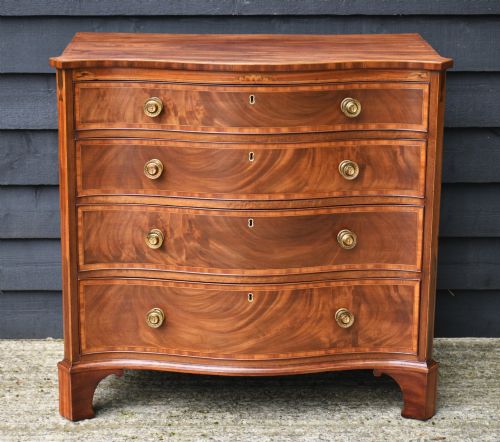
A George III serpentine dresser brings together fluid front lines and rich timbers, offering practical storage with distinct Georgian elegance.
George III Serpentine Dresser
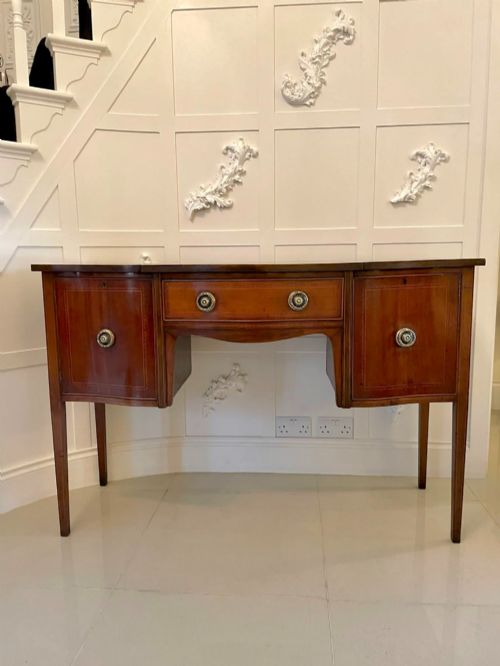
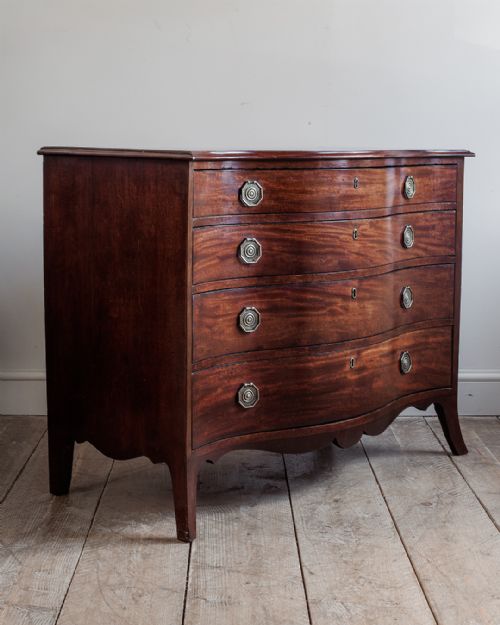
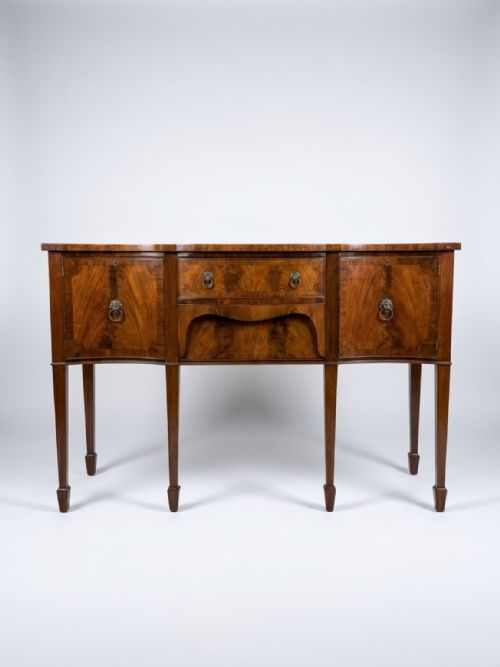
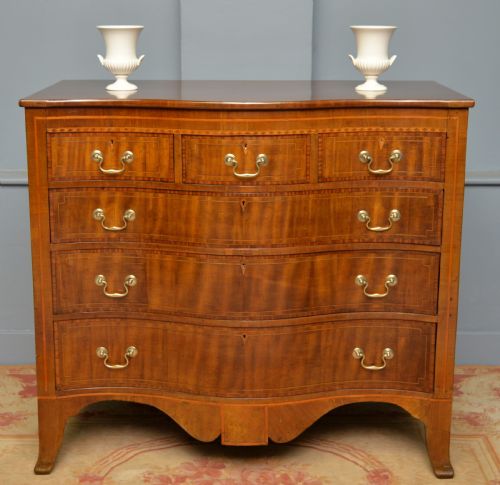
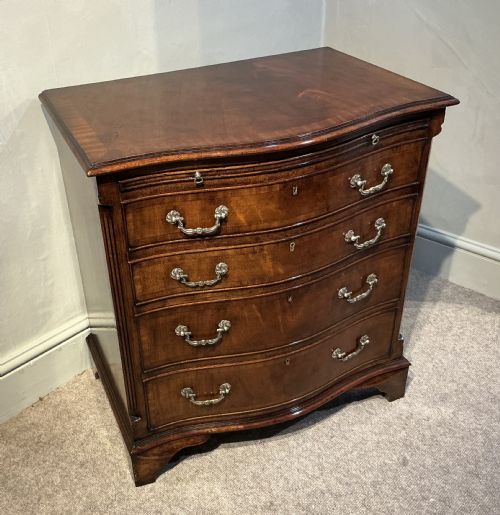
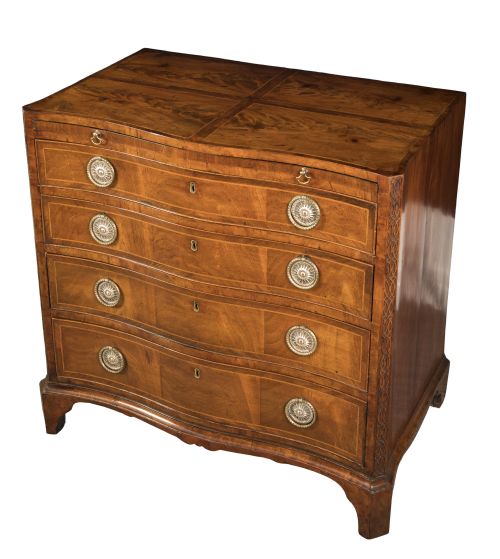
A george iii serpentine dresser typically appears as a chest of drawers or sideboard featuring a gracefully curved front profile. The form dates primarily to the eighteenth century, encompassing George III and Hepplewhite periods alongside later revival pieces.
Makers constructed these storage pieces mainly from mahogany, often utilising flame veneer, fiddleback figuring or satinwood. Scottish regional examples also emerge within the selection, showing distinct cabinetmaking traits.
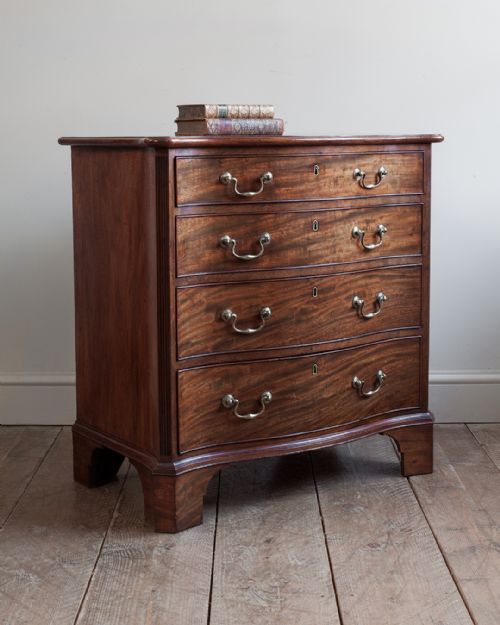
Buyers encounter smaller proportions alongside larger gentleman's dressing chests. Each variation relies on the characteristic undulating line to soften the substantial timber mass.
Materials and construction
Cabinetmakers worked solid mahogany and oak for structural integrity while applying choice flame mahogany veneer to drawer fronts. Inlaid details in boxwood and harewood added contrasting borders to satinwood panels.
Constructing the serpentine shape demanded precise woodworking, as each drawer front required curved timber matching the frame precisely. Brass hardware finished the drawers, fixed securely to the figured wood faces.
George III Serpentine Dresser Retail Price Guide 2026
Typical asking prices for george iii serpentine dresser among the pieces listed under this phrase on Sellingantiques today, from the lower quarter to the upper quarter. They describe what is for sale here now, not the wider market.
Current listings span the eighteenth century to the 1920s, featuring mahogany, satinwood, oak, and brass hardware.
Judging the range
Quality rests heavily on the selection of timber figure, where highly flamed mahogany or intricate marquetry elevates a piece significantly. The crispness of the curved serpentine drawer fronts and the subtlety of boxwood inlay also separate standard work from exceptional cabinetmaking.
Proportion dictates visual success, particularly in smaller examples or gentleman's dressing chests where delicate lines must balance practical depth. Original brasses and untouched eighteenth-century surfaces preserve historical integrity far better than heavily restored alternatives.
The George III Serpentine Dresser Glossary
- Serpentine
- A furniture front curving outward at the centre and inward at the sides. This rhythmic contour defines the silhouette of these chests and sideboards.
- Marquetry
- Decorative wood veneers arranged in pictorial or geometric patterns. Craftsmen utilised satinwood and darker timbers to create contrast.
- Commode
- A decorative chest of drawers or cabinet originating from French influence. Eighteenth-century makers occasionally used this term interchangeably with serpentine drawer units.
- Fiddleback
- A type of figured mahogany with undulating grain resembling the back of a violin. This figuring adds distinct optical depth to the timber.
George III Serpentine Dresser: Frequently Asked Questions
What is a serpentine chest?
A serpentine chest is a storage piece featuring a front that curves outward in the middle and inward near the edges. This flowing shape distinguishes standard straight-front furniture from more elaborate Georgian designs.
Cabinetmakers utilised this profile on chests of drawers and sideboards to catch the light and soften heavy timber forms.
How do I date a piece?
Dating relies on secondary woods, construction methods, and stylistic cues like inlay types and brass hardware. Eighteenth-century pieces generally show hand-cut dovetails and native timbers like oak inside the drawers.
Later nineteenth-century and 1920s revivals often exhibit standardised machine-cut elements and different internal secondary woods.
Where were these made?
These pieces originated primarily in English workshops during the Georgian era, with distinct regional variations appearing from Scottish makers. London cabinetmakers set the prevailing styles, which provincial joiners then interpreted.
Foreign influence, particularly French commode design, also inspired the curving shapes seen in British workshops.
How do I style one?
A serpentine chest works well in a hallway, living room, or bedroom as a primary focal storage surface. Its curved front profile pairs effectively with traditional and transitional interiors alike.
Placing the chest where side lighting can catch the flame mahogany or satinwood grain highlights the natural timber figure.