



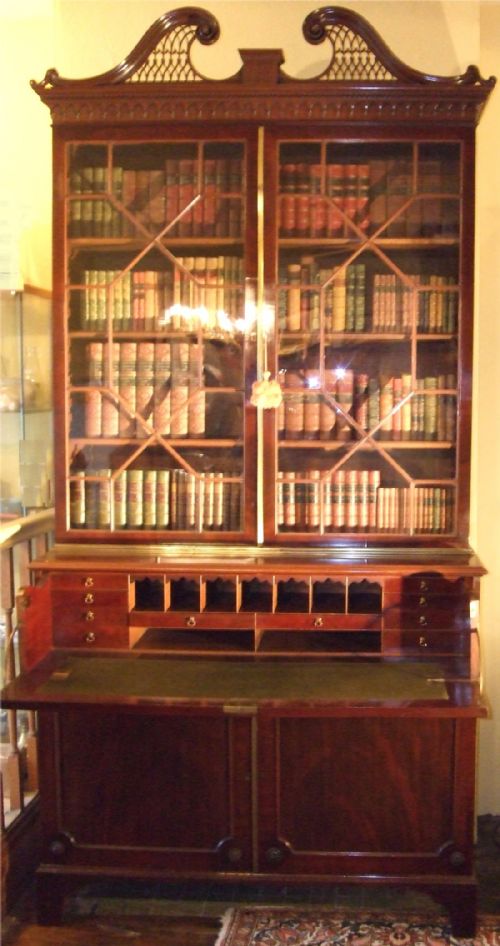

George III Secretaire Drawers
George iii secretaire drawers are ingenious pieces of Georgian furniture designed for writing and storage.
George III Secretaire Drawers
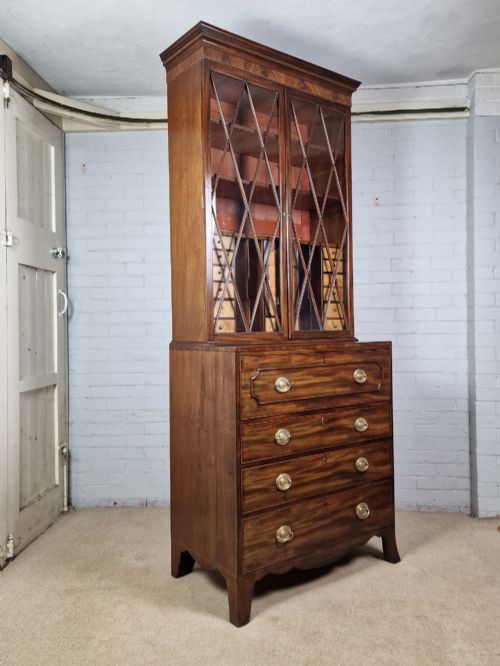
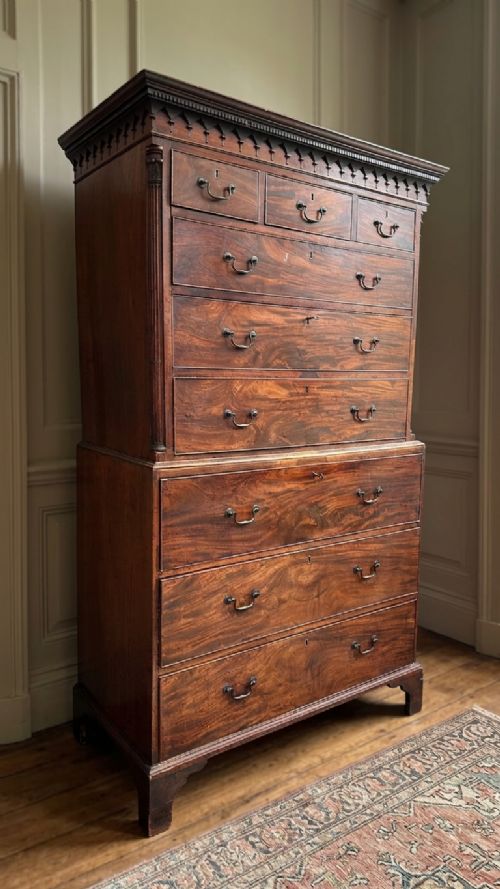
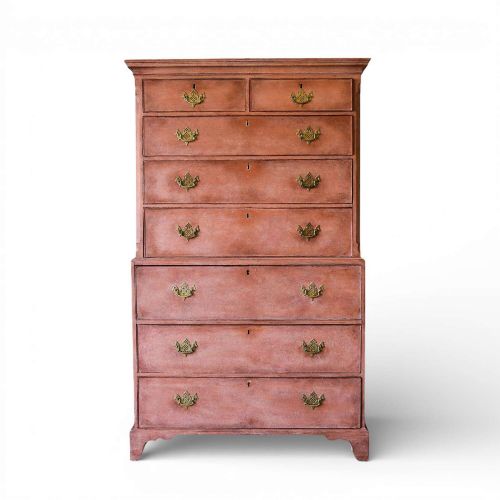
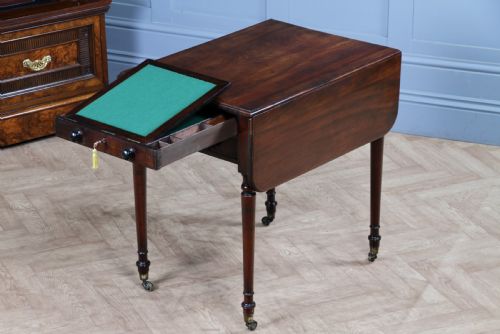
George iii secretaire drawers combine the practical drawer space of a traditional chest with a concealed writing desk. The most common format on this page is the chest on chest, also known as a tallboy, alongside grander bookcase versions and smaller work tables.
These pieces date from the mid to late eighteenth century and into the opening years of the nineteenth century. Makers of this era engineered drop-front fitted drawers containing small compartments and pigeonholes for correspondence.
The primary form sits upright with multiple full-width drawers below the fall-front writing surface. Buyers encounter these pieces in various configurations, from tall cabinets with swan neck pediments down to compact side tables.
How they were made
Cabinet makers built these pieces predominantly using solid mahogany and oak for structural carcasses and drawer linings. Finer examples incorporate satinwood veneers and decorative inlay to accent the writing compartments.
Hardware such as brass handles and escutcheons secure the drawers, while leather and baize provide writing surfaces inside the drop-front desks. Paint finishes also appear on select eighteenth century pieces.
George III Secretaire Drawers Retail Price Guide 2026
Typical asking prices for george iii secretaire drawers among the pieces listed under this phrase on Sellingantiques today, from the lower quarter to the upper quarter. They describe what is for sale here now, not the wider market.
Secret drawers within the interior pigeonholes often required pressing hidden wooden springs to release them.
What varies in quality
Quality rests in the precision of the interior fittings and the selection of timber figures on drawer fronts. Master cabinet makers used choice cuts of mahogany and detailed satinwood stringing that elevated utilitarian furniture into high style.
The execution of the secondary timbers and the original state of the brass hardware and leather inserts distinguish standard workshop production from finer signed or attributed items.
Robert Gillows II
The George III Secretaire Drawers Glossary
- Secretaire
- A piece of furniture containing a drawer or compartment that folds down to form a writing desk. It conceals small drawers and pigeonholes inside.
- Chest on chest
- A tall storage unit formed by stacking a smaller chest of drawers directly on top of a larger base chest. This form maximises vertical capacity.
- Tallboy
- An alternative term for a chest on chest or a high single chest of drawers. These towering pieces dominated Georgian bedroom and library interiors.
- Pediment
- The decorative architectural crown mounted at the top of large bookcases and tallboys. Swan neck versions feature scrolling wooden arches terminating in rosettes.
- Baize
- A coarse woolen material resembling felt used to line writing surfaces and gaming tables. It protects the wood and provides a smooth surface for pens.
George III Secretaire Drawers: Frequently Asked Questions
What is a secretaire drawer?
A secretaire drawer is an ingenious dual-purpose drawer featuring a drop-front panel that opens to reveal a writing surface and small pigeonholes.
Cabinet makers designed these to look like standard drawers from the outside, keeping private correspondence and writing materials concealed when closed.
How do I date a george iii piece?
Dating relies on examining the construction methods, timber choices, and hardware styles characteristic of the period between seventeen sixty and eighteen twenty.
Secondary woods like oak in the drawer linings and distinct handle designs help narrow down the decade of manufacture.
Where were these placed in homes?
These versatile items stood in bedrooms, studies, and libraries as functional storage and writing stations for the household.
Tallbookcase variants suited formal reception rooms, while smaller work tables and chests served private chambers.
Are the writing surfaces original?
Many eighteenth century writing surfaces featuring leather or baize have undergone replacement due to centuries of regular use.
Original leather inserts show authentic wear, whereas modern replacements look clean and uniform upon close inspection.