

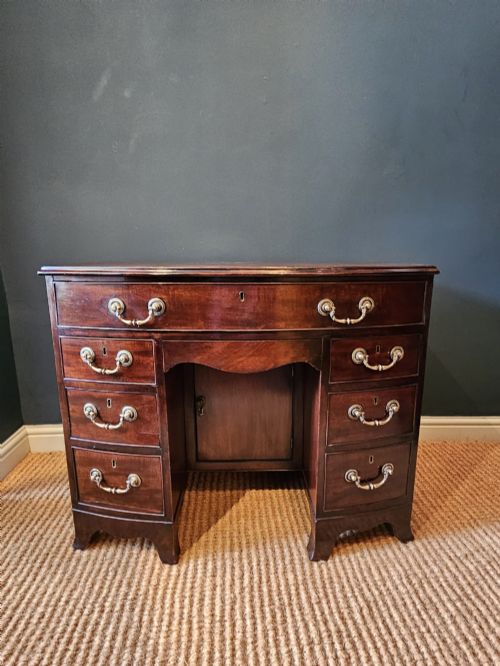
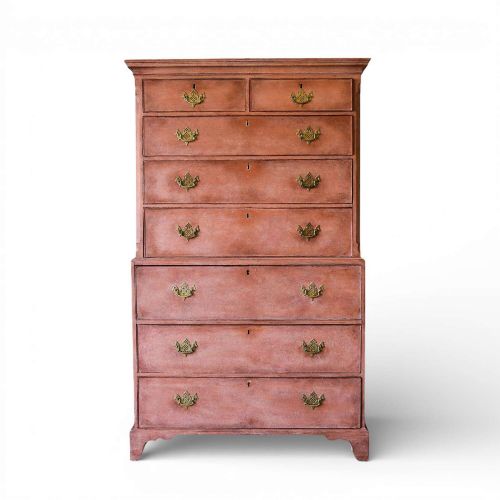


George III Secretaire Chest
These George III secretaire chest pieces combine formal display with concealed writing surfaces, offering the refined storage every traditional interior needs.
George III Secretaire Chest
A George III secretaire chest brings together utilitarian drawer storage and a fitted writing compartment, appearing in forms ranging from compact dressing chests to towering chest on chest examples. Buyers focusing on this phrase encounter taller bureau bookcases and library pieces alongside lower case furniture.
The objects stem from the Georgian era and the later eighteenth century, displaying the architectural proportions and timber selection typical of the period. Tallboys and low press cupboards also emerge within these listings, showing how cabinet makers integrated writing drawers into various formats.
Mahogany dominates the surviving examples, often enriched with satinwood or walnut and featuring brass hardware. Pieces span simple drawer configurations to serpentine fronts and glazed upper bookcase sections.
Quality variations
The sophistication of the timber figure and the precision of the cabinet work separate finer examples from simpler provincial work. Highly figured mahogany veneers, subtle inlay, and well-executed glazing bars elevate the status of a piece.
Internal complexity within the secretaire drawer, such as secret compartments and finely turned small drawers, distinguishes superior execution. Original brasses, intact glass, and untouched surfaces command greater regard than altered or heavily restored examples.
George III Secretaire Chest Retail Price Guide 2026
Typical asking prices for george iii secretaire chest among the pieces listed under this phrase on Sellingantiques today, from the lower quarter to the upper quarter. They describe what is for sale here now, not the wider market.
Some secretaire drawers hide secret inner compartments designed for stashing private correspondence away from prying eyes.
Gillows·Robert Gillows II
The George III Secretaire Chest Glossary
- Secretaire
- A desk drawer featuring a drop-front that conceals pigeonholes and small drawers for writing. It transforms a standard chest or bookcase into a dual-purpose writing station.
- Chest on chest
- A tall case of drawers built in two stacked sections, where a narrower upper chest sits upon a deeper lower chest. This form maximises vertical storage capacity.
- Tallboy
- A tall chest of drawers standing on legs or a base, often incorporating a secretaire drawer within the upper carcase sections. These towering pieces dominate a room.
- Serpentine
- A front line or surface that curves outward in the centre and inward at the sides, creating a gentle wave effect. It demands high skill from the cabinet maker.
- Baize
- A coarse woolen material traditionally used to line writing surfaces within drop-front secretaire drawers. It provides a soft, flat platform for paperwork.
George III Secretaire Chest: Frequently Asked Questions
What is a secretaire chest?
A secretaire chest is a piece of case furniture featuring a drawer that drops open to reveal a fitted writing desk with small drawers and pigeonholes.
This clever dual-purpose design allowed owners to write letters without needing a separate standalone desk in the room.
How do I spot a George III piece?
George III pieces date from the reign of George the Third, running through the later eighteenth and early nineteenth centuries. They are characterised by classical proportions, quality mahogany timbers, and restrained decorative carving.
Cabinet work from this era focuses on architectural balance and functional elegance rather than heavy ornamentation.
How should I care for mahogany?
Mahogany furniture requires stable indoor humidity levels and protection from direct sunlight to prevent timber movement and fading. Regular dusting with a soft cloth keeps the polished surface in good condition.
Avoid placing these pieces near direct heat sources or damp areas.
Where were these pieces used?
These pieces traditionally served in libraries, withdrawing rooms, and grand bedrooms of large Georgian houses. They provided both secure storage for household papers and display space for books.
Today they function effectively as focal points in studies, living rooms, and large hallways.