





George III Press
When you search for a george iii press, you are looking at substantial storage furniture built for the late eighteenth and early nineteenth centuries.
George III Press
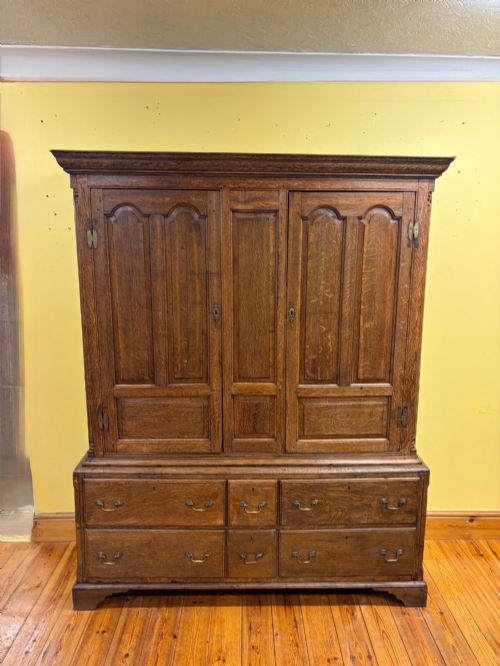
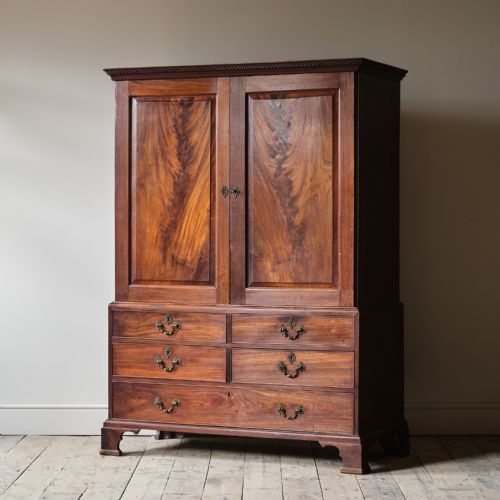
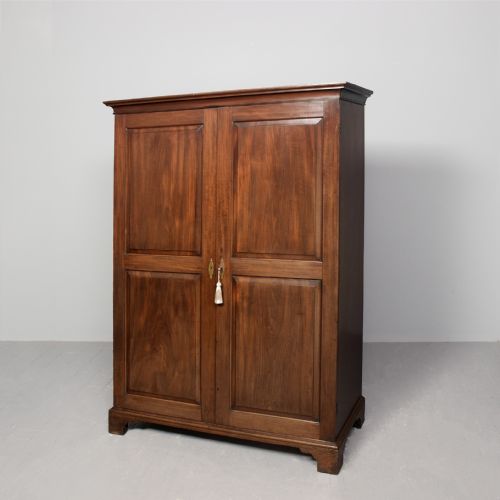
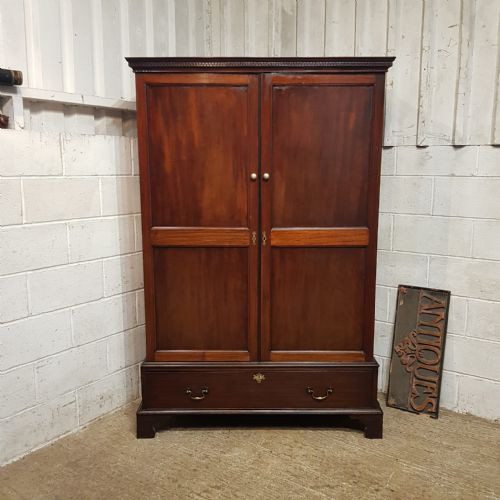
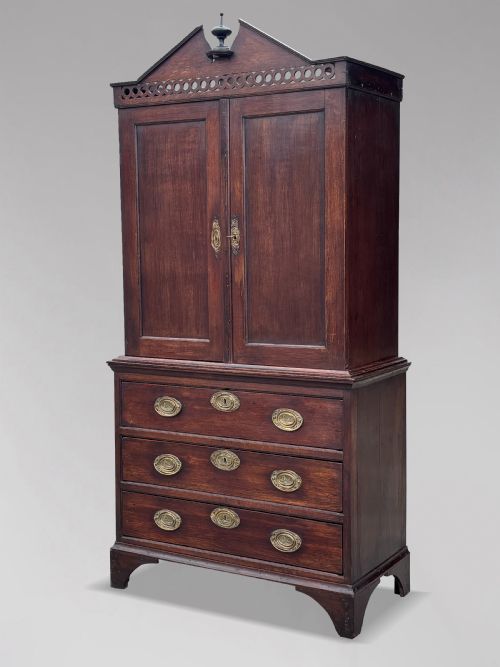
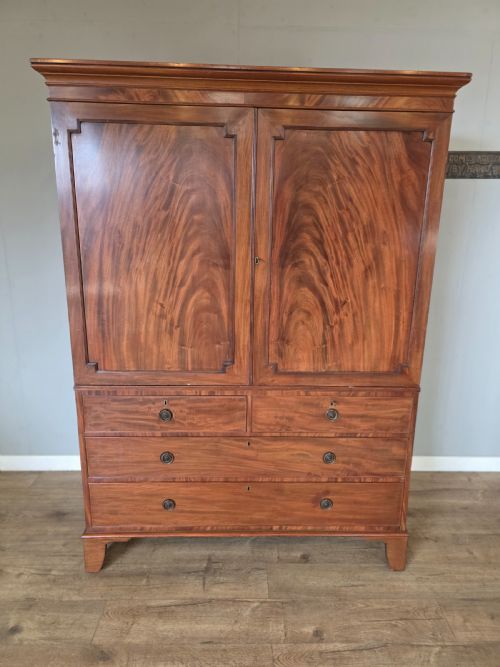
A george iii press is a large case piece designed primarily for storing household linens and garments, combining upper sliding trays or hanging space with a chest of drawers below. The pieces appearing most frequently take the form of tall mahogany or oak cupboards, often built in two sections for transport.
Makers of the period also produced lower dwarf versions and breakfront designs featuring central cabinet doors flanked by hanging sections. Alongside standard linen storage, variants include secretaire book presses and housekeeper cupboards intended for domestic administration.
Materials and construction
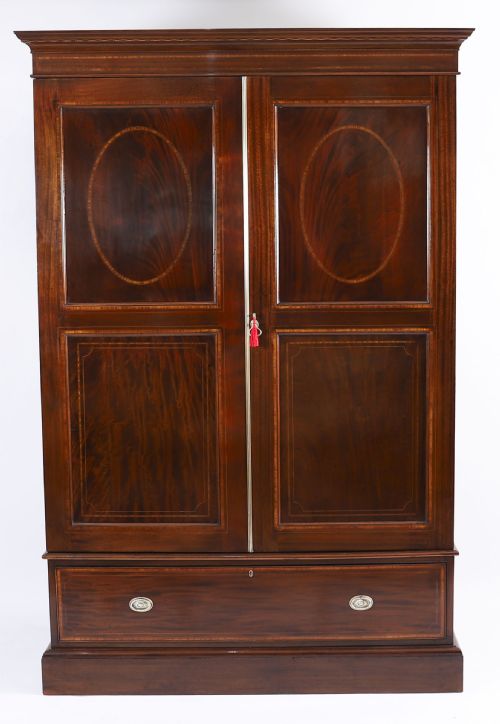
Cabinet makers relied heavily on solid timber and dense veneers, using figured mahogany, flame mahogany, and oak as structural foundations. Workshops enhanced these primary timbers with contrasting boxwood inlay, satinwood banding, and cast brass hardware.
Internal construction typically involved panelled doors enclosing internal sliding trays or shelves above a chest base. More specialised examples utilised internal screw mechanisms or fitted estate cabinet compartments.
George III Press Retail Price Guide 2026
Typical asking prices for george iii press among the pieces listed under this phrase on Sellingantiques today, from the lower quarter to the upper quarter. They describe what is for sale here now, not the wider market.
One provincial press hides an internal screw mechanism, proving that early cabinet makers loved mechanical solutions as much as fine timber.
Judging quality in a george iii press
Quality rests on the selection of timber figures, where richly grained flame mahogany or well-matched quartered oak elevates a piece far above plain boards. The precision of the cabinet work, particularly around the boxwood inlays and swan-neck pediments, signals superior workshop origin.
Proportion also dictates value, with narrow or dwarf proportions commanding greater attention than bulkier carcases. Finer examples display meticulous internal drawer dovetailing and original brass fixtures that match the period of the main body.
Gillows·Thomas Bradshaw
The George III Press Glossary
- Linen Press
- A large storage cabinet featuring an upper section with sliding wooden trays intended for flat textiles, sitting upon a chest of drawers base. This form evolved into modern wardrobes as hanging garments became more common.
- Breakfront
- A cabinet design where the central section projects forward from the flanking wings. This architectural arrangement creates depth and visual rhythm across large bookcases and wardrobes.
- Swan-Neck Pediment
- A decorative broken arch top featuring curving swan-neck scrolls meeting at a central plinth or finial. It frequently crowns the cornice of tall eighteenth-century case furniture.
- Secretaire
- A desk component fitted with a drop-front writing surface concealing small drawers and pigeonholes. It transforms a standard chest or press into a dual-purpose writing and storage unit.
- Dwarf
- A term describing lower, scaled-down versions of standard tall case furniture. These pieces offer reduced height while retaining full internal storage configurations.
George III Press: Frequently Asked Questions
What is a george iii press used for today?
These versatile pieces serve primarily as statement wardrobes, linen stores, or general storage cabinets in bedrooms and hallways. Their deep internal compartments accommodate modern folded clothing and household linens with ease.
The lower drawer sections provide additional partitioned space for accessories, making them practical antiques for contemporary homes seeking character and capacity.
How do I distinguish oak from mahogany examples?
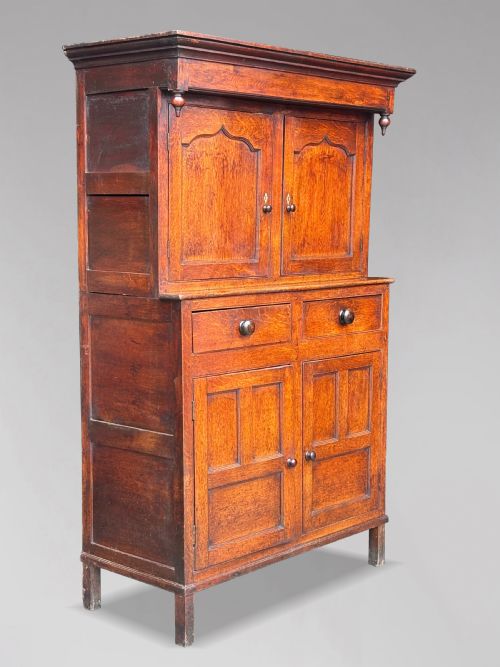
Oak versions typically display a prominent, open grain pattern with visible medullary rays, often associated with regional provincial workshops or housekeepers' cupboards. Mahogany pieces present a smoother, denser surface ranging from rich brown tones to highly figured flame patterns.
While oak pieces lean toward robust domestic utility, mahogany examples frequently incorporate refined decorative elements like satinwood banding and fine stringing.
Did these pieces always have sliding trays?
Many traditional examples were built specifically with internal sliding wooden trays designed to keep folded linens flat and organised before hanging space became standard. Some pieces have undergone historical conversion to full-height hanging wardrobes by removing these internal trays.
Checking the interior reveals whether the original slider runners remain intact alongside the chest base.
How do I identify the period of a press?
Dating relies on architectural proportions, secondary woods used in drawer linings, and hardware styles such as bracket feet versus shaped plinths. Pieces from the eighteenth century often feature hand-cut dovetailing and simpler bracket feet, while later revival models display nineteenth-century machine precision.
Pediment styles and inlay motifs also help narrow the manufacturing window between earlier Georgian iterations and later nineteenth-century revivals.