


George III Marquetry Cabinet
A george iii marquetry cabinet brings structured timber and intricate patterned veneers into a room, offering both display space and concealed storage.
George III Marquetry Cabinet
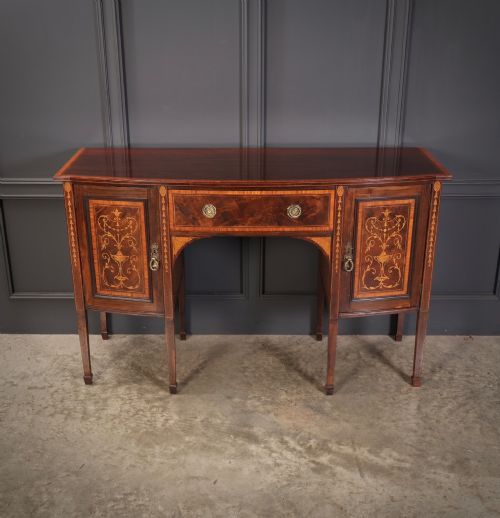
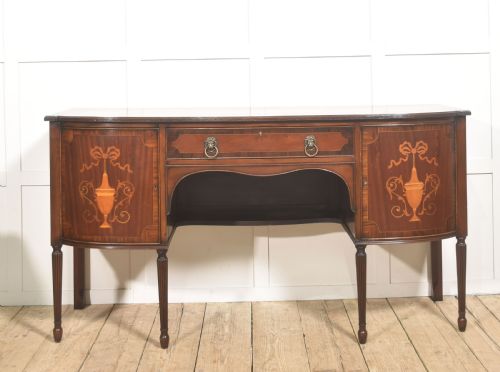
A george iii marquetry cabinet encompasses case furniture built during the Georgian era as well as later revivals from around 1900. These items appear in forms such as sideboards, commodes, bureau bookcases, corner cabinets, and display cabinets.
Buyers meet pieces fashioned from mahogany, satinwood, and rosewood, frequently enhanced with boxwood and diverse wood inlays. The selection moves from eighteenth-century examples to later Sheraton Revival and George III Revival interpretations.
The layout ranges from glazed bookcase fronts and bureau writing sections to demi-lune commodes and breakfront side cabinets. Each form provides a distinct method for organising books, displaying wares, or storing household goods.
How they were made
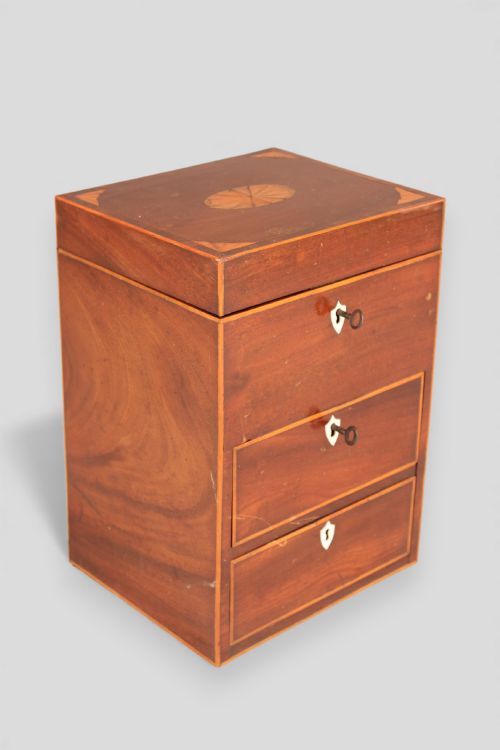
Cabinetmakers constructed carcass frames from timbers such as mahogany, oak, and burr elm, applying thin veneers across the visible surfaces. They utilised satinwood, rosewood, and boxwood inlay to create geometric patterns and floral motifs across doors and drawer fronts.
Glazed upper sections incorporate glass panes held by wooden bars, while fall-front desks conceal internal pigeonholes and small drawers. Brass hardware, including handles and key escutcheons, fastens to the drawer fronts and doors.
Materials recorded include satinwood, mahogany, rosewood, burr elm, harewood, and boxwood inlay.
What varies in quality
The standard of a george iii marquetry cabinet depends upon the precision of the timber matching and the intricacy of the veneer work. Tighter grain alignment and crisper boxwood inlay distinguish superior execution from simpler decorative efforts.
The depth of colour in the primary woods and the crispness of carved details, such as swan neck pediments or bracket feet, dictate the visual weight of the piece. Eighteenth-century examples contrast with later revivals through the natural ageing of the timber and the integration of internal drawer construction.
Edwards & Roberts
The George III Marquetry Cabinet Glossary
- Marquetry
- Decorative veneer work arranged in geometric or pictorial patterns using various coloured woods. This technique creates contrasting surfaces on cabinet doors and drawer fronts.
- Satinwood
- A pale, lustrous timber native to India and Ceylon, prized for its golden sheen. Cabinetmakers employed it extensively for veneers and banding during the Georgian period.
- Demi-lune
- A half-moon shape characteristic of commodes and side tables designed to stand flat against a wall. This profile softens room angles while providing surface space.
- Bureau bookcase
- A piece combining a sloping desk flap for writing above storage drawers with a glazed cabinet or shelving unit on top. It serves as a dual-purpose workspace and library.
- Harewood
- Sycamore timber stained greyish-brown, frequently utilised in eighteenth-century marquetry and inlay work. It provides a muted, cool tone that contrasts with warmer mahogany and satinwood.
George III Marquetry Cabinet: Frequently Asked Questions
How do I identify a true Georgian piece?
Examine the timber construction methods, secondary woods inside drawers, and the natural patina developed over centuries of use.
Later revivals from around nineteen hundred often display machine-cut elements and brighter, less weathered finishes compared to eighteenth-century originals.
Where should I place a corner cabinet?
A corner cupboard or cabinet fits directly into room angles, utilising dead space for storage and display.
These pieces suit dining rooms or hallways where floor space is limited but vertical height allows for shelving.
What is the difference between a commode and a sideboard?
Commodes generally feature curved or bow fronts with sets of drawers, designed originally for bedrooms or formal living spaces.
Sideboards function primarily in dining spaces for serving food and storing tableware, often featuring longer rectangular proportions.
How do I care for inlaid wood surfaces?
Keep inlaid cabinets away from direct sunlight and steady heat sources to prevent the delicate satinwood and boxwood veneers from drying out.
Apply a traditional wax polish occasionally to nourish the timber and maintain the natural lustre of the finish.