

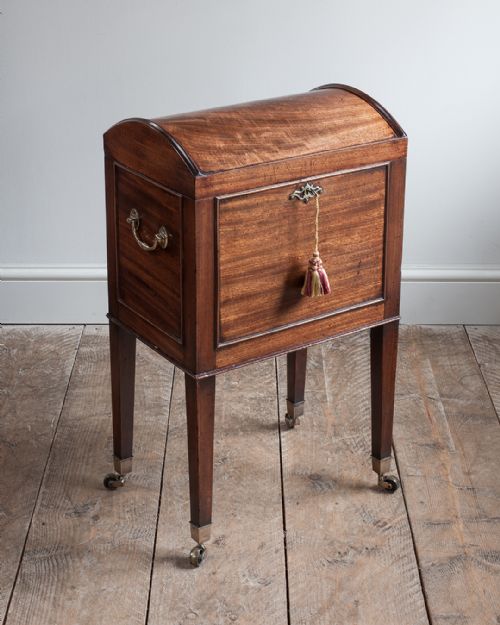


George III Mahogany Cooler
When you search for a george iii mahogany cooler, you seek a noble vessel designed to chill wine and hold bottles in the grand dining rooms of the past.
George III Mahogany Cooler
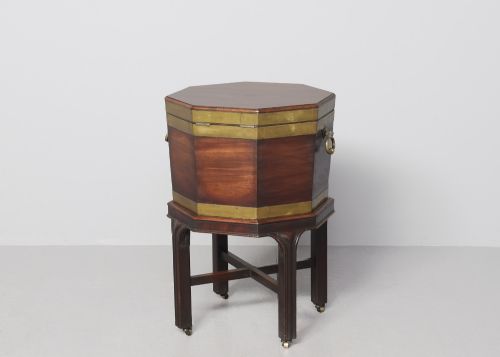
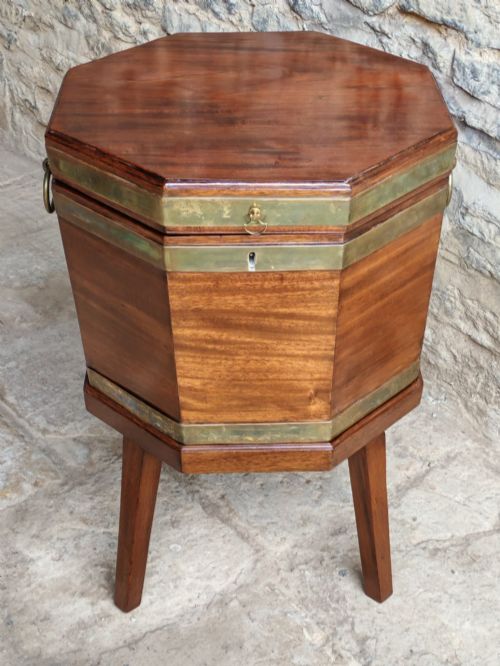
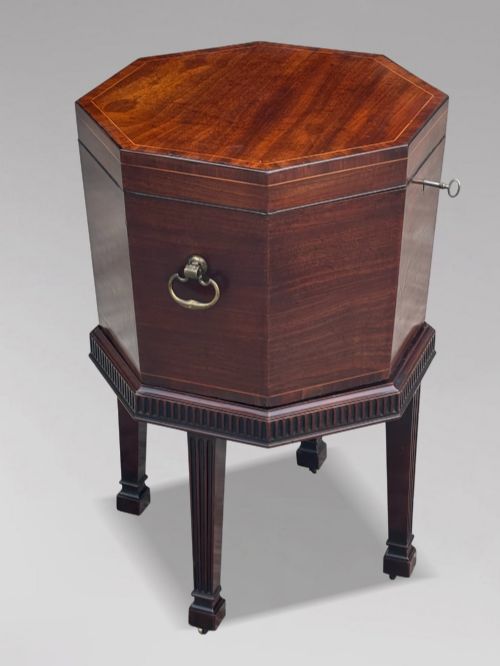
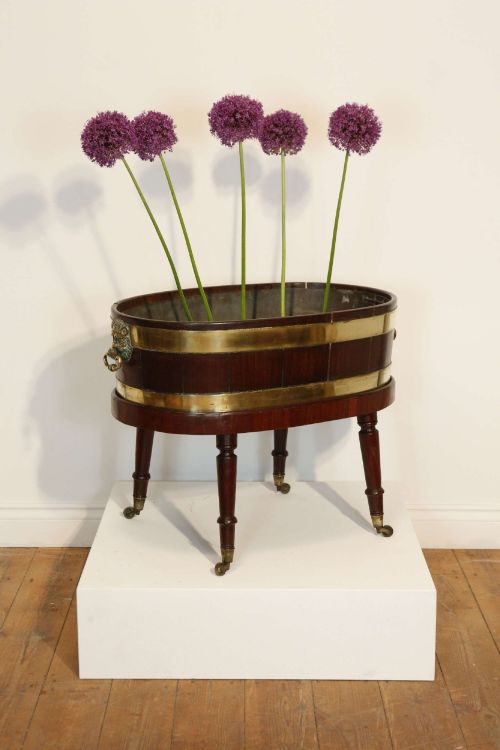
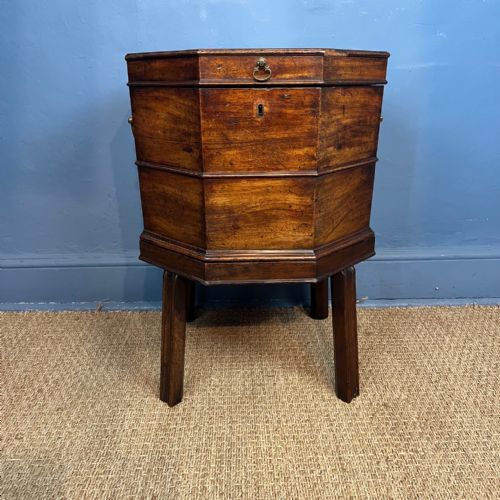
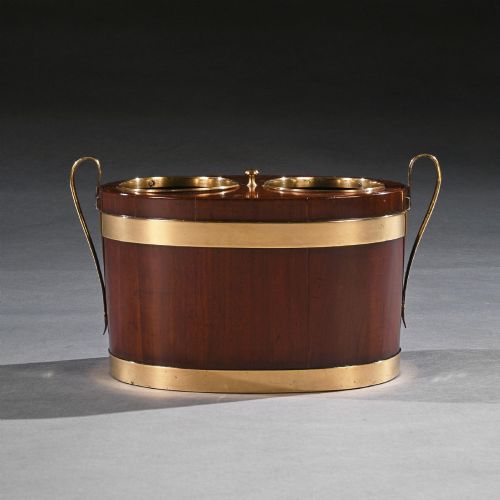
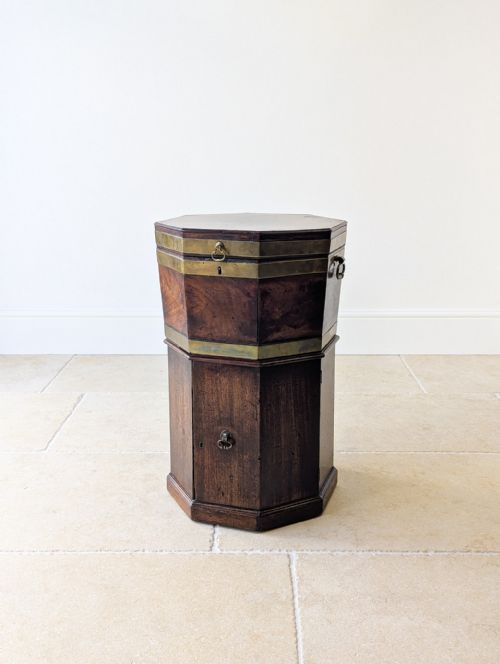
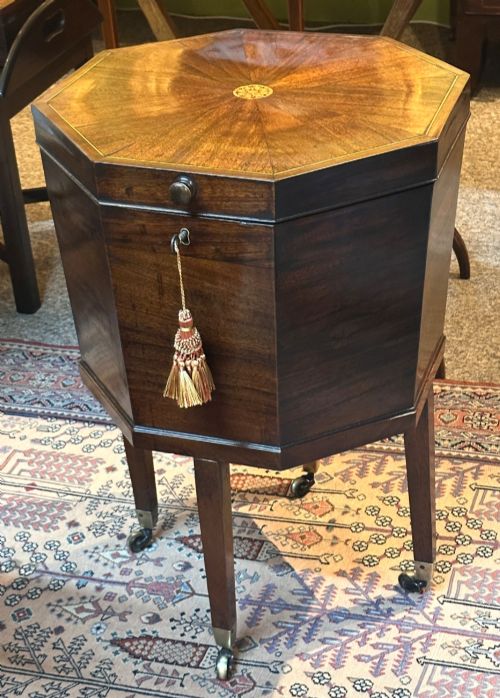
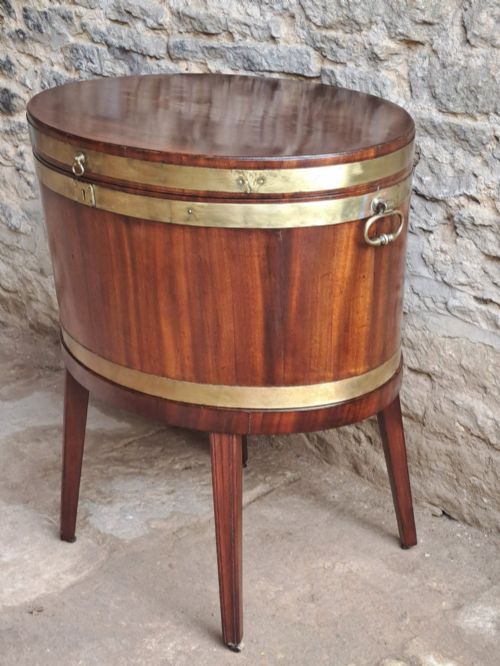
A george iii mahogany cooler typically takes the form of an oval, octagonal, or hexagonal cellarette designed to house wine bottles and ice during formal dining. These pieces originate primarily in the eighteenth century, spanning the Georgian period with occasional later revivals in the nineteenth century.
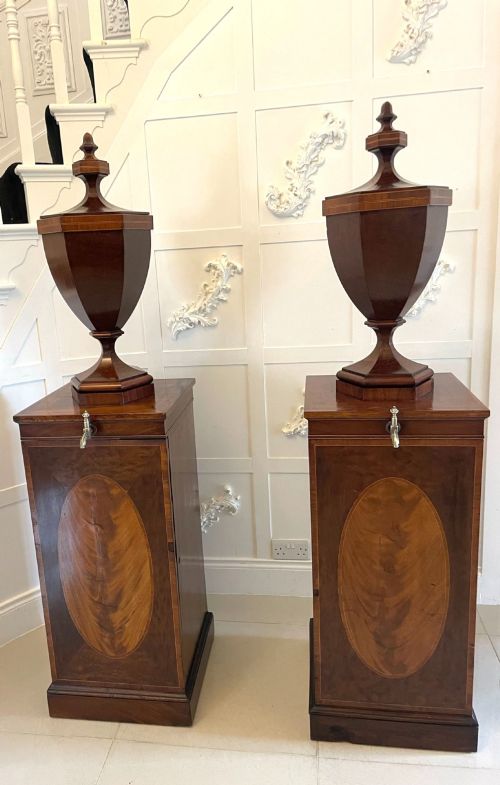
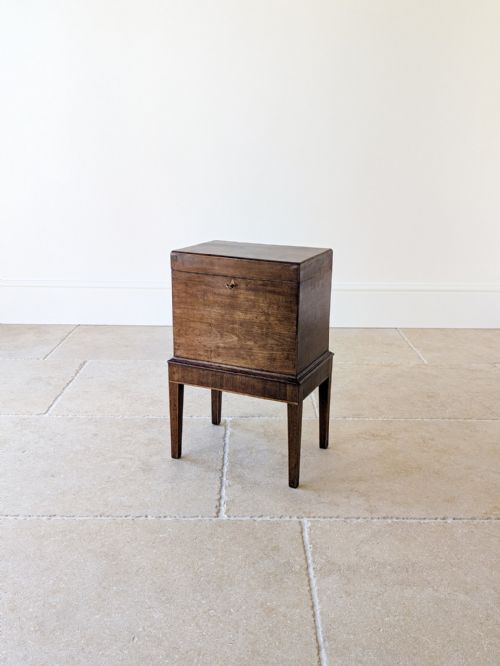
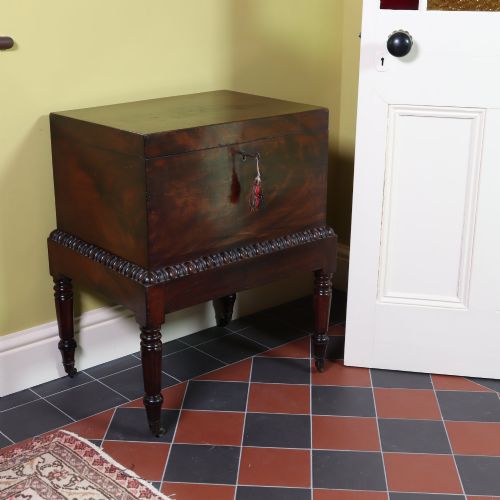
Makers fashioned these vessels as freestanding items on stands, low table-standing buckets, or grand pedestal cupboards with matching urns. The primary function was to keep wine chilled near the dining table before glass bottles took their modern place in cellars.
Materials and Construction
Craftsmen built these vessels from dense timber, predominantly utilising solid mahogany and flame mahogany veneers, sometimes accented with satinwood, boxwood inlay, and walnut. Metal bands of brass secure the staves of oval and octagonal bodies in the manner of coopered buckets.
Internal lead linings or zinc inserts held melted ice and water safely away from the polished wooden exterior. Original stands frequently match the body, incorporating tapering legs or pedestal cupboards designed to support considerable weight.
George III Mahogany Cooler Retail Price Guide 2026
Typical asking prices for george iii mahogany cooler among the pieces listed under this phrase on Sellingantiques today, from the lower quarter to the upper quarter. They describe what is for sale here now, not the wider market.
Listings feature mahogany, brass, zinc, satinwood, and boxwood inlay across octagonal, oval, and hexagonal forms dating from the eighteenth to the nineteenth century.
Judging Quality
The distinction between ordinary and exceptional examples rests upon timber selection, patination, and the crispness of brass work. Grain figures showing rich flame mahogany and warm depth elevate a piece significantly above plain timber alternatives.
Proportion and integrity of the original stand or base dictate overall desirability. Pieces retaining their metal liners, tight coopered joints, and delicate boxwood or satinwood inlay command greater attention from collectors.
Samual Norman
The George III Mahogany Cooler Glossary
- Cellarette
- A lockable container used to store wine bottles in the dining room. These vessels often feature internal dividers and lead linings.
- Brass bound
- The construction method utilising heavy metal hoops around wooden staves to hold the container together. This mirrors the technique used by coopers for barrels.
- Flame mahogany
- A decorative veneer cut from the branch junction of the tree, producing a dramatic flickering grain pattern. It appears on finer Georgian furniture.
- Pedestal and urn
- A matching architectural pairing where an elevated vessel rests upon a small cupboard base. They served ritual functions in grand dining spaces.
- Patina
- The deep surface sheen and mellow tone developed by wood over centuries of handling and polishing. It serves as an indicator of genuine age.
George III Mahogany Cooler: Frequently Asked Questions
What is a cellarette?
A cellarette is a specialised container built to hold wine bottles and ice during meals. They sit on the floor or on dedicated stands near the dining table.
Unlike modern refrigerators, these vessels relied on ice and metal linings to keep drinks cool for guests.
How were these coolers used?
Servants filled the internal lead or zinc compartments with ice and water to chill wine bottles before service. The lockable lids kept expensive vintages secure from staff and guests alike.
After dining, the heavy vessels remained in the room while the company enjoyed post-meal port and conversation.
Where should I place one?
These pieces function wonderfully as freestanding statement items in a dining room or hallway. They also serve effectively as plant holders or distinctive side tables.
Keep them away from direct sunlight and strong heat sources to protect the polished mahogany surface.
How do I spot a reproduction?
Examine the timber shrinkage, internal linings, and the method of joining the staves. Eighteenth-century pieces display genuine wear patination and hand-cut joinery.
Later Victorian revivals exhibit different construction marks and standardised brass fittings compared to Georgian originals.