

George III Dining Buffet
A george iii dining buffet brings refined eighteenth-century cabinet-making to the modern dining room, offering elegant storage and serving surfaces.
George III Dining Buffet
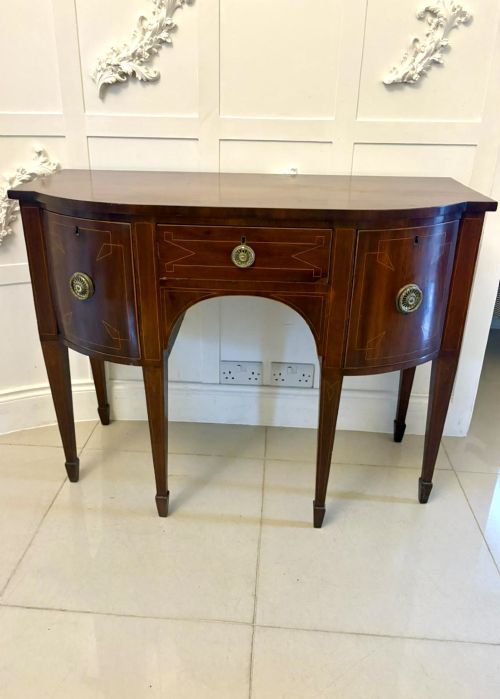
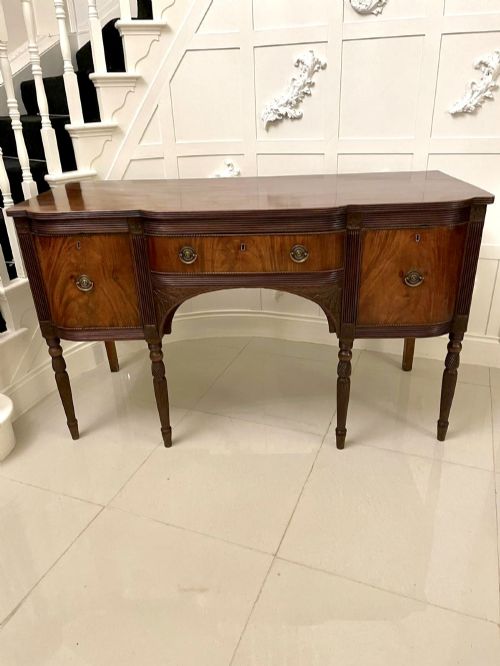
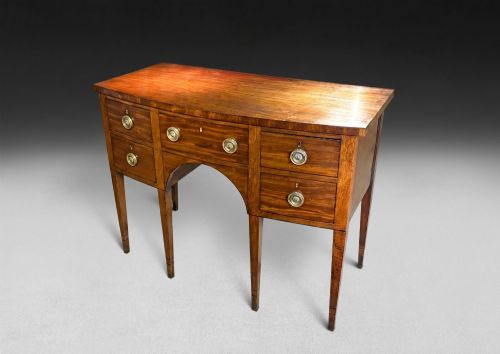
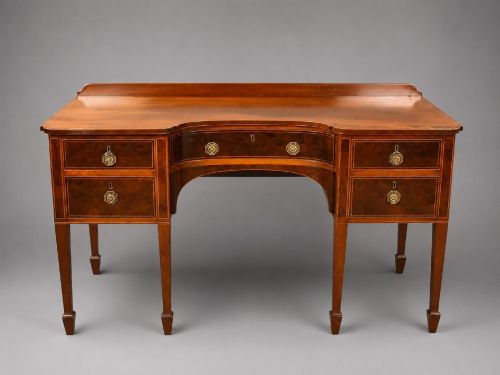
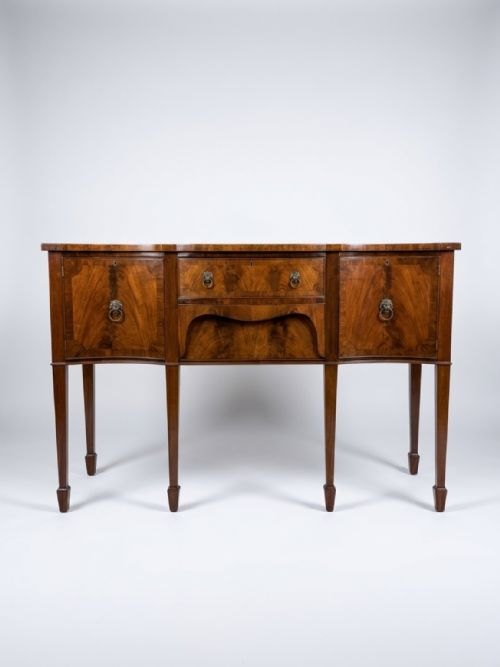
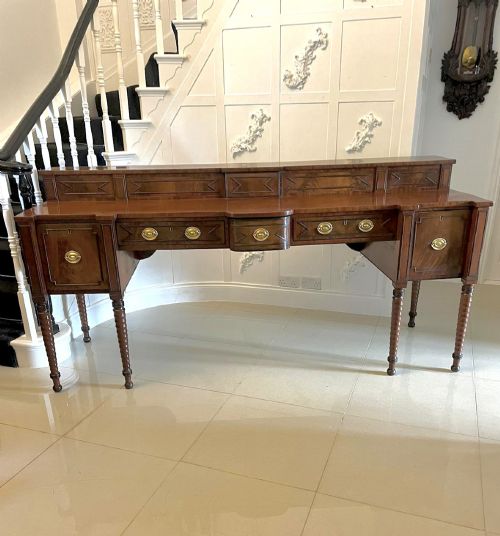
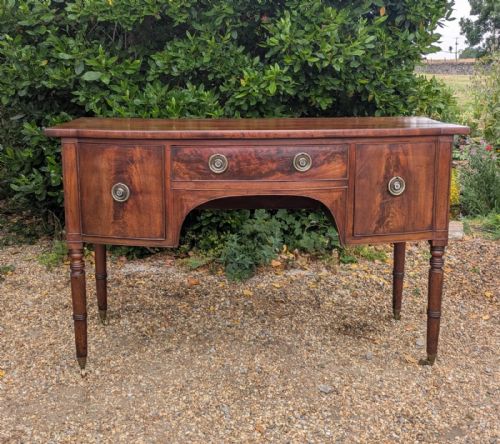
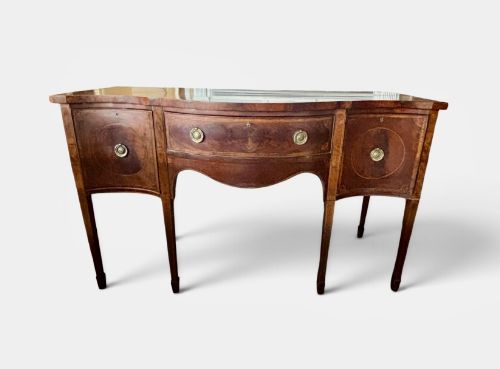
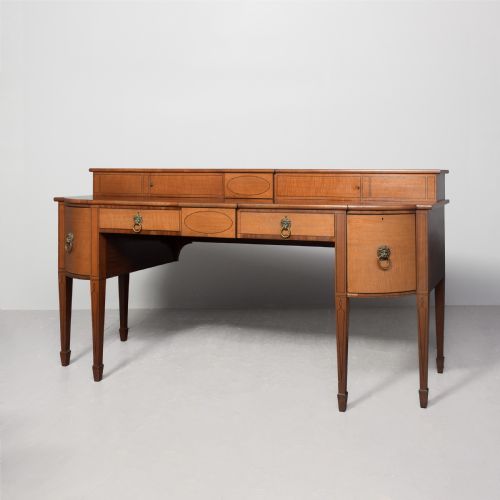
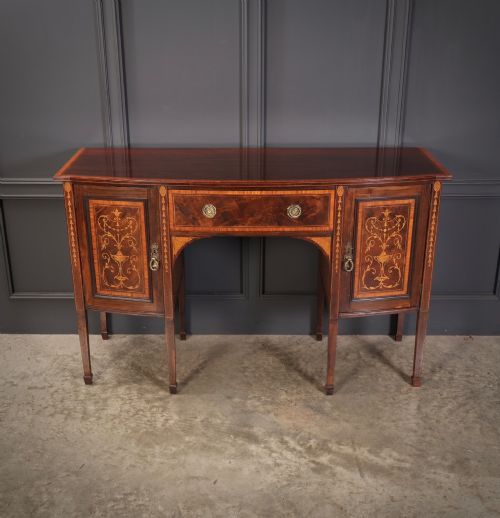
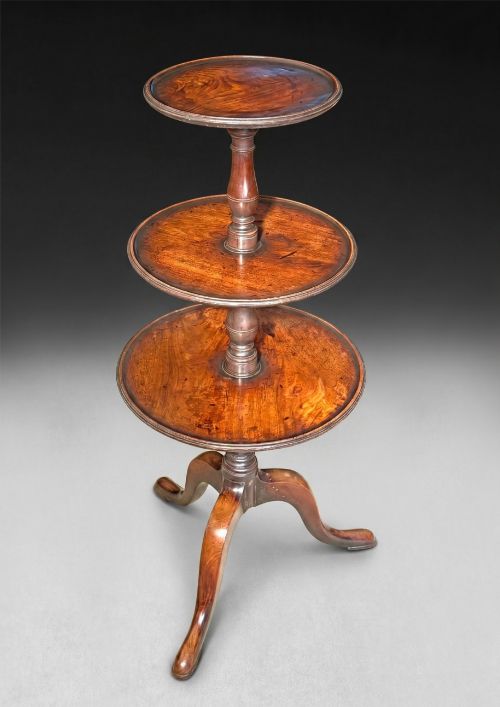
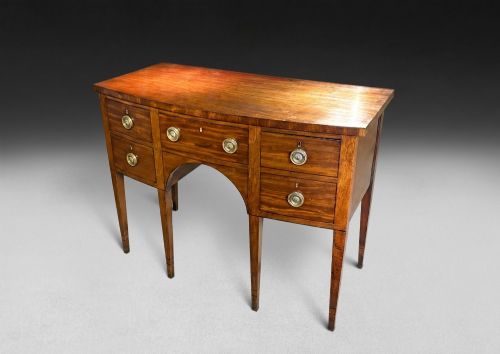
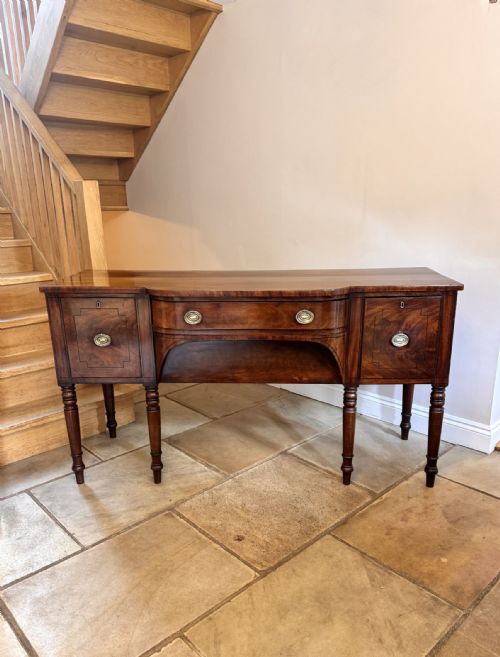
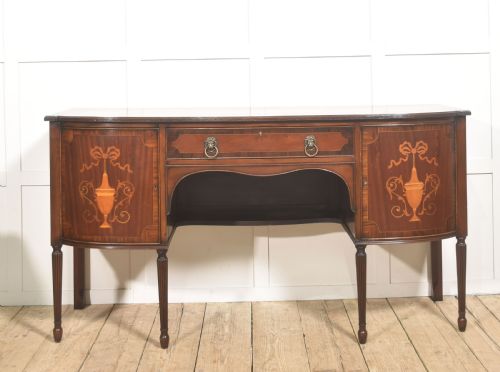
A george iii dining buffet encompasses substantial sideboards, serving tables, and dumbwaiters originating primarily from the Georgian period and the eighteenth century. Most pieces met on this page take the form of sideboards featuring straight, bow front, or serpentine profiles.
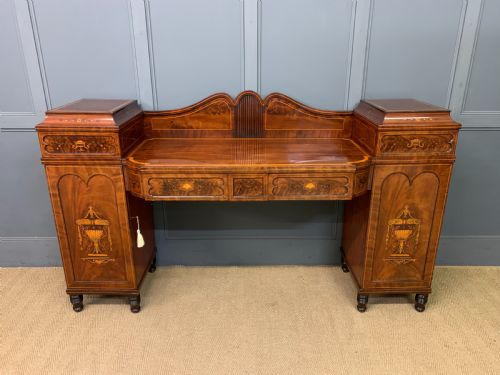
Makers of this era constructed these serving pieces to organise dining rooms efficiently while displaying silver and porcelain. Alongside standard sideboards, variations include stage-back designs, breakfront cabinets, and tiered serving furniture.
While many examples date directly to the George III reign and late eighteenth century, revival pieces from later decades also appear. These later iterations continue the classical proportions and timber traditions established by earlier cabinet-makers.
Materials and Technique
Cabinet-makers relied heavily on mahogany as the primary timber, frequently selecting figured and flame mahogany veneers to create rich surface patterns. Workshops enhanced these primary woods with contrasting stringing and borders in boxwood and satinwood.
Inlaid decoration formed a central part of the ornamentation, utilising precise boxwood inlay and marquetry techniques to trace geometric and floral motifs. Carpenters shaped solid timber and veneers around sturdy pine and oak carcases to achieve complex curves like the bow front and serpentine outline.
Listings feature eighteenth-century pieces alongside nineteenth-century revival iterations, constructed from mahogany, satinwood, and brass.
Craftsmanship and Proportion
The distinction between ordinary and superior pieces rests on the choice of timber and the precision of the cabinet-maker's joinery. Superior examples display carefully matched flame mahogany veneers and crisp, unbroken boxwood stringing along complex serpentine or bow fronts.
Proportion and structural integrity define the higher tiers of the range, where drawers operate smoothly within well-fitted carcases and original brass hardware remains intact. Lesser examples may show coarser timber selection, simpler straight-front construction, or heavy later alterations to the finish.
Lord Leverhulme
The George III Dining Buffet Glossary
- Serpentine
- A furniture front curving inward centrally and outward at the ends in a graceful 'S' shape. This profile requires immense skill from the cabinet-maker to execute successfully.
- Bow front
- A convex curved front that swells outward from the corners. It is a common feature on eighteenth-century sideboards to soften rigid room angles.
- Dumbwaiter
- A freestanding tiered piece of furniture with revolving or stationary circular trays on a central pillar. These served dining rooms by holding dishes and glasses without requiring servants.
- Stringing
- Thin inlaid lines of contrasting timber used to outline drawers, panels, and borders. Boxwood was a favourite material for this delicate decorative work.
- Breakfront
- A large piece of furniture whose central section projects forward from the flanking wings. This architectural arrangement creates depth and visual rhythm in dining spaces.
George III Dining Buffet: Frequently Asked Questions
What is a george iii dining buffet used for?
These pieces served historical dining rooms as functional storage stations for heavy china, silver, and glassware during large meals. Today, they operate effectively in modern homes as sideboards or serving consoles that anchor a dining space.
The surface tops provide ample room for serving food or displaying decorative objects, while internal cupboards and drawers conceal dining linens and table accessories.
How do I identify a george iii sideboard?
Look for characteristic eighteenth-century proportions, classical hardware, and the predominant use of solid mahogany or flame mahogany veneer. Many authentic examples incorporate subtle boxwood stringing and tapered legs rather than heavy cabriole supports.
Examination of the secondary woods inside the drawers, such as oak or pine, helps confirm the period of construction alongside the cut of the timber.
What is the difference between a sideboard and a serving table?
Serving tables from the eighteenth century typically consist of an open frame with a top and legs, designed strictly for presenting dishes during a meal. Sideboards incorporate integrated drawers and cupboards directly into the carcase for enclosed storage.
While serving tables prioritise an open, architectural appearance, sideboards offer the practical benefit of concealed storage compartments beneath the serving surface.
Where should I place a dumbwaiter?
A dumbwaiter works best beside a dining table or in the corner of a dining room where its multi-tiered trays remain easily accessible. Because these pieces are freestanding and often rotate, they function well without blocking traffic flow.
They also adapt well to sitting rooms or hallways as display surfaces for books and small decorative items.