
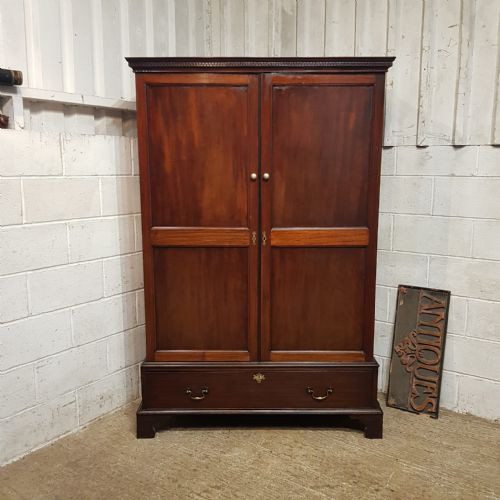


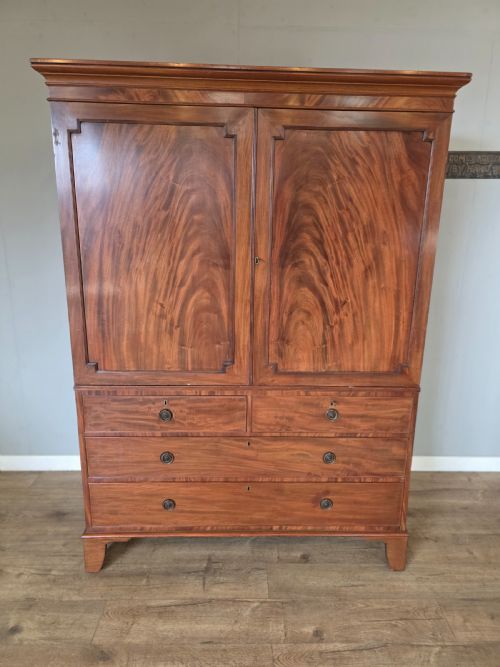


George III Clothes Wardrobe
A george iii clothes wardrobe is a substantial timber piece built to house garments and linen, offering timeless storage with classic proportions.
George III Clothes Wardrobe
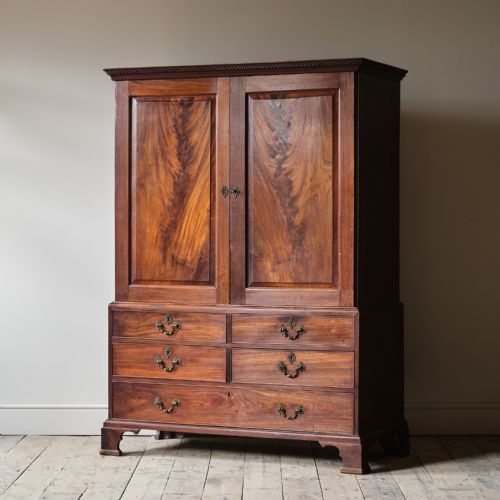
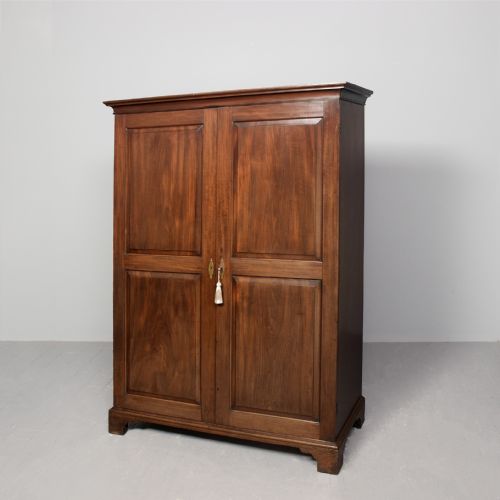
When you search for a george iii clothes wardrobe, you encounter large storage furniture primarily designed for hanging garments and housing linen. The pieces you meet on this page span several decades, frequently taking the form of linen presses, gentleman's cabinets, and double wardrobes.
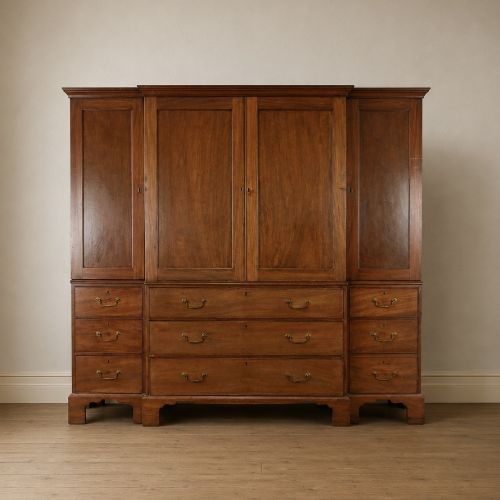
The selection ranges from breakfront models to bow-front examples, showing periods from the mid-eighteenth century onwards. Many items combine upper cupboard sections with lower chest configurations, occasionally featuring internal sliding trays behind panelled doors.
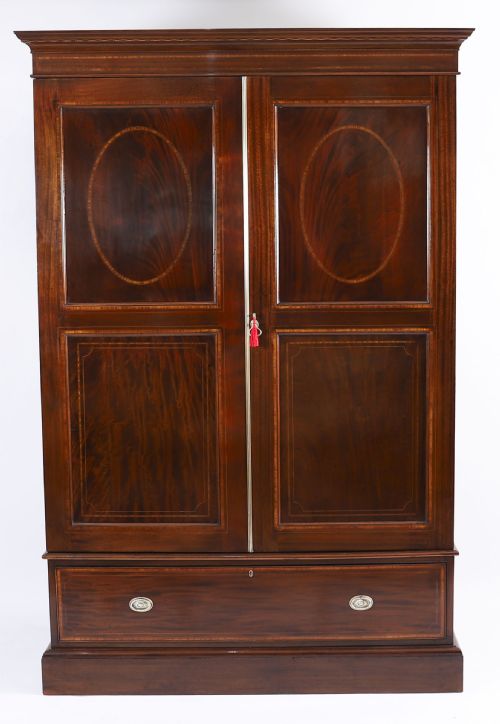
Revival pieces also appear, alongside traditional eighteenth-century examples showing regional variations. Buyers find both simple panelled units and grander cabinets finished with decorative banding.
Variations in quality
Quality rests on the selection of timber figures, where rich flame mahogany veneers and balanced satinwood banding elevate the visual weight of the cabinet. The crispness of carved details and the integration of architectural pediments differentiate standard utility presses from high-status estate pieces.
Proportion and structural harmony also dictate the standing of a piece, particularly in breakfront formats where the central section projects cleanly. The execution of internal sliding trays and the original state of brass fittings contribute further to the distinction between workshop tiers.
Period spans represented across the inventory range from the mid-eighteenth century through Georgian times to later revival eras.
Gillows
The George III Clothes Wardrobe Glossary
- Linen press
- A tall storage cabinet featuring upper doors enclosing sliding trays, sitting above a lower chest of drawers. This form was originally designed to store household linen flat before modern hanging wardrobes became standard.
- Breakfront
- A cabinet design where the central section projects forward from the flanking outer wings. This configuration adds architectural depth to large wardrobes and linen presses.
- Flame mahogany
- A veneer cut from timber taken where branches join the main trunk, producing a distinctive flickering flame pattern. Cabinetmakers used this timber on prominent door panels and drawer fronts.
- Gentleman's press
- A specialised wardrobe or cabinet equipped for male attire, combining hanging space, shirt drawers, and sliding trays. These pieces often feature satinwood banding and fine inlay.
- Swan-neck pediment
- A broken arch top terminating in outward-curving scrolls, frequently centred on a plinth or urn. This classical architectural feature crowns large eighteenth-century case furniture.
George III Clothes Wardrobe: Frequently Asked Questions
What is the difference between a linen press and a wardrobe?
A linen press traditionally contains interior sliding trays behind its upper doors for flat storage, whereas a wardrobe focuses primarily on vertical hanging space for garments.
Over time, many presses were converted into hanging wardrobes by removing the internal trays to suit modern clothing storage needs.
How do I tell an eighteenth-century piece from a revival piece?
Original eighteenth-century examples display period construction methods, timber ageing, and hand-cut dovetails within the drawer construction. Revival pieces, such as those from the nineteenth century, often exhibit heavier secondary woods and different internal finishing.
Examining the backboards, interior drawer linings, and hardware fixings provides clear indicators of the true manufacturing period.
Where should I place a large breakfront wardrobe?
These substantial cabinets require a room with adequate ceiling height and wall space to accommodate their architectural proportions safely. Placing them away from direct heat sources protects the mahogany timbers and delicate veneers from drying out.
Because of their monumental scale and weight, they often need to be positioned in principal bedrooms or dressing rooms with straightforward access.
What are sliding trays used for inside the upper section?
Sliding trays act as shallow internal shelves designed to keep folded textiles, shirts, and household linens organised and accessible. They slide out on wooden runners, allowing easy retrieval of items stored higher up in the cabinet.
Many period pieces retain these original trays, though some have been altered to accommodate modern hanging rails.