

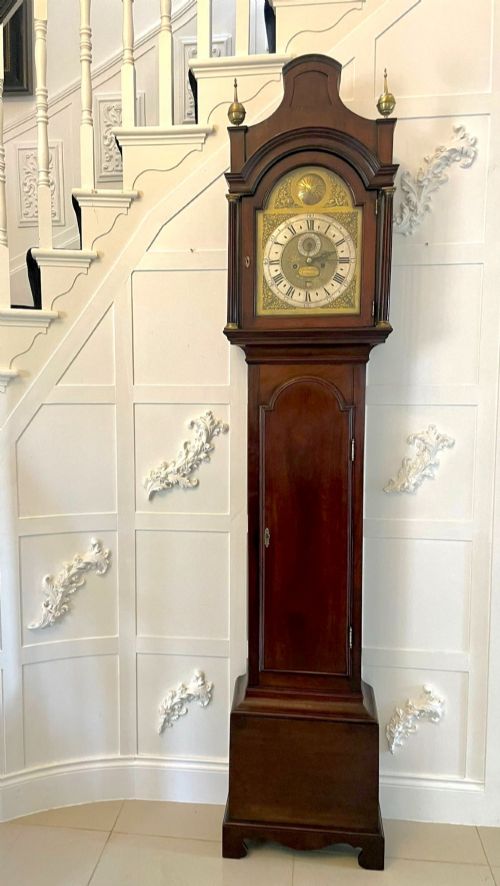
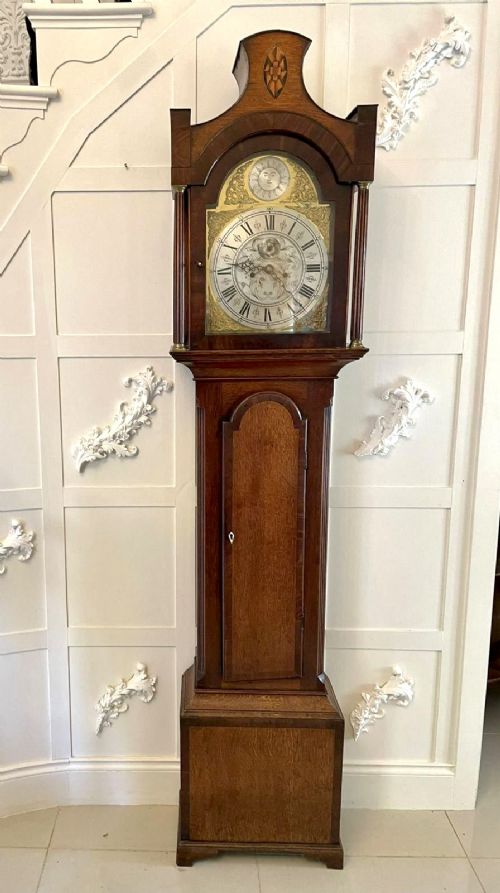
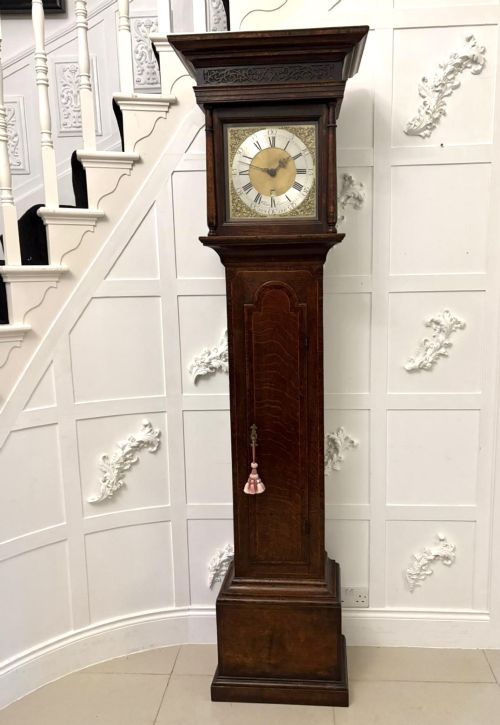


George III Brass Clock
When you search for a george iii brass clock, you seek the steady tick and polished metal of an 18th-century movement housed in mahogany or oak.
George III Brass Clock
A george iii brass clock encompasses tall floor-standing timepieces, smaller bracket models for tables or walls, and occasional wall-mounted dial clocks originating in the Georgian period. Longcase clocks dominate the selection, bringing tall wooden hoods and trunks into domestic spaces.
Makers housed brass movements inside cases fashioned predominantly from mahogany and oak, occasionally incorporating walnut, burr oak, or lacquered finishes. Brass dials and silvered metal chapters catch the light, paired with glass panels and brass fittings.
Pieces from this era date from the mid-eighteenth century into the early nineteenth century, bridging the reigns of George III and the Regency period. Regional English workshops and London makers alike contributed to this diverse group of timepieces.
How they were made
Horologists utilised brass for moving mechanical parts, dial plates, and visible mounts, pairing the metal with silvered chapter rings for legibility. Cabinets were constructed from dense timbers such as mahogany and oak, shaped with carvings, veneers, or inlay.
Movements relied on weights or springs to drive mechanisms like verge escapements, eight-day workings, and musical strikes. Glass protected fragile dials and allowed glimpses of swinging pendulums or revolving moon phases.
George III Brass Clock Retail Price Guide 2026
Typical asking prices for george iii brass clock among the pieces listed under this phrase on Sellingantiques today, from the lower quarter to the upper quarter. They describe what is for sale here now, not the wider market.
Some moon dials paint the lunar phases with cheerful painted faces that peer out from the arch of the clock.
What varies in quality
The refinement of the cabinetwork separates standard domestic timepieces from masterworks by prominent London makers. Crispness in dial engraving, the complexity of musical or moon-phase complications, and the preservation of original timber surfaces define the higher tier.
Proportion and material selection dictate overall merit, with figured mahogany and burr oak standing above plain vernacular pine or secondary woods. The integrity of the brass movement and the balance of the case proportions determine lasting worth.
Charles Shuckburgh·Francis Perigal·James Tregent·Dwerrihouse and Carter·John Pollard·Matthew and Thomas Dutton·Williams·John Fletcher·Bentley·Joseph Lum·James Maitland·John Taylor
The George III Brass Clock Glossary
- Longcase clock
- A tall floor-standing clock, also known as a grandfather clock, featuring a weighted movement housed in a wooden trunk. These pieces dominate the domestic horology of the Georgian era.
- Bracket clock
- A portable table or shelf clock, historically designed to sit on a wall bracket. They often feature carrying handles and glass panels.
- Silvered metal
- A thin layer of silver applied to brass dial plates to create a contrasting, readable surface for numerals and inscriptions. This technique enhances the clarity of the face.
- Verge escapement
- An early mechanical regulating mechanism used in clocks and watches to control the release of power. It creates the characteristic rapid tick of period movements.
- Moon dial
- A secondary rotating disk on a clock face that tracks the phases of the lunar cycle. Collectors prize these for their decorative complexity.
George III Brass Clock: Frequently Asked Questions
How do I wind an eight day clock?
Eight day movements require winding once a week using a matching key inserted into the winding holes on the dial face. Care must be taken not to overwind the springs or pull weights too rapidly.
Ensuring the pendulum hangs evenly after winding keeps the beat steady and accurate.
Where should I place a longcase clock?
Tall timepieces need a stable, dry interior wall away from direct sunlight, central heating vents, and damp floorboards. Placing them on solid foundations prevents the wooden case from warping and helps the pendulum swing true.
Securing the upper trunk to a wall anchor provides safety in rooms with children or pets.
How can I tell if the dial is original?
Original brass dials show natural patination, hand-engraved lettering, and mounting fixings that align properly with the wooden hood. Later replacements often feature machine stamping or mismatched maker signatures.
Checking the style of the spandrels in the corners helps confirm whether the face belongs to the period of the movement.
What is the difference between a bracket clock and a longcase clock?
Bracket clocks are compact, portable timepieces designed for tables, shelves, or wall brackets, driven by spring-wound movements. Longcase clocks stand on the floor and utilise falling weights suspended in the trunk.
While bracket clocks offer versatility in placement, longcase clocks serve as prominent architectural furniture in a room.