
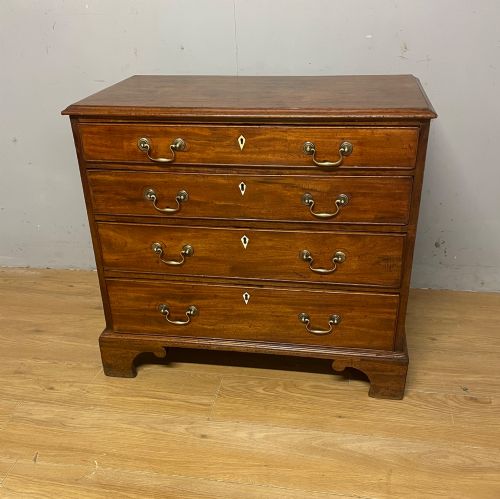
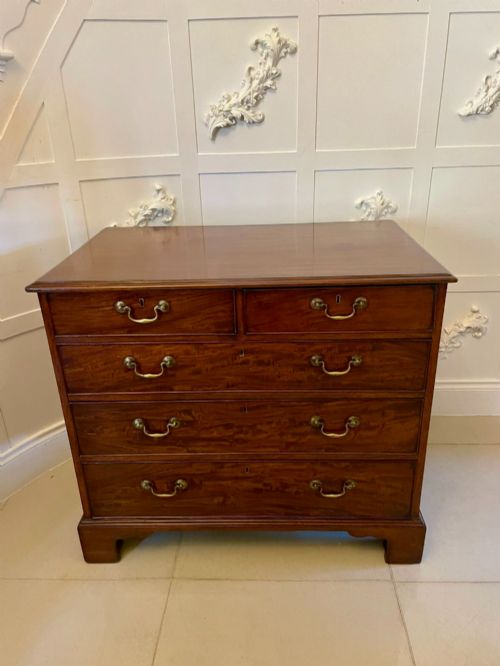
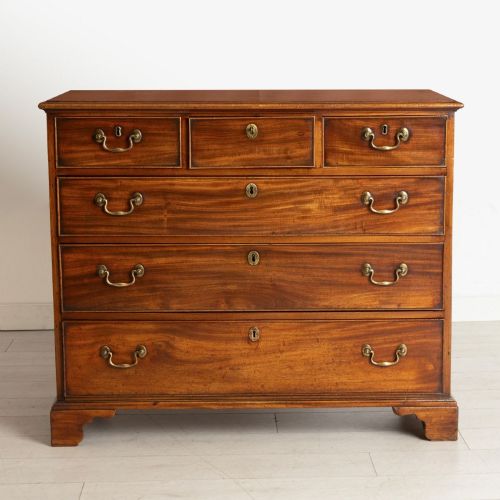
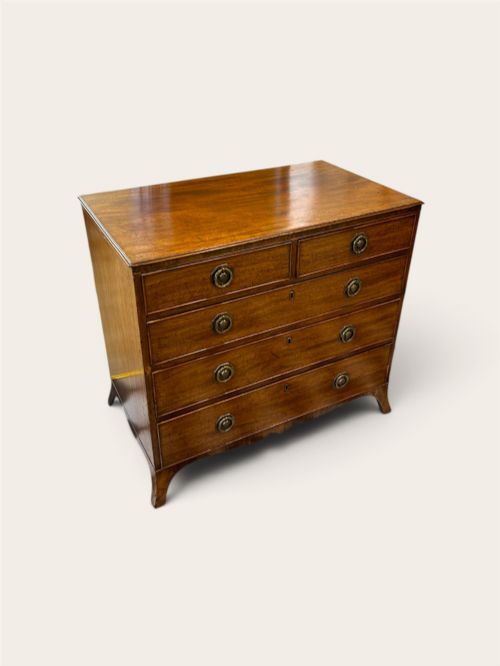
George III Bracket Foot Chest
A george iii bracket foot chest brings substantial Georgian cabinet-making into a room, offering practical storage through disciplined proportion and timber grain.
George III Bracket Foot Chest
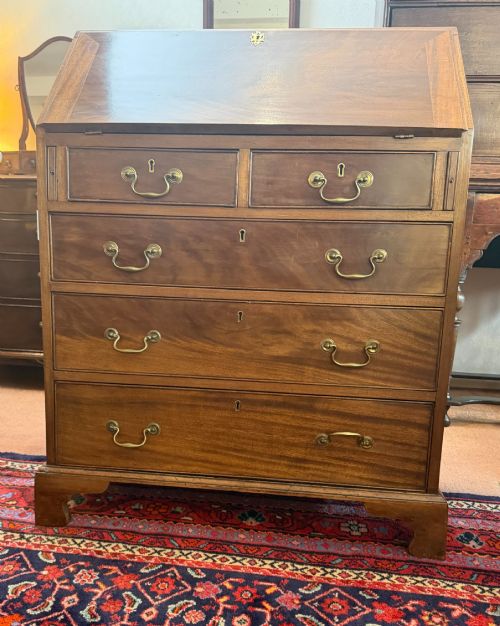
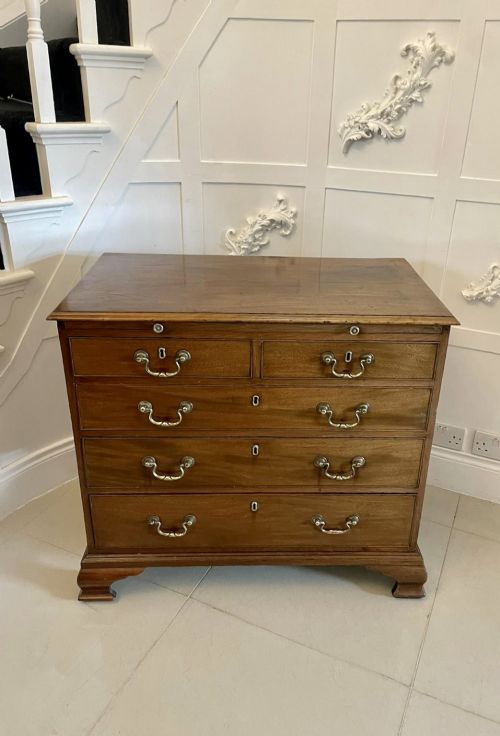
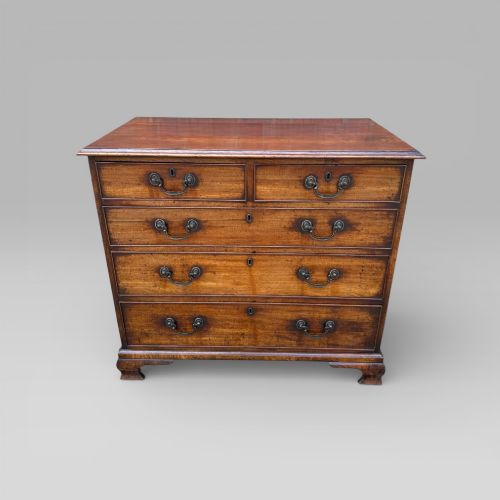
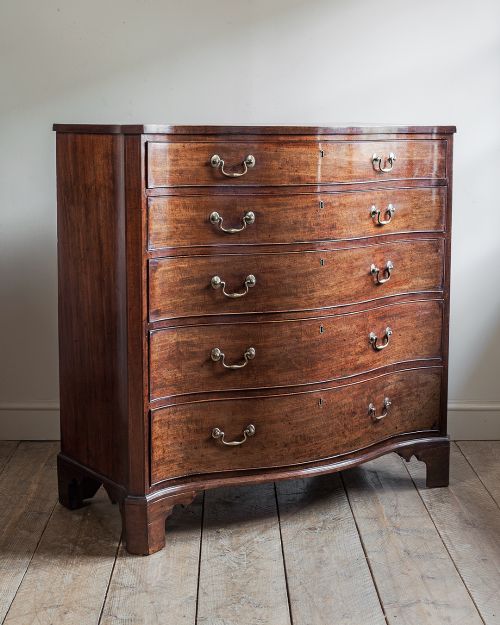
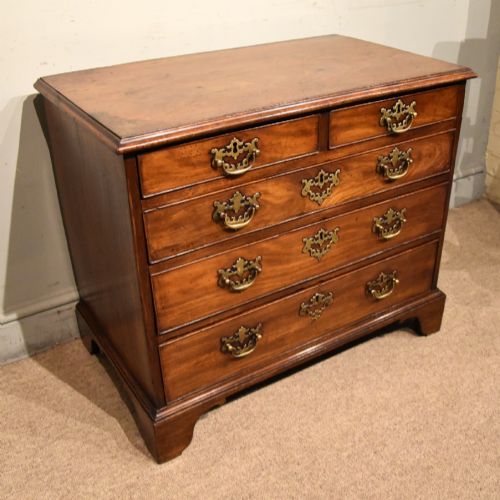
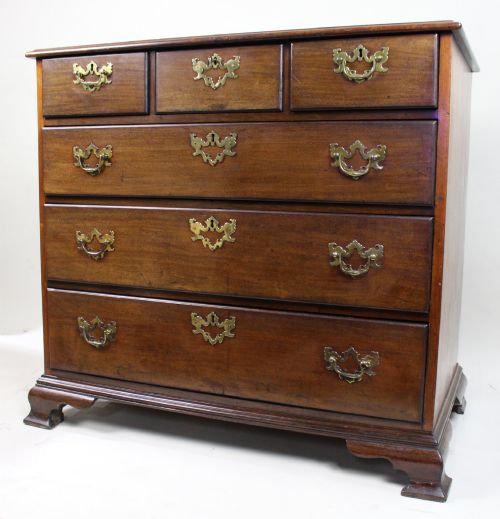
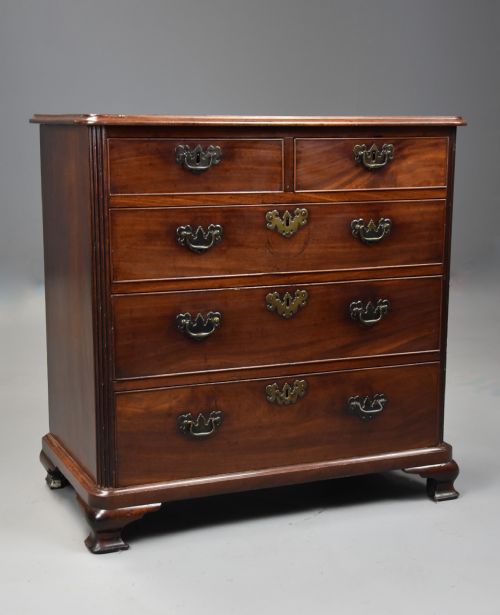
A george iii bracket foot chest is a case piece designed for domestic storage, most frequently encountered in mahogany across this selection. These items emerge primarily from the eighteenth century and the broader Georgian period, often taking the form of a chest of four or five drawers.
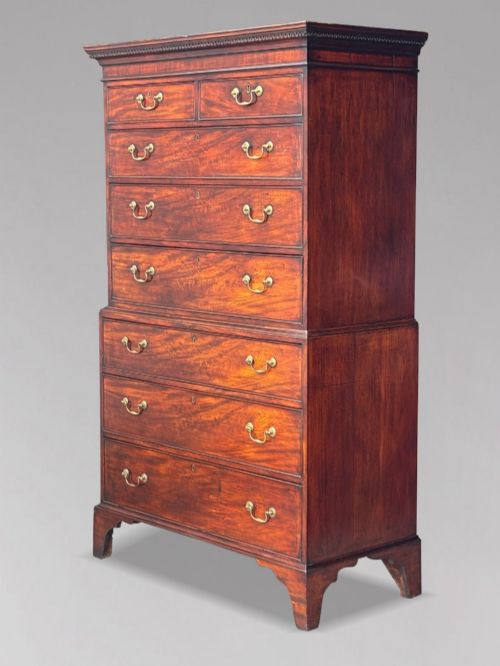
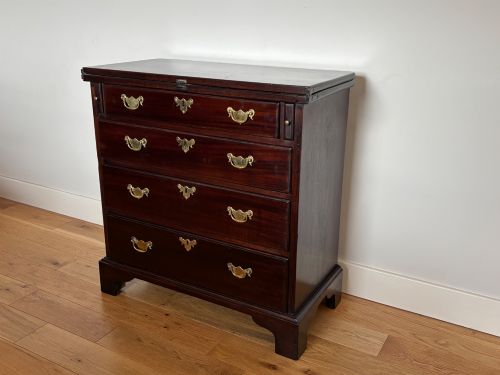
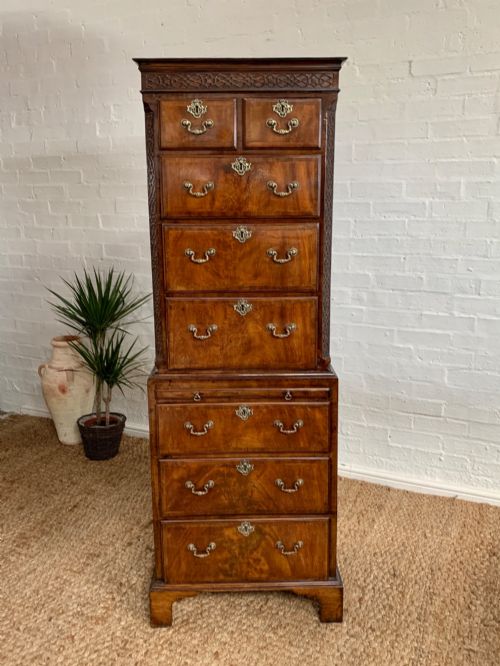
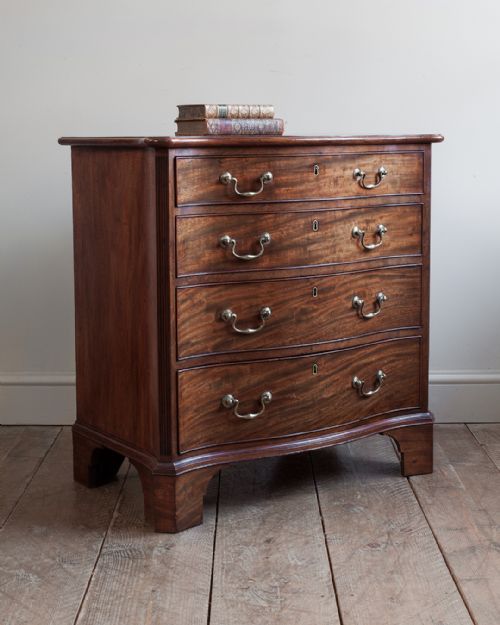
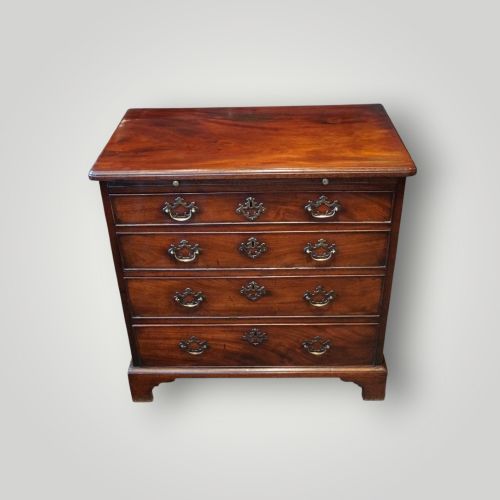
Makers produced variations including smaller proportions, bachelor chests fitted with sliding shelves, serpentine fronts, and chests on chests or tallboys. Oak and pine frequently appear as secondary timbers used for drawer linings and carcase backs, while burr walnut and yew also feature.
The defining base configuration relies on bracket feet, which support the rectangular or shaped body without heavy protruding legs. Buyers encounter standard four-height chests alongside more ambitious forms such as bureau desks.
Materials and construction
Cabinet-makers utilised dense timbers like mahogany, walnut, and yew for primary visible surfaces, exploiting the natural figure of curl mahogany and burr grain. Secondary woods such as oak and pine provide structural stability inside the carcase and drawer frames.
Brass hardware, including handles and key escutcheons, fastened the drawers while adding metallic contrast to the dark timber. Drawer dividers and carcase frames relied on traditional joinery methods like dovetailing to secure the corners and withstand daily use.
The inventory records functional variations including bachelor chests with slides, serpentine fronts, and multi-tier chests on chests.
Judging timber and proportion
Quality rests heavily on the selection of timber, where tightly figured curl mahogany or burr walnut elevates a piece far above plain stock boards. The crispness of the bracket feet and the subtlety of the moulded edge on the top define the maker's hand.
Proportion dictates desirability, with smaller dimensions and narrow footprints commanding greater attention than standard utilitarian chests. The preservation of original brass handles and smooth drawer movement without excessive timber shrinkage completes the measure of a superior example.
J Moorcroft
The George III Bracket Foot Chest Glossary
- Bracket foot
- A corner foot shaped like a bracket, supporting the base of a case piece with mitred mitre joints. It often takes a shaped or ogee profile on better examples.
- Brushing slide
- A pull-out shelf located above the top drawers, traditionally used for writing or brushing clothes. It slides flush into the carcase when not in use.
- Serpentine front
- A furniture front curving outward in the centre and inward at the ends. This undulating shape requires advanced woodworking skill to construct.
- Chest on chest
- A tall storage unit formed by stacking a smaller chest of drawers directly on top of a wider base chest. It is also known as a tallboy.
- Batchelor chest
- A compact chest of drawers equipped with a folding top or a sliding shelf. These pieces served multi-functional purposes in smaller bedchambers.
George III Bracket Foot Chest: Frequently Asked Questions
What is a brushing slide used for?
The pull-out shelf served as a convenient surface for dressing tasks or writing letters without opening the main drawers. It remains a hallmark of better domestic chests.
Cabinet-makers integrated these boards just beneath the top moulding so they remained discreetly hidden until pulled forward.
How do I spot a serpentine front?
A serpentine front curves outward in the middle and sweeps inward toward the corners, creating an undulating wave effect across the drawer faces. This profile required exceptional skill from the carpenter.
Straight-fronted chests outnumber these shaped examples significantly in daily commerce.
Where were these chests placed?
Bedchambers and dressing rooms housed these pieces for storing linen, garments, and personal valuables securely behind locked drawers. Their modest depth allowed them to fit neatly against chamber walls.
Later periods saw them move into reception rooms as decorative storage furniture.
Are small proportion chests genuine?
Small proportion chests were built for smaller rooms or dressing spaces, featuring reduced widths and shallow depths while retaining full functionality. Makers scaled down the entire design rather than simply cutting down standard carcases.
These compact versions attract strong interest from modern collectors.