

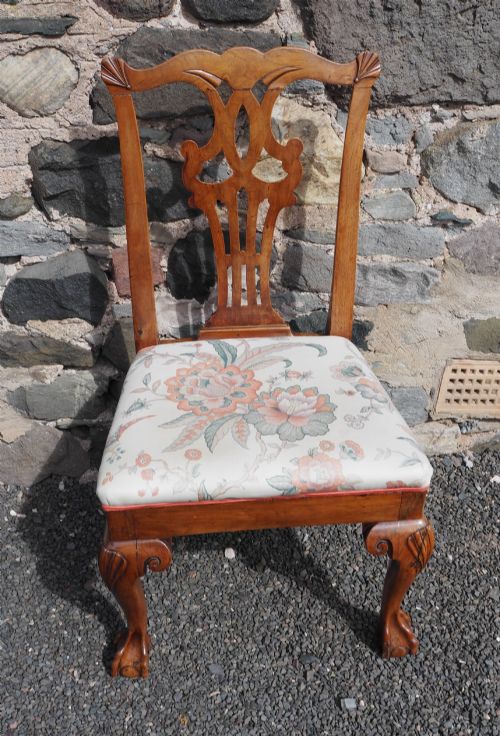
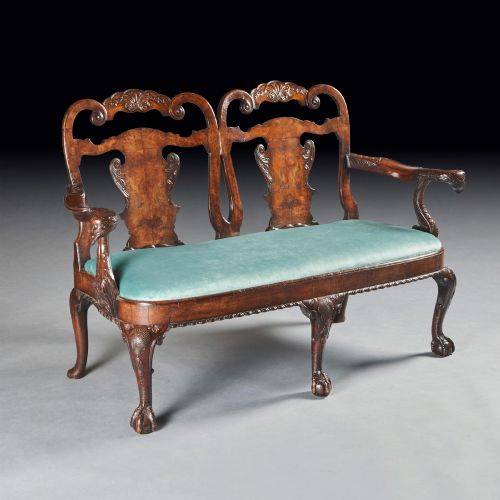
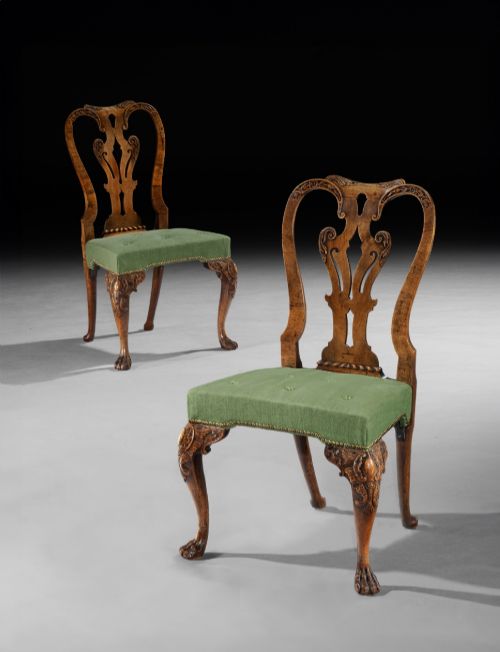
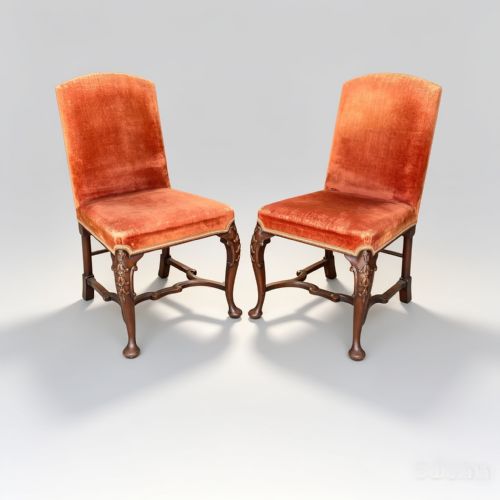
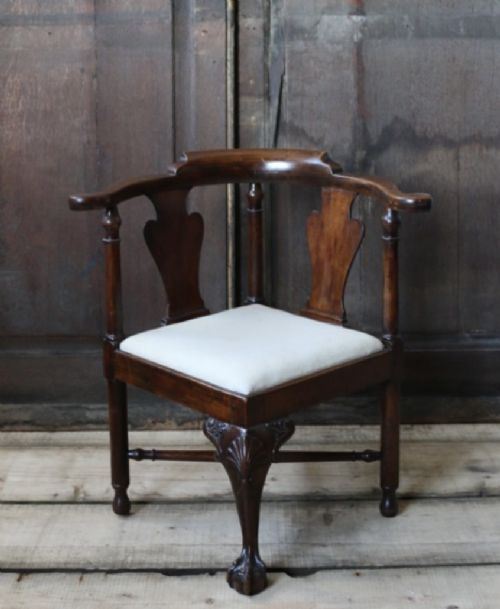


George II Walnut Chair
A genuine george ii walnut chair carries substantial timber and carved detail, providing a focal point of period proportion.
George II Walnut Chair
A george ii walnut chair is a seating form originating in the eighteenth century or later reproduced in revival periods. These pieces appear as single side chairs, armchairs, wing chairs, and occasionally larger dining sets or settees.
Regional variations also emerge, including Irish examples with distinct proportions and Scottish interpretations of the form. Side chairs and dining sets dominate the offerings, matched by library armchairs and corner chairs.
How they were made
The construction relies heavily on solid walnut, red walnut, and veneered burr walnut applied to supportive frames. Carving is executed directly into the timber to form shell motifs, scrollwork, and cabriole legs.
Upholstery techniques involve traditional stuffing secured beneath textile coverings such as velvet, damask, fabric, and tapestry. Frame joints utilise period joinery methods to sustain the weight and stress placed upon dining and armchairs.
George II Walnut Chair Retail Price Guide 2026
Typical asking prices for george ii walnut chair among the pieces listed under this phrase on Sellingantiques today, from the lower quarter to the upper quarter. They describe what is for sale here now, not the wider market.
One unexpected variant recorded in the archive is a hand chair, offering a literal grasp on seating design.
What varies in quality
The depth and crispness of the carved ornament distinguish superior examples from simpler production. Original eighteenth-century timber surfaces display a patination developed through centuries of handling, differing from the more uniform appearance of later revival pieces.
Proportion and scale dictate the visual success of the chair, with well-balanced cabriole legs and supportive arm designs commanding greater appreciation. The integrity of the underlying walnut frame and the choice of facing veneers determine the structural endurance.
The George II Walnut Chair Glossary
- Cabriole leg
- A furniture leg that bends outward in a convex curve and tapers inward to a foot, typical of eighteenth-century seating. This form echoes animal limbs and provides structural support without heavy stretchers.
- Red walnut
- A dense variant of walnut timber valued for its distinct reddish hue and fine grain. Cabinetmakers utilised this material for high-status eighteenth-century seating.
- Burr walnut
- Timber taken from the warted growths of a walnut tree, yielding highly decorative swirling grain patterns. Veneers of this material decorate the splats and frames of select chairs.
- Wing chair
- An armchair with side panels attached to the back to shield the sitter from drafts. These large seats frequently feature upholstered bodies raised on walnut legs.
- Corner chair
- A seating form designed to fit into room angles, featuring a diagonal seat plan and a curved back rail supported on posts. These pieces serve as writing or desk chairs.
George II Walnut Chair: Frequently Asked Questions
How do I date a walnut chair?
Dating relies upon examining the timber species, joinery methods, and the wear patterns present on the underside of the frame. Eighteenth-century pieces exhibit hand-cut joints and distinct surface patination.
Revival pieces from the nineteenth century utilise machine-sawn elements and different secondary woods. Comparing the carved motifs to documented period examples helps confirm the era of manufacture.
Are these chairs suitable for daily dining?
Original eighteenth-century dining sets require careful use and professional conservation to support daily seating requirements. Their historic joints and timber frames benefit from gentle handling.
Revival dining chairs from later centuries often provide greater structural robustness for regular use around a dining table. Consulting the dealer about the internal frame condition ensures the seating meets practical needs.
What is the difference between side chairs and armchairs?
Side chairs are built without armrests, designed to be tucked neatly around a dining table or placed against a wall. Their compact footprints suit auxiliary seating.
Armchairs incorporate structural arm supports, offering a wider seat intended for lounging or desk work. Both forms share the characteristic walnut framing and carved cabriole legs of the period.
How should I care for antique walnut furniture?
Maintain a stable indoor humidity level to prevent the walnut timber and veneers from drying out or splitting. Avoid placing the furniture near direct heat sources or strong sunlight.
Clean the surfaces with a soft, dry cloth and apply appropriate conservation wax sparingly. Professional upholstery care preserves historic textiles like damask, velvet, and tapestry.