


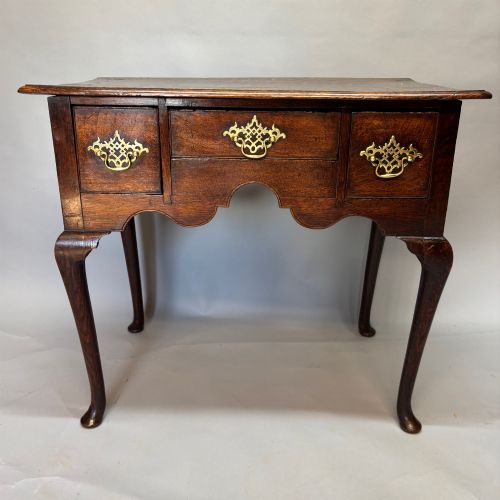
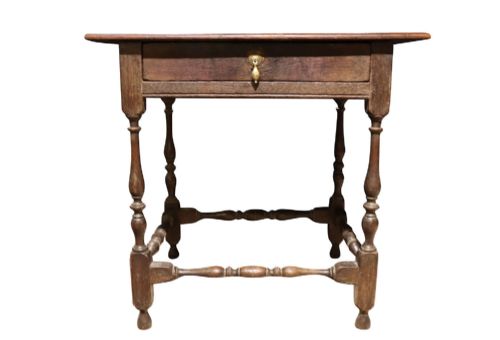
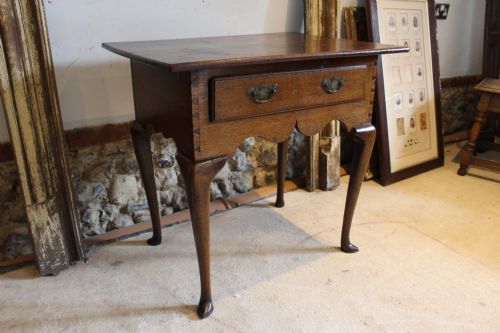
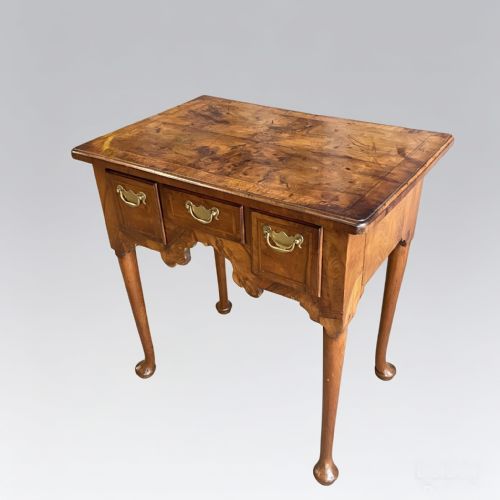


George II Oak Side Table
A george ii oak side table brings sturdy domestic presence to a hallway or study.
George II Oak Side Table
A george ii oak side table is a utilitarian surface from the eighteenth century, built for everyday household tasks. These pieces frequently appear in forms such as lowboys, dressers, and compact writing desks.
The versions most commonly met on this page span the georgian era, utilising native timbers like oak alongside walnut and cherrywood. Their straightforward proportions suit modern interiors just as well as traditional rooms.
Makers of the period prioritised functional drawer arrangements and robust joints over excessive ornament. Each piece reflects the honest cabinet-making standards of mid eighteenth-century workshops.
Construction and materials
Carpenters constructed these tables using solid timber frames with pegged joints to ensure lasting stability. Oak provides the primary structural strength, while walnut occasionally appears for fine surface veneers.
Drawer construction typically involves hand-cut dovetails and side-hung runners designed for daily use. Brass drop handles or pulls complete the facade, secured through original boreholes.
George II Oak Side Table Retail Price Guide 2026
Typical asking prices for george ii oak side table among the pieces listed under this phrase on Sellingantiques today, from the lower quarter to the upper quarter. They describe what is for sale here now, not the wider market.
Side tables and lowboys from the georgian period frequently incorporate single or triple drawer configurations.
Assessing quality
Quality rests on the selection of timber and the crispness of the joinery rather than elaborate decoration. Finer examples retain their original surface patination and untouched drawer linings.
Proportions and leg profiles separate standard utilitarian items from more considered regional pieces. Tables featuring feather banding or walnut cross-banding represent higher tiers of eighteenth-century craftsmanship.
The George II Oak Side Table Glossary
- Lowboy
- A small table with one or more drawers, commonly used as a dressing table or side table in the eighteenth century. These items stand on slender legs and often feature shaped aprons.
- Feather banding
- An inlay technique where thin strips of veneer are arranged in a herringbone pattern around drawer perimeters. This decorative detail frames the timber grain.
- Dovetail
- A joint formed by interlocking wedge-shaped fingers, securing drawer corners without metal fasteners. Hand-cut examples indicate traditional period construction.
- Patina
- The surface sheen and colour developed by timber through age, handling, and wax polishing. A desirable finish shows genuine historical depth.
George II Oak Side Table: Frequently Asked Questions
What is a lowboy?
A lowboy is a small, low table equipped with drawers, originating in the eighteenth century. They served various domestic purposes from writing desks to dressing tables.
Their compact scale makes them adaptable for use as lamp tables or hallway furniture in contemporary homes.
How do I date an 18th-century table?
Dating relies on examining construction methods, timber species, and handle hardware. Hand-cut dovetails and pegged joints point directly to eighteenth-century workshop practices.
Changes in leg design and timber availability across the georgian era also help narrow down the decade of manufacture.
Where should I place a side table?
These tables fit naturally in hallways, living rooms, or studies where surface space is required without a heavy footprint. Their shallow depth keeps walkways clear.
Pair them with a simple mirror or lamp to highlight the grain of the oak or walnut top.
Are walnut and oak tables cleaned differently?
Both timbers respond best to gentle dusting and occasional applications of traditional beeswax rather than modern silicon sprays. Regular waxing nourishes the dry wood and preserves the surface sheen.
Keep these tables away from direct heat sources to prevent the timber from splitting.