
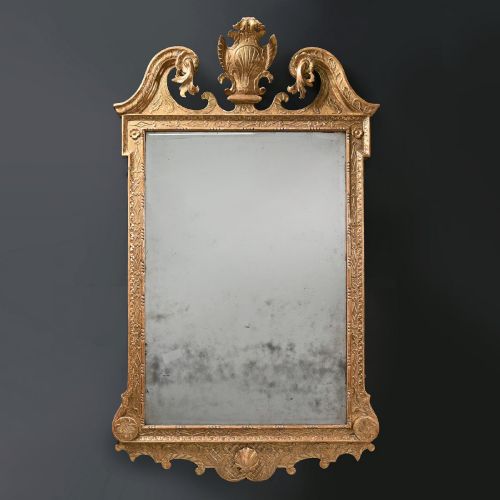

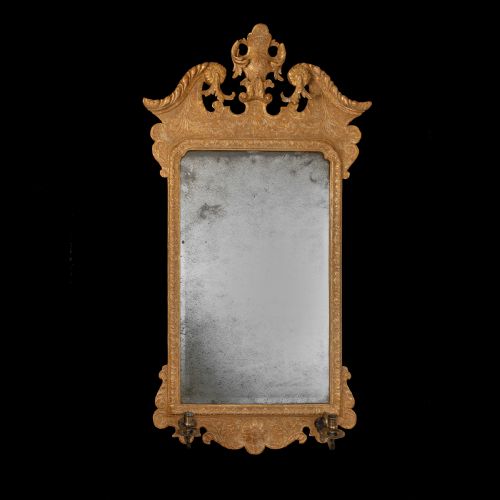


George II Carved Mirror
A george ii carved mirror brings architectural presence to a room through deep mouldings, rich gilding, and figured walnut timbers.
George II Carved Mirror
A george ii carved mirror spans substantial architectural wall pieces, pier glasses, and smaller dressing table mirrors intended for domestic use. The pieces on this page divide between eighteenth-century originals and later nineteenth-century revival interpretations.
Wall mirrors and overmantels dominate the selection alongside toilet glasses framed in walnut or giltwood. Many examples employ parcel-gilt details, carving, and fretwork panels that reflect mid-eighteenth-century Palladian or rococo taste.
How they were made
Cabinetmakers constructed these frames using dense hardwoods like walnut and mahogany, often applying layers of gesso to carve intricate motifs before adding gold leaf. Giltwood surfaces combine carved wooden elements with prepared chalk grounds to hold crisp botanical and scroll details.
Parcel-gilt finishes leave areas of polished wood exposed alongside gilded highlights to create tonal contrast. Original glass plates frequently show traditional silvering methods and minor age characteristics within heavy wooden rebates.
Some dressing glasses retain tiny original drawers once hidden away to store secret love letters and small trinkets.
What varies in quality
Depth of carving and sharpness in the gesso ornamentation define the ambition of the original maker, separating standard frames from important works. Crisp execution in architectural pediments and gilded scrollwork indicates superior workshop production.
The integrity of the timber and the survival of original mirror plates influence the character of each piece. Surviving gilding layers and undisturbed structural joints maintain the visual weight intended by the designer.
Benjamin Goodison·William Kent
The George II Carved Mirror Glossary
- Gesso
- A plaster-like mixture applied to wood frames to provide a smooth surface for carving and gilding. Artisans built up layers to achieve high relief before applying gold leaf.
- Parcel-gilt
- A decorative treatment where specific areas of a wooden frame receive gold leaf while the underlying wood grain remains visible. This technique highlights carved mouldings against dark walnut or mahogany.
- Palladian
- An architectural style influencing mid-eighteenth-century design with classical symmetry, heavy cornices, and structured pediments. These mirrors often incorporate architectural tabernacle frames.
- Pier glass
- A tall mirror designed specifically to hang on the wall space between windows. Such pieces frequently matched console tables placed underneath.
- Fretwork
- Openwork patterns cut from thin boards using a fine saw, commonly seen on eighteenth-century walnut dressing mirrors. This technique produced light, geometric, or scrolling silhouettes.
George II Carved Mirror: Frequently Asked Questions
How do I identify an eighteenth-century original?
Examine the construction methods behind the frame, the composition of the gesso layers, and the backing boards. Eighteenth-century pieces typically display hand-cut joinery and period-specific timber shrinkage.
Original glass plates often exhibit minor distortions, foxing, and old silvering techniques that differ from modern float glass production. Comparing the carving depth against documented workshop examples helps confirm the period.
What is a parcel-gilt finish?
Parcel-gilt describes objects decorated with gold leaf on selected portions while other areas display polished natural wood. This method creates contrast between the dark grain of walnut or mahogany and bright metallic highlights.
Craftsmen used this technique on mid-eighteenth-century frames to emphasise carved mouldings and architectural details without fully gilding the entire surface.
How do I care for antique gilded surfaces?
Dust gilded and carved frames gently using a dry, soft artist brush or ostrich feather duster. Avoid applying commercial cleaning sprays, water, or chemical solvents directly to the gesso and gold leaf.
Maintain stable room humidity levels to prevent the underlying wood from expanding or contracting, which can cause the gesso layer to crack and flake.