
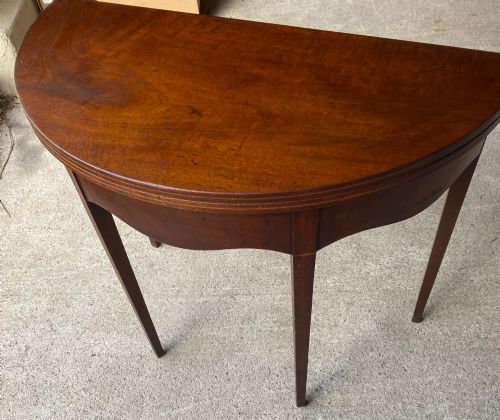
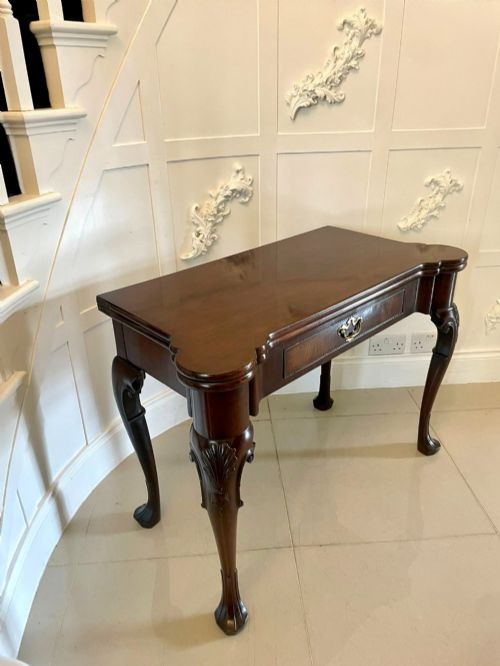
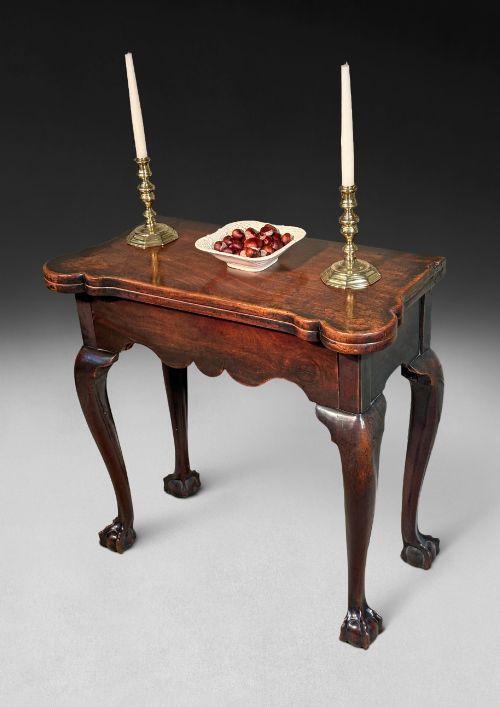
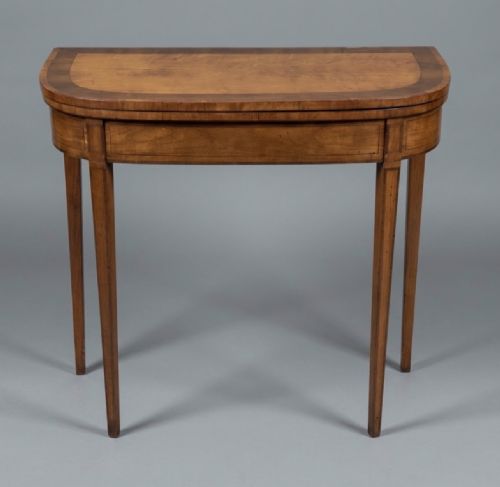
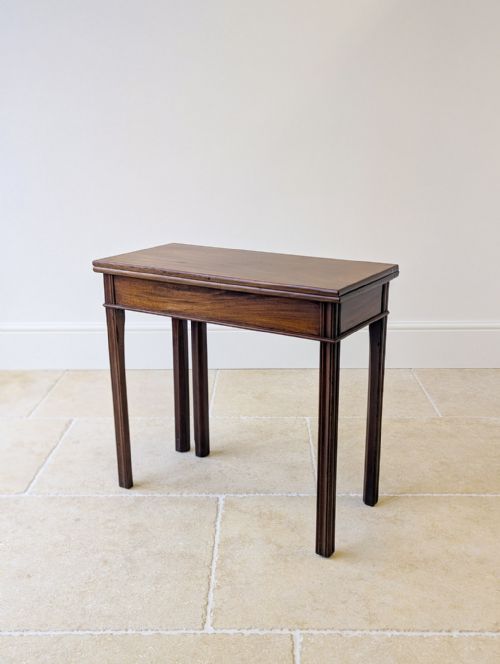
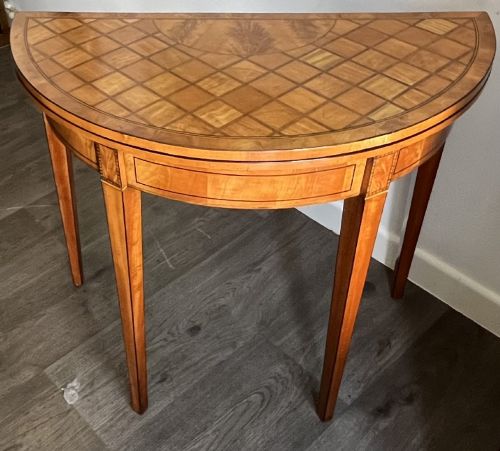

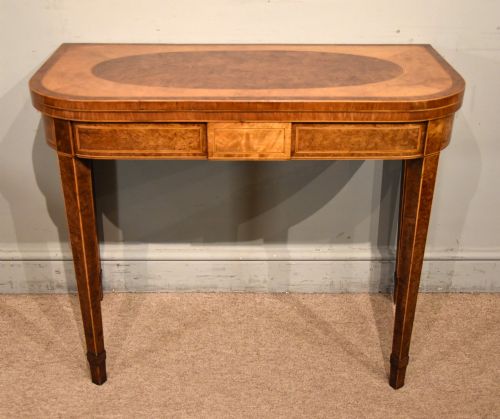
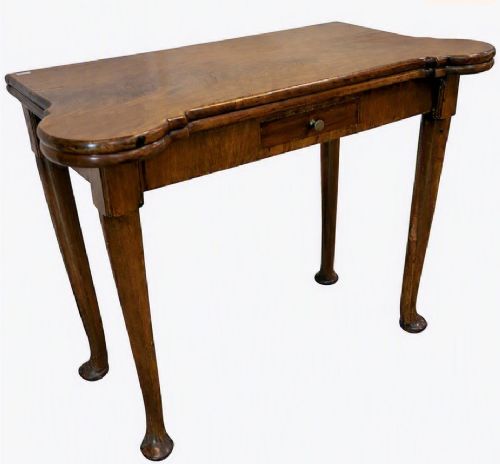
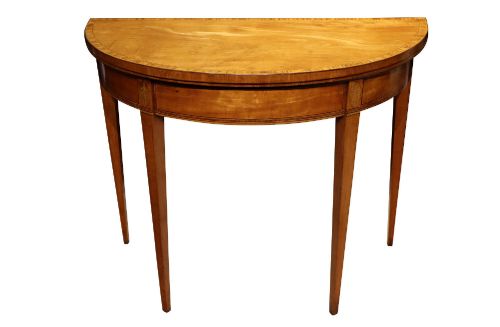
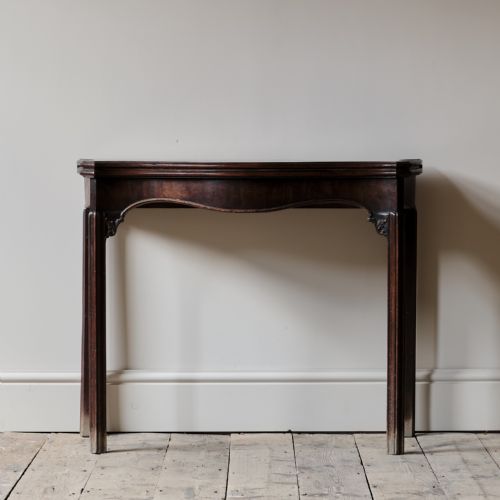
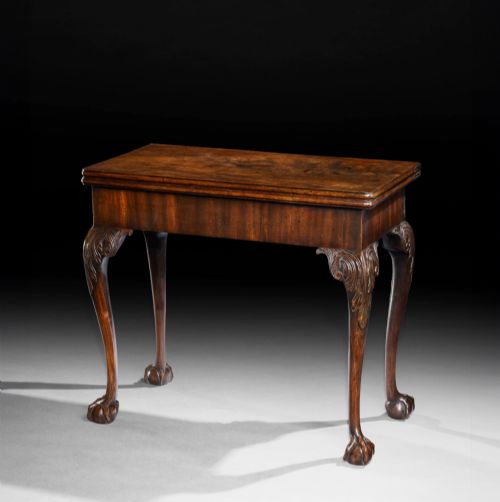
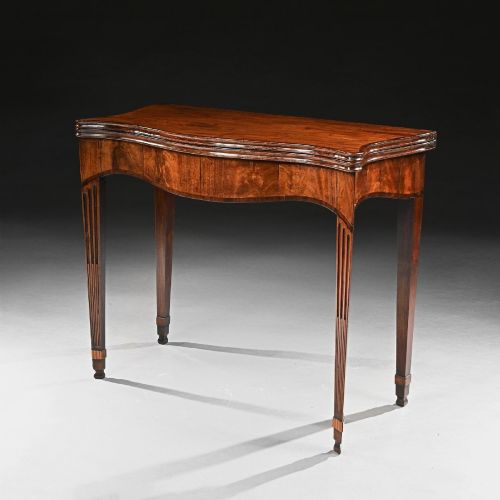

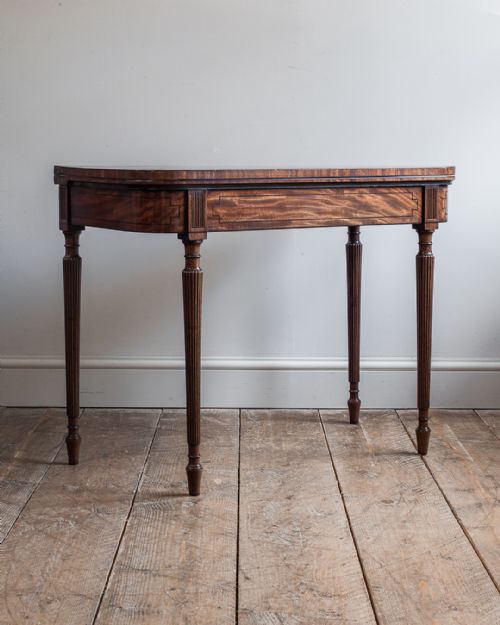
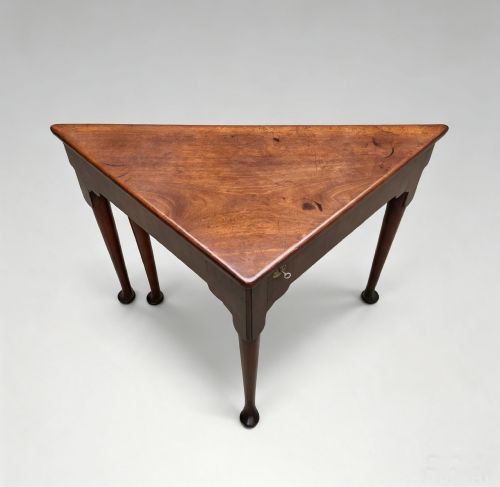
George I Card Table
When you search for george i card table, you enter a world of folding timber surfaces built for eighteenth-century parlour games.
George I Card Table
A george i card table provides a folding timber top supported on hinged or concertina legs, designed specifically for card playing and social gatherings in the early eighteenth century.
Most pieces encountered under this search span the broader Georgian and eighteenth-century eras, featuring walnut, mahogany, and folding tops that conceal candle wells and coin depressions.
Forms range from simple rectangular folding leaves to demi-lune and concertina-action frames, reflecting shifts in interior fashion from the reign of George I onward.
Materials and Construction
Cabinet makers utilised dense timbers such as mahogany, walnut, and rosewood, often applying delicate wood veneer, satinwood, and boxwood crossbanding to the fold-over tops.
Concertina actions and swing legs required precise joinery so the heavy framework remained stable when opened out for play, while baize lined the interior playing surface.
Listings feature walnut, mahogany, satinwood, and rosewood surfaces paired with baize linings and brass hardware.
Factors of Quality
The sophistication of the frame's action separates standard examples from superior pieces, particularly the engineering of concertina hinges that allow all four legs to move outward symmetrically.
Timber selection and figuration dictate the visual weight of the item, with dense flame mahogany or finely figured walnut creating depth that plain timber lacks.
George Bullock·Giles Grendey·Bruce And Burns·Gillows
The George I Card Table Glossary
- Concertina action
- A table frame construction where the rear legs extend outward on a hinged framework matching the front rails, providing continuous support for the opened leaf.
- Crossbanding
- A strip of veneer applied to the border of a tabletop with the grain running perpendicular to the central panel, creating a defined visual edge.
- Demi-lune
- A half-moon shape popular for console and card tables designed to sit flush against a wall when closed.
- Baize
- A coarse woollen felt material traditionally used to line the interior playing surface of a gaming table.
- Dished gaming wells
- Circular depressions carved into the timber corners of a table to hold coins, counters, or candlesticks securely during play.
George I Card Table: Frequently Asked Questions
How do concertina legs work?
A concertina action utilises hinged rails that unfold simultaneously with the opening top leaf. This engineering ensures the rear corners receive direct vertical support during card games.
Simpler tables rely on a single swinging leg that pivots outward from the frame. Concertina frames remain heavier and more complex to manufacture.
What was the baize for?
The woollen baize provided a soft, non-slip surface for dealing cards and moving wooden counters. It also protected the polished wood underneath from friction and scratches during play.
Many surviving pieces retain their original textile lining, though replacement baize is common on tables restored for modern use.
How do I spot a walnut period piece?
Walnut surfaces display a rich, warm grain pattern that differs visibly from the reddish-brown tones of later mahogany tables. Early pieces often incorporate ash or oak secondary timbers within the internal frame.
Checking the drawer linings and corner blocks helps confirm the period of construction alongside the exterior timber characteristics.
Where were these tables placed?
These folding tables stood against drawing room or parlour walls when closed, functioning as console or side furniture between gatherings. Servants moved them into the centre of the room when evening entertainment began.
The dual purpose made them essential furnishings for polite society throughout the eighteenth century.