



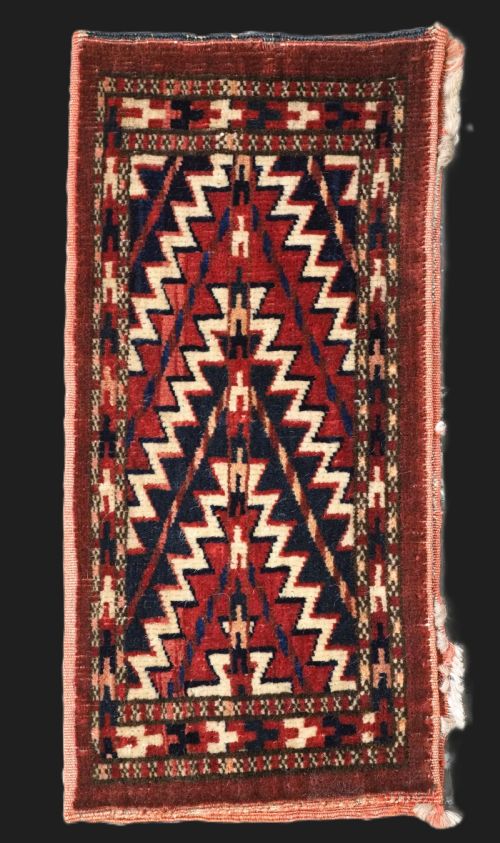

Geometric Woven Bag
A geometric woven bag brings nomadic textile artistry into a room through precise wool work and regional tribal patterns.
Geometric Woven Bag
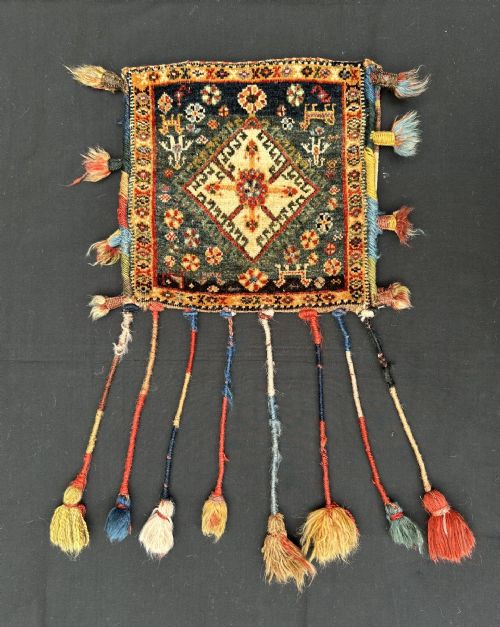
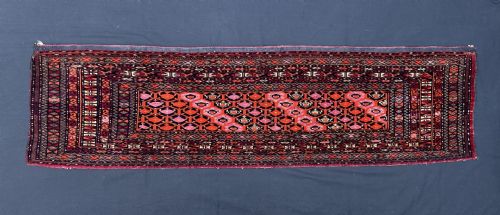
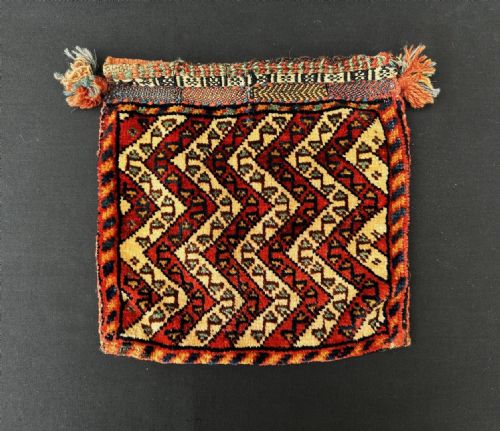
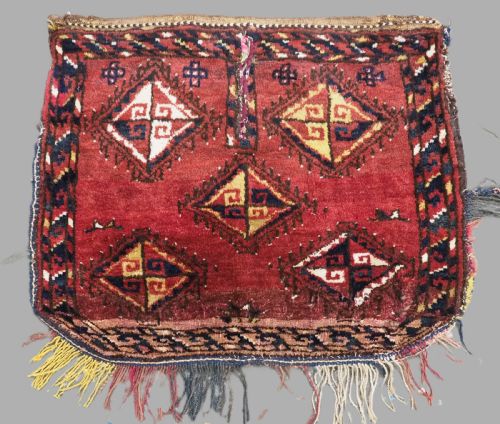
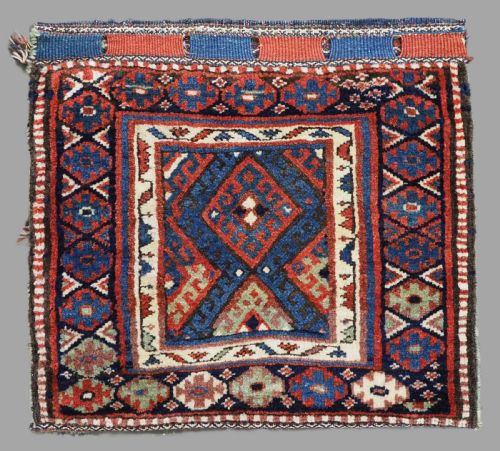
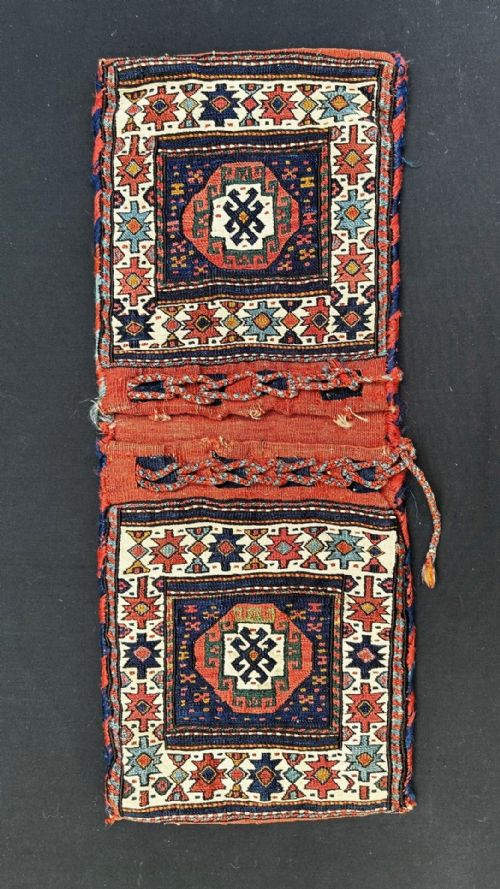
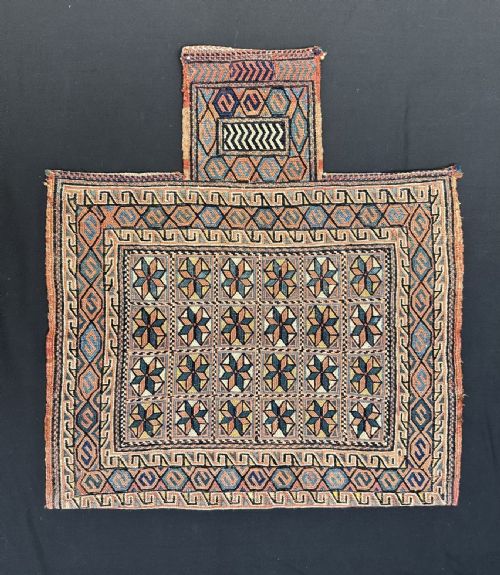
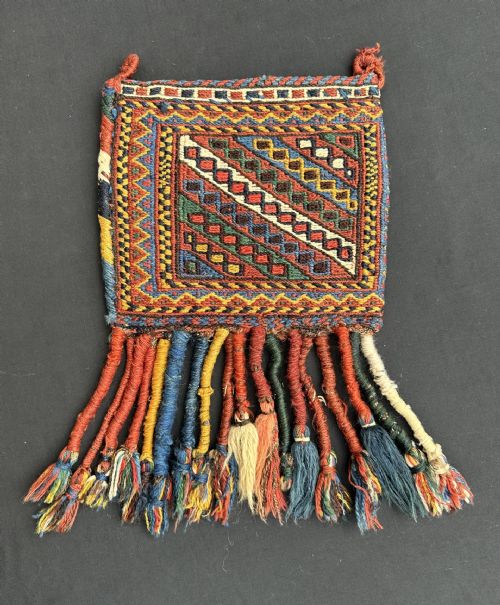
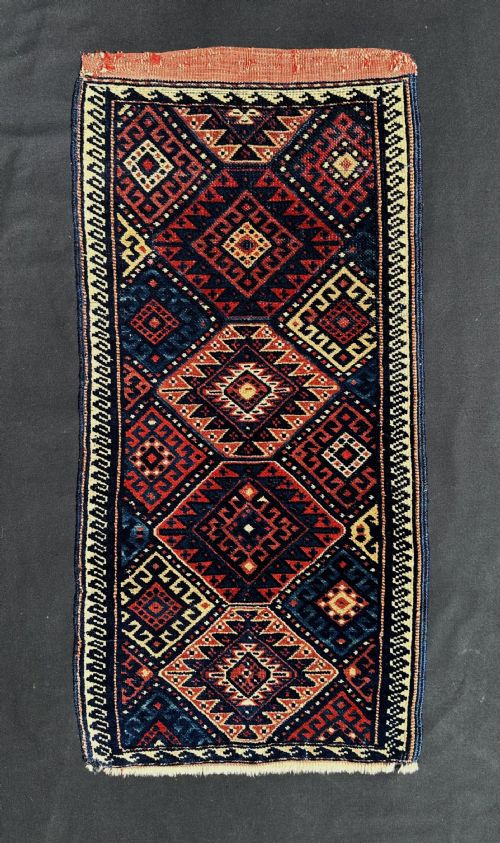
The formats vary from miniature vanity pouches to large storage receptacles designed for nomadic life. Pieces frequently display specific tribal iconography associated with regional weaving traditions from regions like Fars Province, Azerbaijan, and Turkmenistan. Each item reflects the domestic and utilitarian requirements of tribal makers who utilised traditional portable looms.
Materials and construction
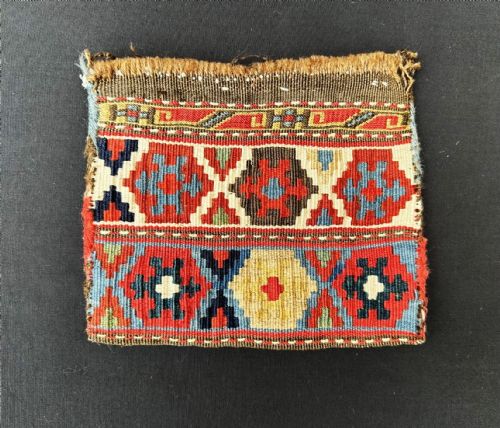
The construction relies heavily on wool and hand-spun wool, often combined with cotton for structural integrity in foundation warps and wefts. Artisans employed natural dyes to achieve deep colour palettes across pile-woven surfaces and flat-woven soumak work. This combination of materials provides both durable utility and intricate surface pattern definition.
Weavers utilised techniques such as hand-knotting and banded weft work to construct durable utility items capable of enduring nomadic transport. Many surviving pieces retain portions of their original plain weave flat-woven backs, demonstrating the practical division between the decorative face and the utilitarian reverse.
Geometric Woven Bag Retail Price Guide 2026
Typical asking prices for geometric woven bag among the pieces listed under this phrase on Sellingantiques today, from the lower quarter to the upper quarter. They describe what is for sale here now, not the wider market.
Nomadic weavers occasionally tucked tiny protective amulets directly into the secret structural folds of their storage bags.
Assessing quality
Quality rests in the fineness of the knotting or the tightness of the soumak weave, which dictates the clarity of the geometric patterns. Pieces demonstrating superior precision in tribal motifs and harmonious natural dye saturation command greater attention from collectors.
The survival of original structural elements, such as plain weave backs and complete side cords, influences the integrity of the piece. Greater care in wool preparation and dye extraction separates standard utilitarian containers from exceptional examples of nomadic textile art.
The Geometric Woven Bag Glossary
- Soumak
- A flat-weave technique where coloured weft threads wrap around warp threads to produce a textured surface. This method creates durable structures without pile.
- Torba
- A small storage bag produced by Turkmen tribes, often hung inside a tent. These pieces feature distinct regional gul motifs.
- Jollar
- A wide Turkmen bag used for bedding storage inside the yurt or tent. They display horizontal banded designs.
- Khorjin
- The Persian term for a double saddle bag designed for transport on animals. Surviving examples often appear split into individual bag faces.
- Chuval
- A large Turkmen storage bag utilised for household belongings. They exhibit dense geometric layouts.
Geometric Woven Bag: Frequently Asked Questions
How were these bags used?
Nomadic tribes utilised these containers for storing salt, grain, vanity items, and bedding during seasonal migrations. They functioned as practical transport gear fastened to pack animals or hung inside tents.
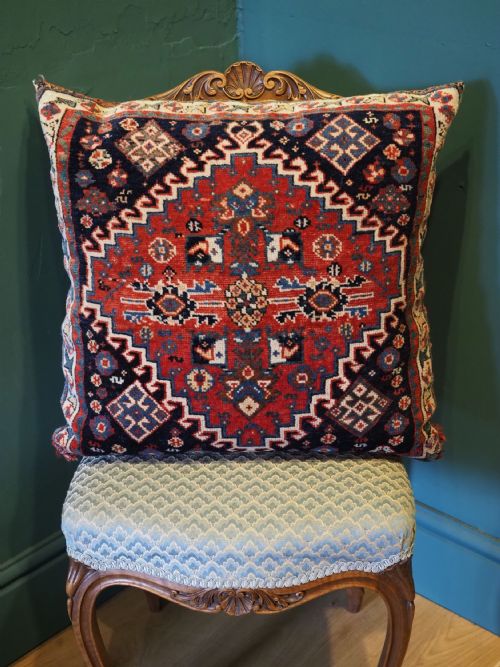
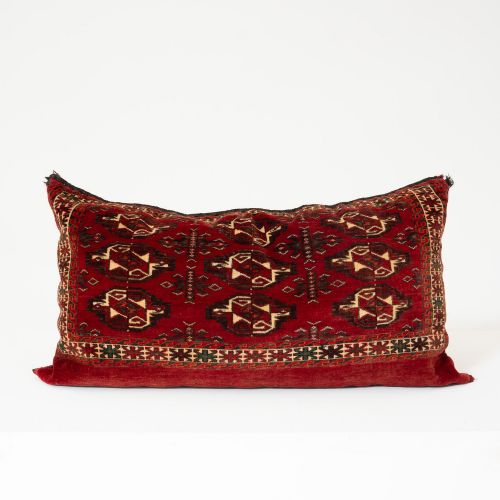
Over time, many of these utilitarian containers became separated into individual panels or were adapted into decorative home furnishings like cushions.
What is a bag face?
A bag face is the decorative front panel of a larger double saddle bag or storage receptacle. When the structural reverse wore out, the patterned front was often preserved.
These panels frequently survive independently and are mounted as small wall hangings or turned into decorative pillows.
Where did these bags originate?
These textiles originate from tribal confederations and nomadic groups across Persia, the Caucasus, and Central Asia. Specific regions include Fars Province, Azerbaijan, and Turkmenistan.
Different tribes, such as the Qashqa'i, Shahsevan, and Yomut, developed distinct regional patterns and colour combinations.
How do I care for antique wool bags?
Protect antique wool textiles from direct sunlight to prevent natural dye fading. Gentle vacuuming with a mesh screen protects fragile flat-weave and pile surfaces.
Keep the wool clean and dry, avoiding excessive moisture or harsh chemical cleaners that damage natural fibres.