


Geometric Wool Corridor Rug
A geometric wool corridor rug brings linear motifs and hard-wearing pile to narrow spaces, drawing upon regional weaving traditions from the nineteenth and early twentieth centuries.
Geometric Wool Corridor Rug
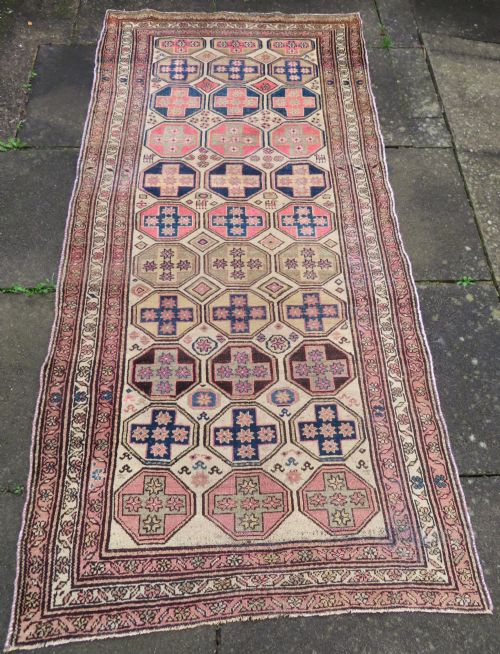
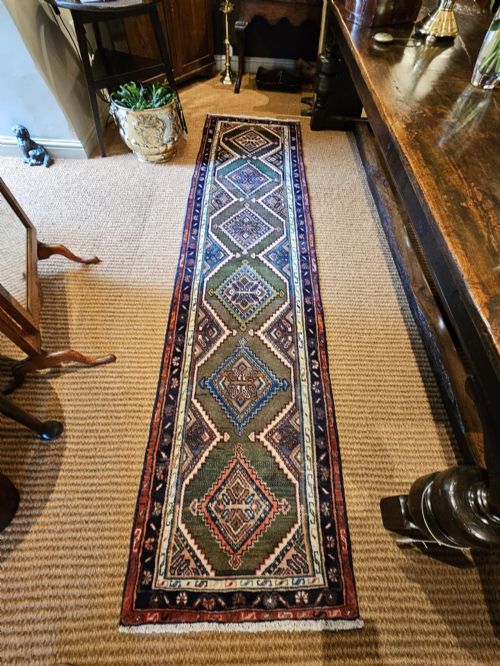
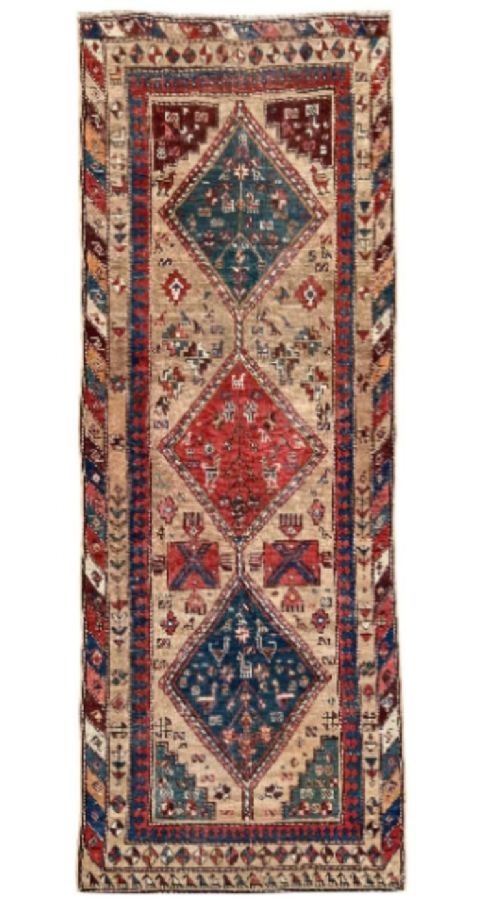
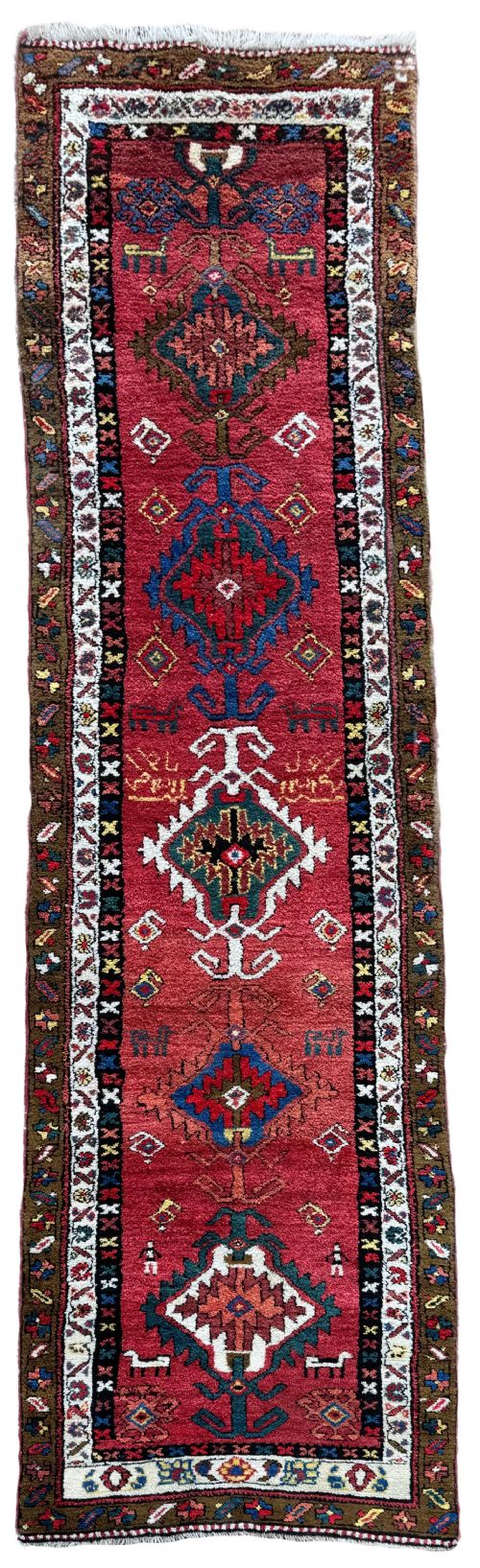
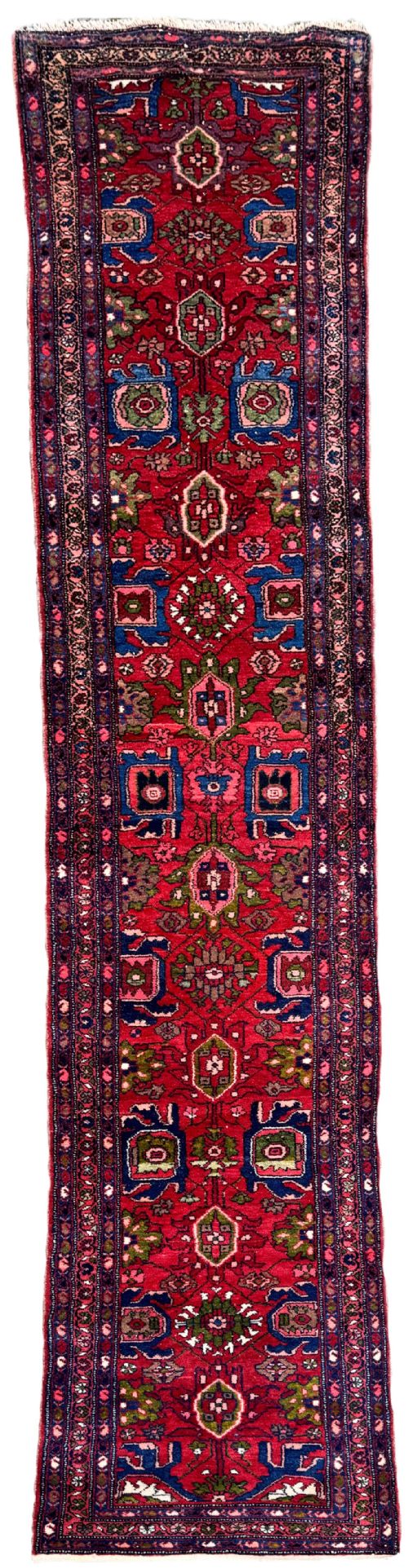
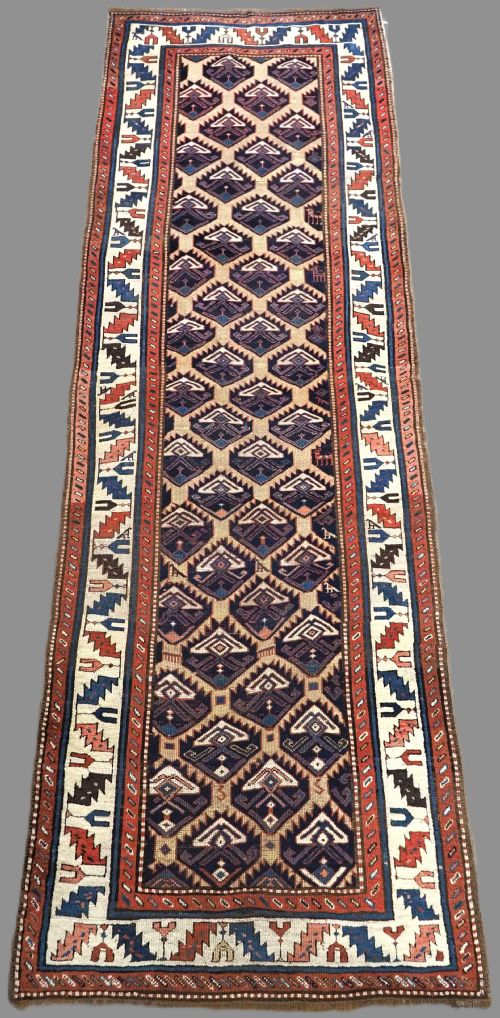
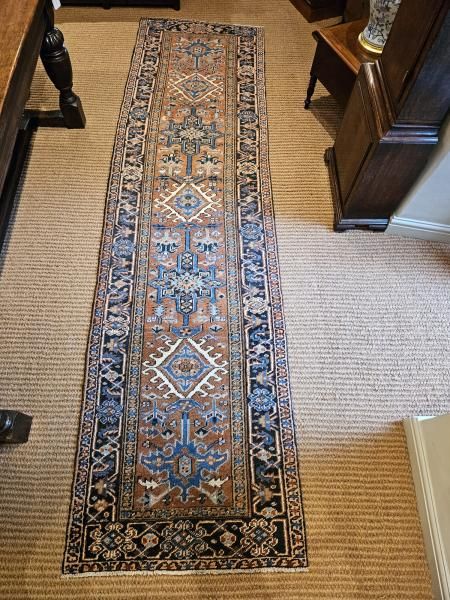
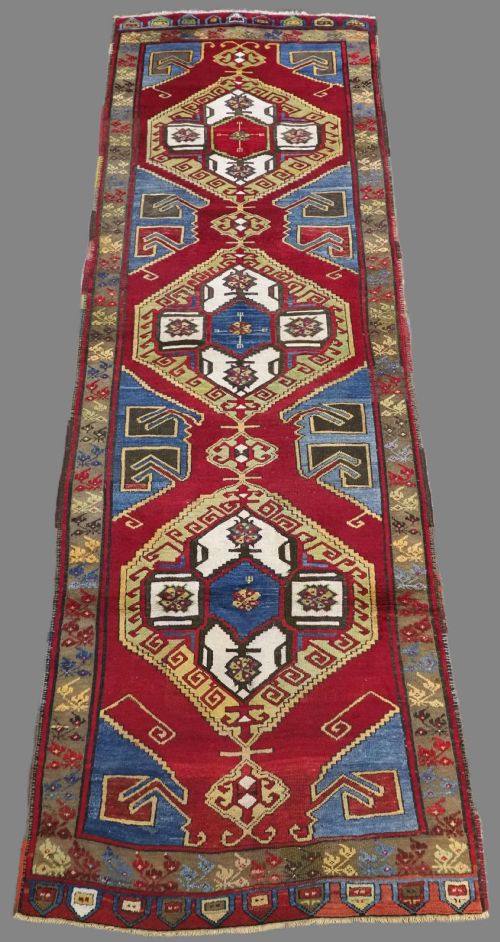
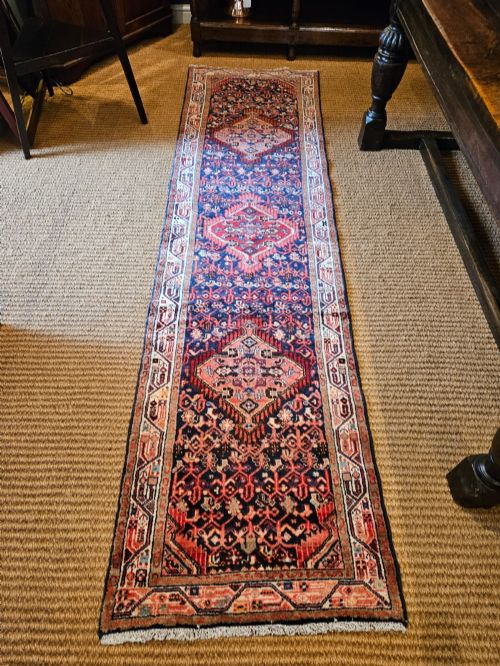
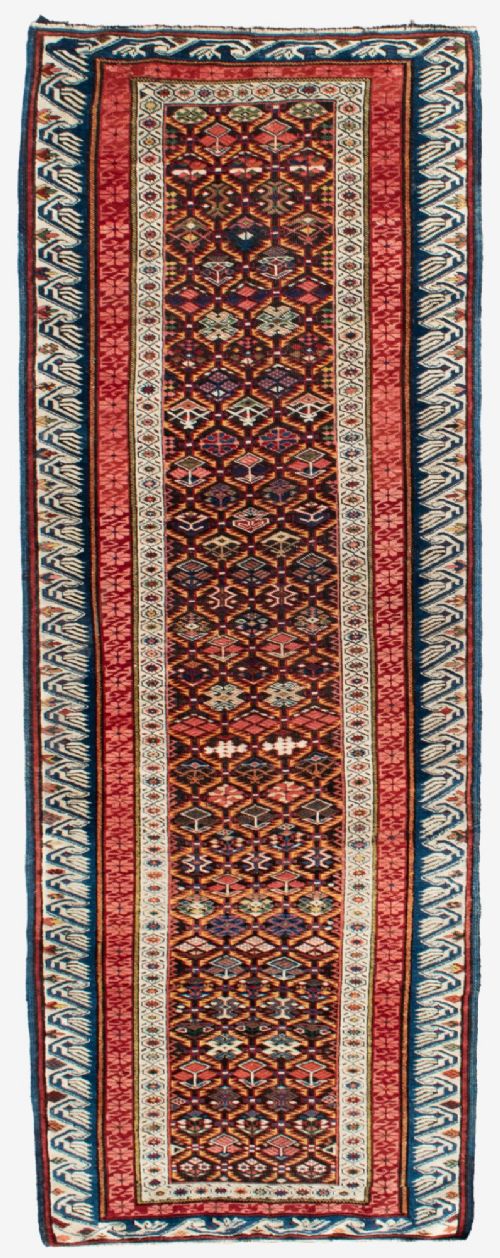
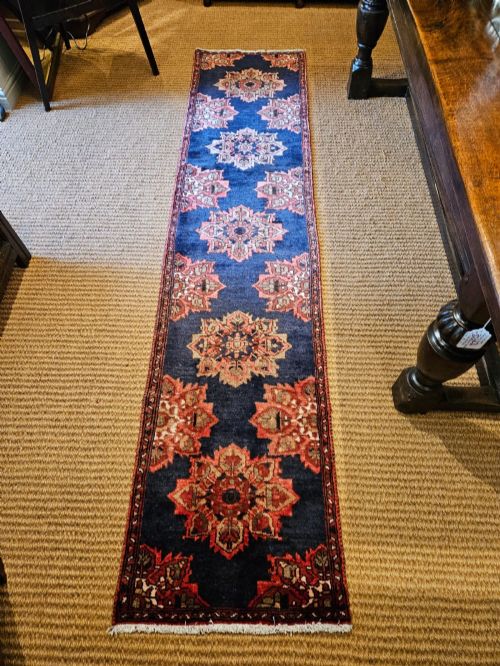
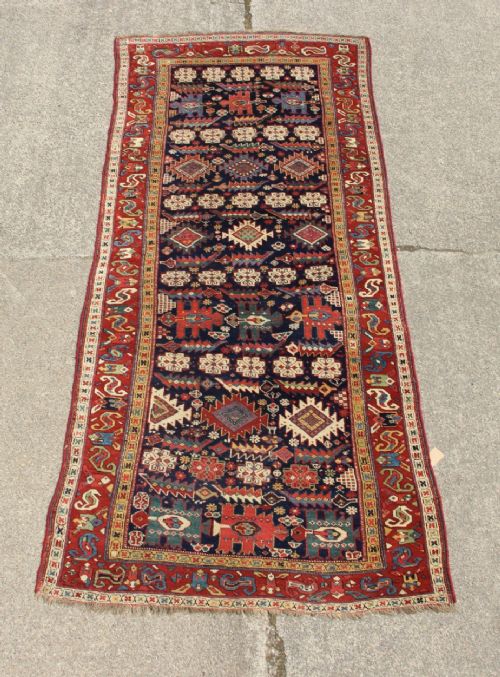
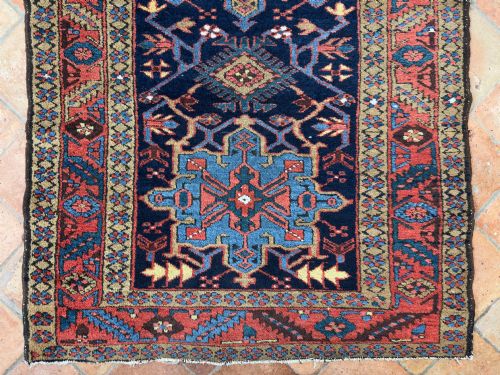
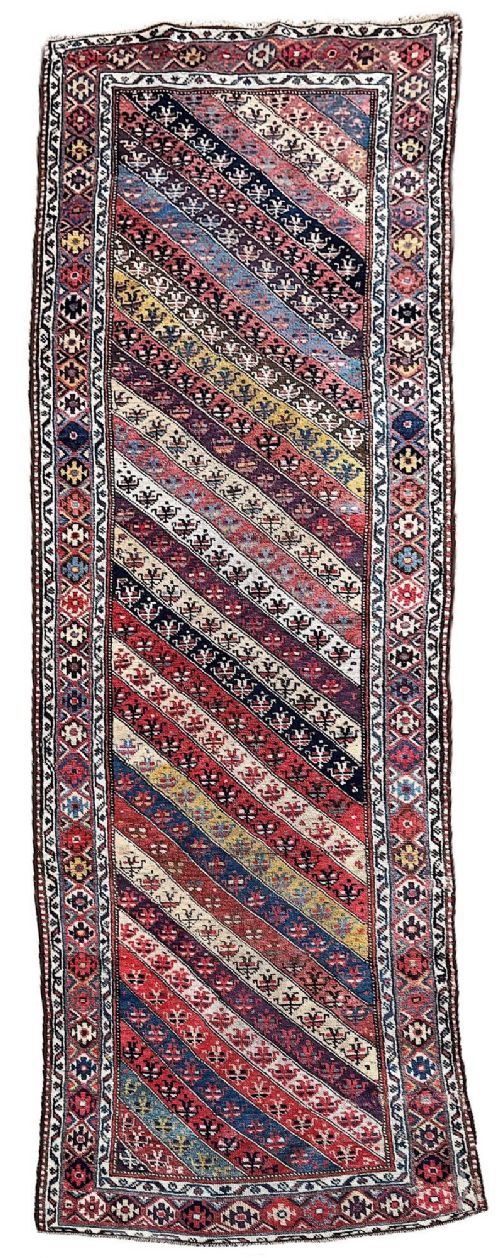
A geometric wool corridor rug is typically encountered as a runner, hallway runner, or long rug designed specifically for narrow circulation spaces. These pieces span production periods from the nineteenth century through the 1930s, originating from workshops and tribal regions in Persia, the Caucasus, and Anatolia. Examples include Kurdish, Heriz, Kazak, and Shirvan formats that utilise repeating medallions, lattices, and angular motifs.
The inventory demonstrates a strong representation of antique room-length formats such as Kurdish, Heriz, and Anatolian runners. These textiles serve to line corridors and hallways with substantial wool pile and cotton foundations. Buyers find both narrow formats and broader long rugs measuring over four metres in length.
How they were made
These floor coverings are constructed primarily from wool and hand-spun wool pile knotted onto cotton foundations. The heavy-duty textile structure provides the durability required for high-traffic corridors and hallway environments.
Weavers employed traditional tribal and regional knotting techniques, producing dense geometric structures that define patterns like the lattice designs seen in Caucasian Gendje pieces and the robust weaves of Heriz runners.
Listings span production dates from the mid-nineteenth century through the 1930s, featuring Persian, Caucasian, and Anatolian origins.
What varies in quality
Quality in these runners relates to the density of the wool pile and the crispness of the geometric design execution. Finer examples display precise knotting and well-defined structural lines across the length of the carpet.
The integrity of the foundation materials and the uniformity of the weave distinguish standard production pieces from heavily distressed or structurally irregular specimens.
The Geometric Wool Corridor Rug Glossary
- Runner
- A long, narrow carpet format specifically proportioned for hallways, corridors, and passageways. These pieces usually measure significantly longer than they are wide.
- Pile
- The upright yarn loops or cut ends that form the usable surface of the rug. In these corridor examples, wool provides a dense and resilient stepping surface.
- Kelleh
- A large rectangular carpet format, often longer than a standard rug but wider than a typical runner. Several listed pieces adopt this specific proportion.
- Kilim
- A flat-woven carpet or runner produced without a pile. Some listed items combine flat-woven kilim sections with knotted pile areas.
Geometric Wool Corridor Rug: Frequently Asked Questions
Where should I place a corridor runner?
These long formats suit narrow spaces such as hallways, corridors, and entryways where linear floor coverings protect wooden floorboards while adding traditional pattern.
Their elongated proportions allow them to span the full length of passage areas without obstructing doors.
How do I identify a tribal runner?
Tribal runners display geometric motifs, repeating medallions, and angular lattice work rather than curved court designs. They originate from nomadic or village weaving traditions.
Regions like the Caucasus, Kurdistan, and Anatolia produced these characteristic tribal floor coverings.
What materials make up these rugs?
The listings consist primarily of wool and hand-spun wool pile. Many traditional pieces utilise cotton foundations to support the dense knotted structure.
This material combination ensures the durability needed for heavy foot traffic in domestic corridors.
How do I date an antique runner?
Dating relies on stylistic analysis, material composition, and structural characteristics recorded in the piece details. Surviving examples range from the mid-nineteenth century through the 1930s.
Natural dye variations and traditional regional weaving traits also help establish the approximate production era.