





Geometric Turkish Kilim
A geometric turkish kilim brings flatweave artistry into a room through sharp rectilinear motifs and dyed wool.
Geometric Turkish Kilim
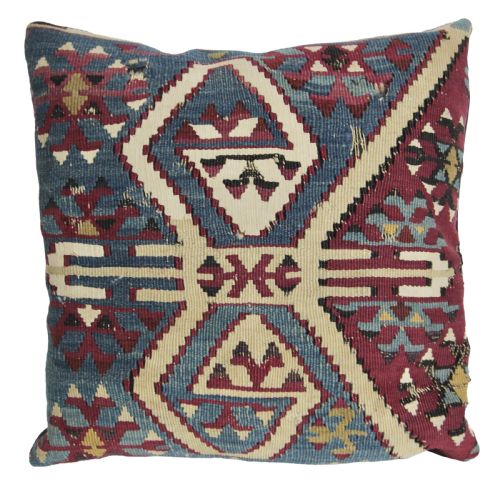
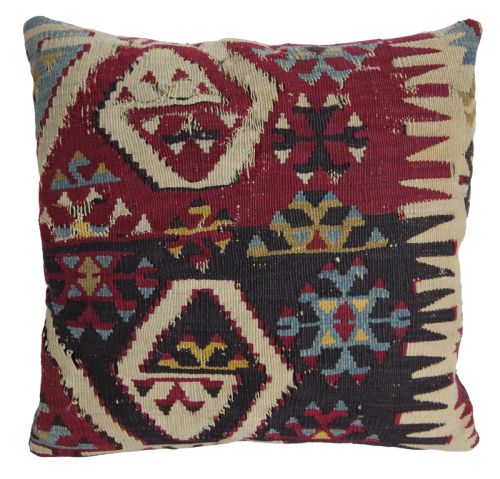
A geometric turkish kilim is a flatweave textile originating from Anatolian and Balkan regions, produced in forms such as rugs, runner rugs, and cushions. These pieces display patterns built from triangles, diamonds, and banded designs rather than curved floral motifs.
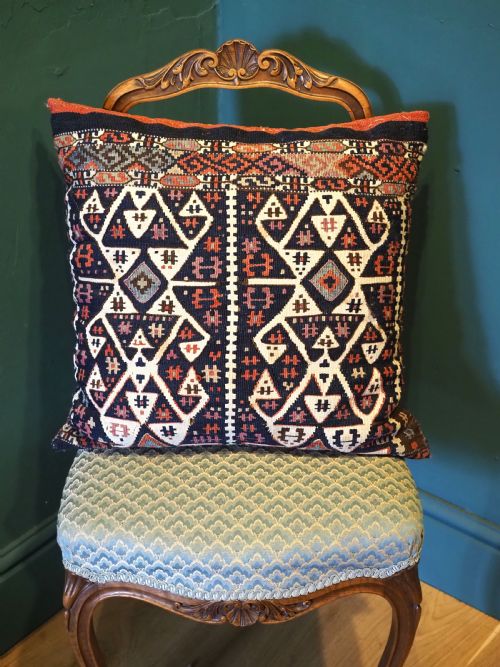
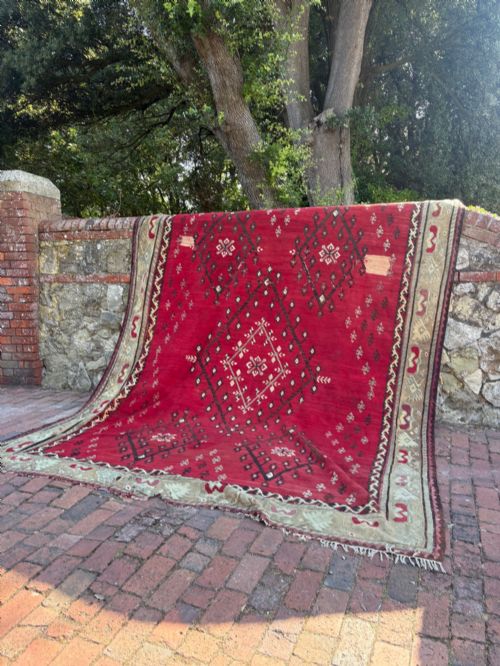
The pieces on this page span from the mid nineteenth century into the twentieth century, appearing both as room-sized carpets and smaller domestic items like saddle bag faces and throw cushions. Regional traditions from centres such as Konya, Malatya, and Sarkoy dictate the specific structural layouts found within the selection.
How they were made
The weavers utilised wool and cotton, employing slit-weave techniques where weft yarns return at the edge of each colour block to create clean vertical lines between geometric motifs. Larger formats were frequently woven in two separate panels and joined along the centre to achieve room proportions.
Dyes derived from natural sources provide the palette of soft reds, pastels, and warm tones seen across the regional groups. Embroidered elements occasionally supplement the flatweave structure, particularly on specific wall hanging panels and specialised regional rugs.
Several cushions started life as nineteenth-century saddle bags carried across Anatolian plains.
What varies in quality
Quality rests in the precision of the geometric draft and the integrity of the flatweave structure. Tighter tension in the weft creates a firmer textile that holds its rectilinear lines without distortion.
The nuance of the dye palette distinguishes exceptional examples, where varied natural tones create depth across repeated medallions and bands. Condition also plays a role, though historical repairs and timeworn patination are standard characteristics of authentic nineteenth-century textiles.
The Geometric Turkish Kilim Glossary
- Kilim
- A flatweave textile produced without a pile by tightly interweaving warp and weft strands. This method results in a lightweight, double-sided rug or hanging.
- Slitweave
- A foundational flatweave technique where the weft threads turn back at the boundary of a colour area, leaving a small vertical slit in the fabric. This method allows sharp geometric boundaries to form.
- Warp
- The stationary vertical threads stretched onto a loom before weaving begins. In these textiles, wool and cotton form this foundational grid.
- Weft
- The horizontal threads passed through the warp to create the visible pattern and colour. These yarns carry the dyed wool that builds the geometric design.
- Juval
- A large storage bag face produced by nomadic tribes for domestic use. These panels are often repurposed today as decorative cushions.
Geometric Turkish Kilim: Frequently Asked Questions
How do I clean a kilim?
Surface dust can be removed through gentle vacuuming without a beater bar, taking care to avoid the fringes. Professional textile cleaning is recommended for deeper maintenance.
Water washing should be approached with caution to prevent dye bleed in older natural colourings.
Can I use these on the floor?
Many examples function well as floor coverings in areas with moderate foot traffic. Placing an appropriate underlay beneath the textile prevents slipping and reduces friction against hard surfaces.
Larger runner formats suit hallways, while delicate cushions and wall panels are better suited for vertical display or seating.
Why are some rugs in two parts?
Larger formats from regions like Malatya and Kayseri were often woven on narrower village looms in two separate panels. These strips were subsequently joined down the middle to achieve room-sized carpets.
This construction method is a normal characteristic of traditional village production rather than a later alteration.
How do I date a piece?
Dating relies on assessing the wool quality, the chemical or natural nature of the dyes, and the structural characteristics of the weave. Mid nineteenth-century pieces often display softer, aged palettes compared to brighter twentieth-century variants.
Regional weaving traits and motifs also help place pieces within specific decades from the eighteen-fifties onward.