
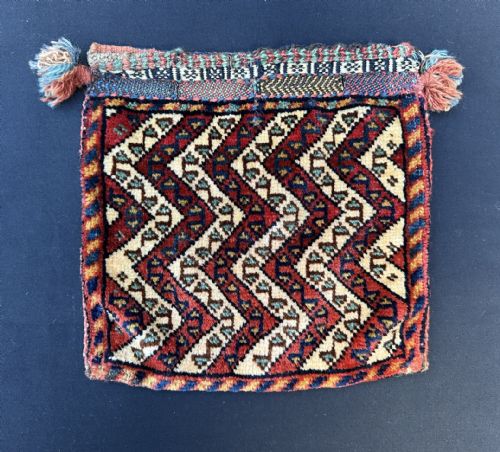
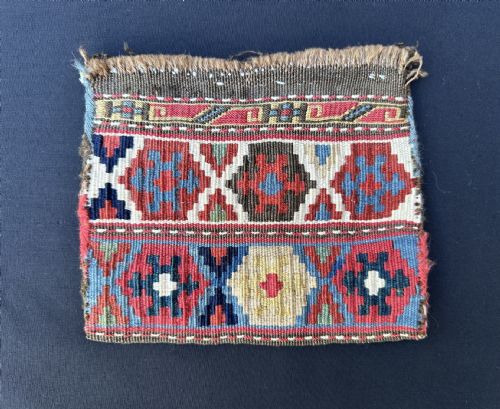
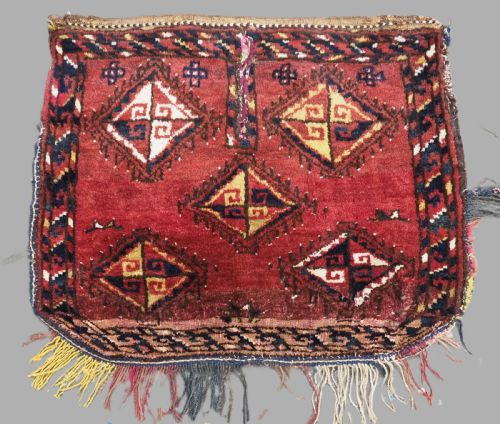

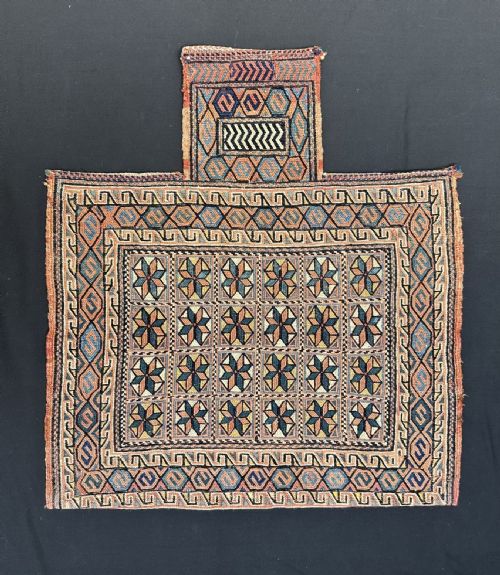


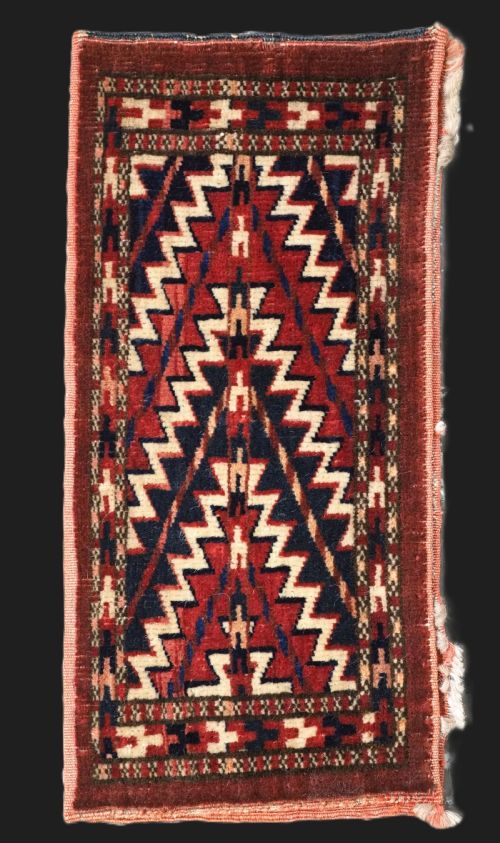
Geometric Tribal Rug Bag
When you search for geometric tribal rug bag, you find utilitarian woven containers crafted by nomadic and village weavers across Persia, Caucasus and Central Asia.
Geometric Tribal Rug Bag
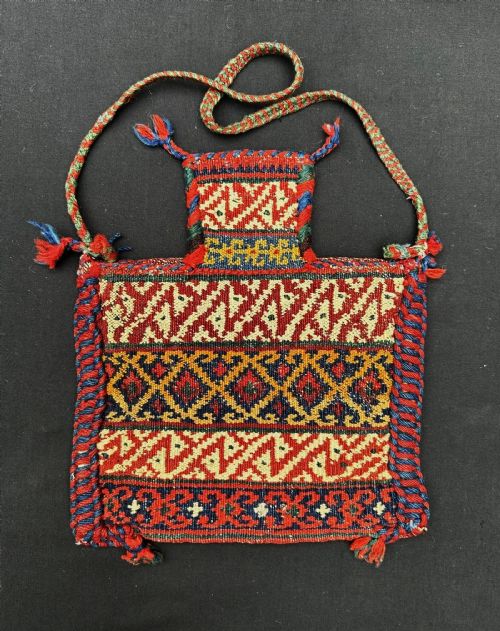
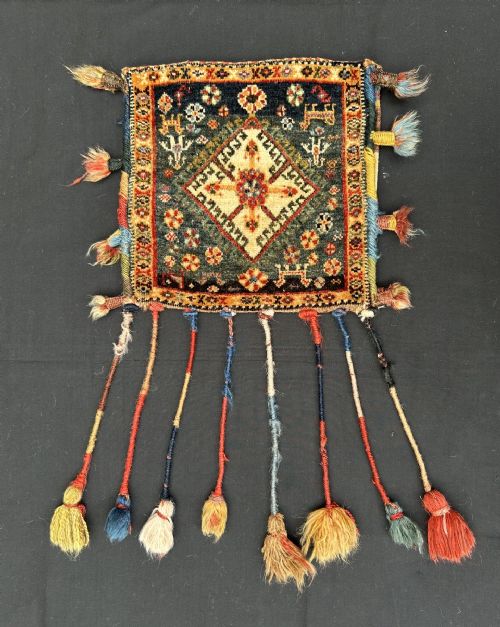
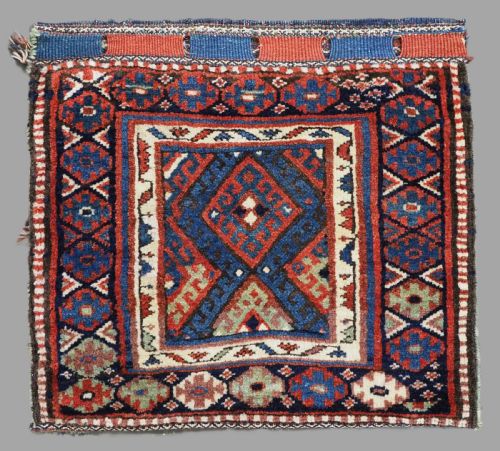
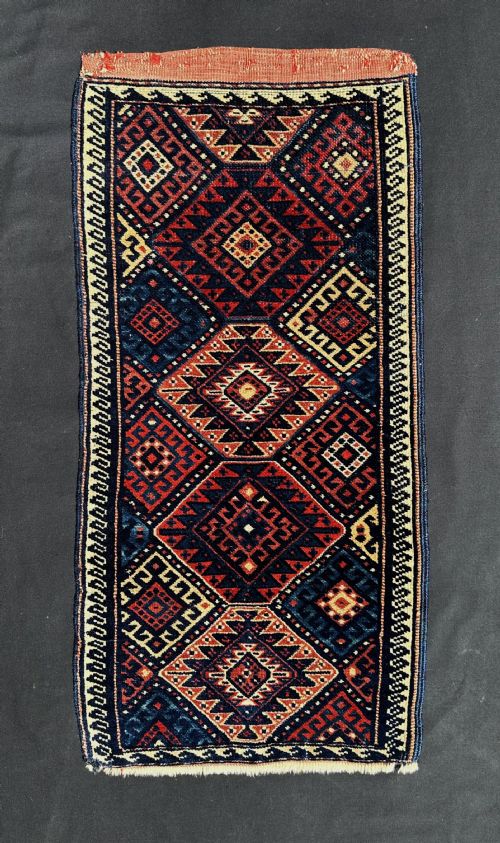
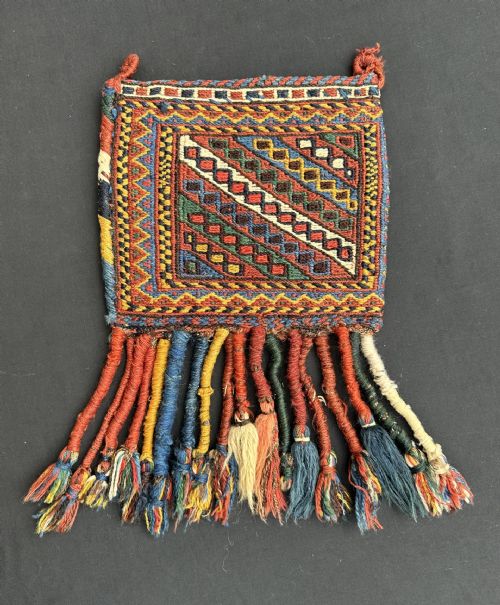
A geometric tribal rug bag encompasses practical containers such as saddlebags, salt bags, vanity bags and storage torbas made for daily nomadic life. These textiles date primarily from the nineteenth century into the early twentieth century, originating from tribal confederations including the Qashqai, Shahsevan, Afshar and various Turkmen groups.
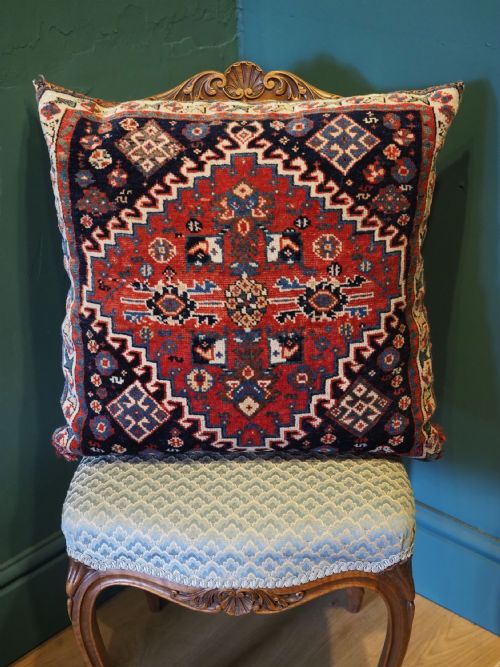
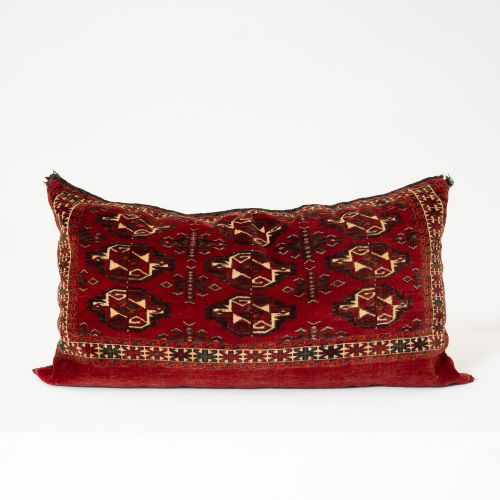
The format varies from complete double saddlebags with their original plain weave backs to single bag faces now adapted as cushions. The designs rely on geometric motifs, medallions and tribal symbols handed down through generations of weavers rather than written patterns.
Materials and construction
Weavers utilised hand-spun wool for the pile and foundation structures, combined with cotton details in specific regional pieces. Natural dyes provide the underlying palette, producing rich tones that weather evenly over decades of use.
Techniques range from standard pile knotting to flat-woven soumak work and banded weft work designs. These methods ensured the containers remained durable enough for pack animals, tent storage and daily transport.
Listings feature nineteenth-century and early twentieth-century examples utilising hand-spun wool and natural dyes across Persian, Caucasian and Central Asian tribal traditions.
Distinctions in quality
Quality rests upon the handled integrity of the wool, the saturation and clarity of the natural dyes, and the precision of the geometric drawing. Pieces retaining their original plain weave backs and complete closures stand apart from fragments reduced to single faces.
Tribal attribution also influences the standing of a piece, with certain sub-tribes within the Qashqai, Shahsevan and Turkmen confederations producing particularly crisp knotting and complex iconography.
The Geometric Tribal Rug Bag Glossary
- Jollar
- A Turkmen tent hanging or storage bag placed on the kibitka wall. These wide rectangular bags often display repeating guls and geometric borders.
- Torba
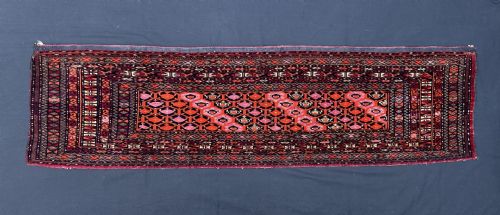
- A smaller Turkmen bag used for domestic storage inside the yurt. They frequently feature a prominent face design with hooked motifs and elem panels.
- Khorjin
- The Persian term for a double saddlebag used for transport on horses, donkeys or camels. Complete examples include both pockets and the connecting web.
- Soumak
- A flat-weave technique where pattern yarns wrap around the warp threads in a herringbone or braided texture. This method creates a sturdy, non-pile surface with sharp geometric definition.
- Chuval
- A large Turkmen tent storage bag intended for bedding and household goods. They are broader than torbas and form a central part of nomadic interior furnishings.
Geometric Tribal Rug Bag: Frequently Asked Questions
What were these bags originally used for?
Nomadic groups utilised these woven containers for transporting belongings on pack animals and storing goods within tents. Different shapes served specific purposes, from carrying salt and tobacco to holding household utensils and bedding.
Over time, many double saddlebags were separated into single faces as the original connecting webs wore away or were cut for easier display. Today, these surviving fronts and complete bags function primarily as decorative cushions or wall hangings.
How should I care for an antique bag face?
Gentle vacuuming with a low suction setting without a rotating brush helps remove dust from the wool pile. Keeping the textile away from direct sunlight prevents the natural dyes from fading unevenly over the years.
If used as a cushion or displayed on a wall, rotating the piece occasionally ensures even wear. Professional textile cleaning is recommended when deeper maintenance becomes necessary.
What does a plain weave back indicate?
The presence of an original plain weave back indicates that a saddlebag or storage container has survived intact without being cut down. These utilitarian flat-woven sections protected the contents against pack animal sweat and friction during travel.
Finding a bag complete with its back is increasingly uncommon as centuries of use led many pairs to be separated. Such examples offer a more complete view of how the original nomadic object functioned.