


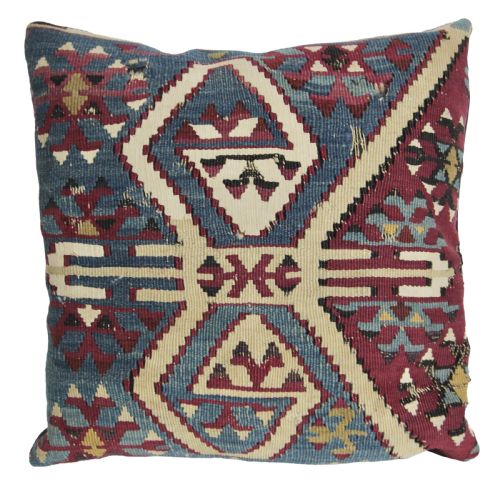


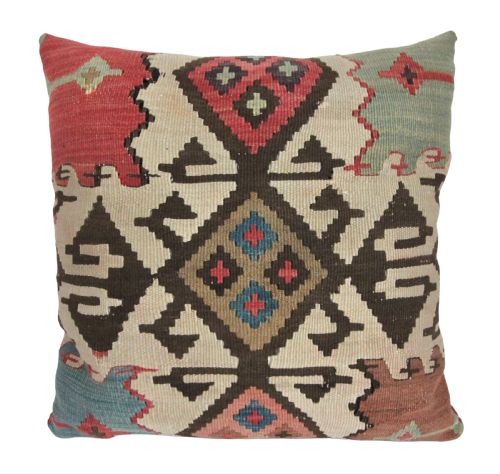
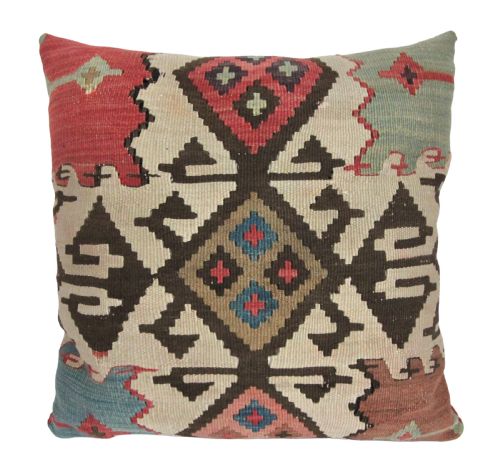


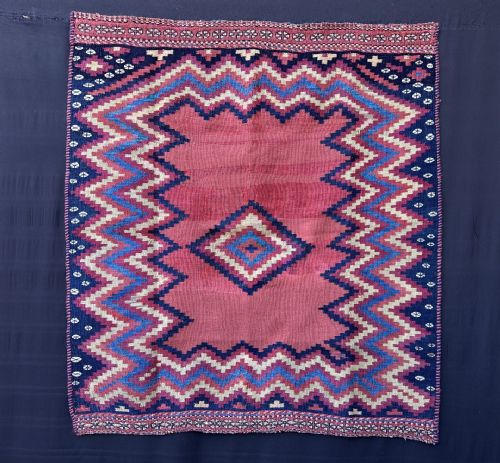
Geometric Pattern Flatweave
These geometric pattern flatweave pieces are tribal and nomadic textiles valued for their bold motifs and flat surfaces.
Geometric Pattern Flatweave
A geometric pattern flatweave encompasses pileless textiles created by nomadic and village weavers across Anatolia, Persia, the Caucasus, and the Balkans. These objects include rugs, carpets, runners, cushions, bread sofreh, and storage bags originating from periods between the mid-nineteenth century and the mid-twentieth century.
The versions most commonly met on this page are tribal kilims and flatweave cushions. Examples range from Qashqai and Afshar pieces originating in Persia to Pirot, Sarkoy, and Turkish regional kilims utilising repeat medallions, lattice structures, and banded designs.
How they were made
Weavers constructed these textiles using wool and cotton foundations, often employing slit-tapestry weaving techniques where different coloured weft threads interlace with warp threads. Certain pieces incorporate soumak wrapping techniques or are woven in separate parts before being joined together.
Makers utilised natural dyes to achieve the distinct colour palettes seen across tribal and folkloric traditions. The interplay of wool textures and plant-based colour agents defines the structural integrity of these flatweaves.
Listings feature wool and cotton materials dyed with natural substances across nineteenth and twentieth-century Anatolian, Persian, and Balkan origins.
What varies in quality
The standard of a flatweave rests upon the precision of its geometric drawing and the richness of its dye palette. Finer examples display crisp motif borders and harmonious colour saturation across the woven field.
Structural execution also determines quality, evident in the tightness of the weave and the preservation of original long kilim ends or borders. Pieces retaining structural wholeness and strong natural coloration stand apart from standard examples.
The Geometric Pattern Flatweave Glossary
- Kilim
- A pileless woven textile produced by tightly interweaving warp and weft strands to create a flat surface. These pieces function as floor coverings, wall hangings, or utility textiles.
- Soumak
- A brocading technique where coloured weft threads wrap around warp threads in decorative patterns. This method adds structural weight and distinct surface texture to the textile.
- Sofreh
- A flatwoven cloth traditionally utilised for food preparation, serving, or storing bread within nomadic households. These functional pieces frequently display sophisticated tribal iconography.
- Palas
- A term applied to flatwoven utility rugs or covers produced by nomadic groups. They provide durable, lightweight floor or bedding coverings.
- Warp
- The stationary vertical threads stretched across a loom that receive the interweaving weft. They form the foundational skeleton of every flatweave textile.
Geometric Pattern Flatweave: Frequently Asked Questions
How do I clean an antique flatweave?
Surface dust should be gently removed using a suction-limited vacuum without a beating bar. Professional textile conservators should handle wet cleaning to protect natural dyes.
Avoid chemical detergents or vigorous scrubbing which can damage wool fibres and alter historical colour compounds.
Can I use these flatweaves as floor rugs?
These textiles serve well as floor coverings in moderate traffic areas when paired with an appropriate non-slip underlay. The flat structure accommodates placement beneath furniture.
Placing them away from direct, harsh sunlight preserves the natural dye pigments over years of daily use.
What is the difference between a kilim and a carpet?
Kilims are woven flat without a pile by interlocking weft threads through the warp foundation. Traditional carpets utilise knotted piles that stand upright from the foundation.
This structural distinction gives flatweaves a lighter weight and a smooth surface texture compared to knotted pile carpets.
How do I identify regional tribal designs?
Regional attribution relies on specific structural traits, dye palettes, and characteristic geometric motifs. Persian tribal pieces often display distinct medallion arrangements, while Balkan or Anatolian examples show specific lattice or banded patterns.
Comparing border bands and wool preparation helps isolate the likely weaving community and origin period.