


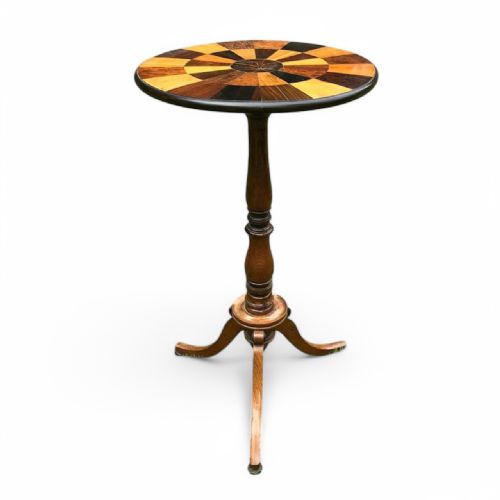


Geometric Marquetry Accent Table
A geometric marquetry accent table brings intricate wood patterns and rich tones to a room, offering a functional surface built from meticulous craftsmanship.
Geometric Marquetry Accent Table
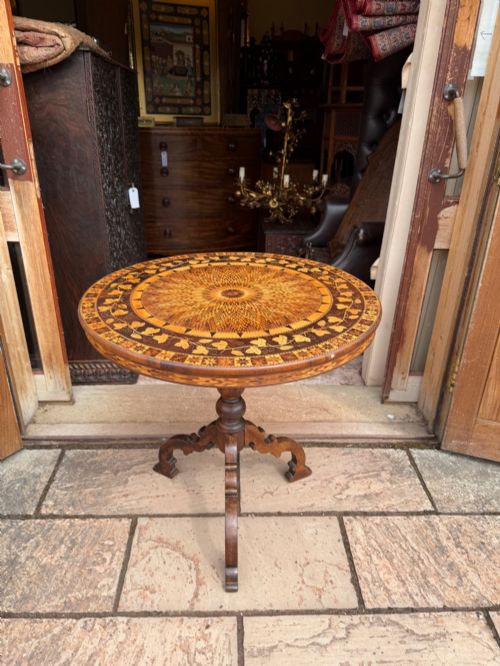
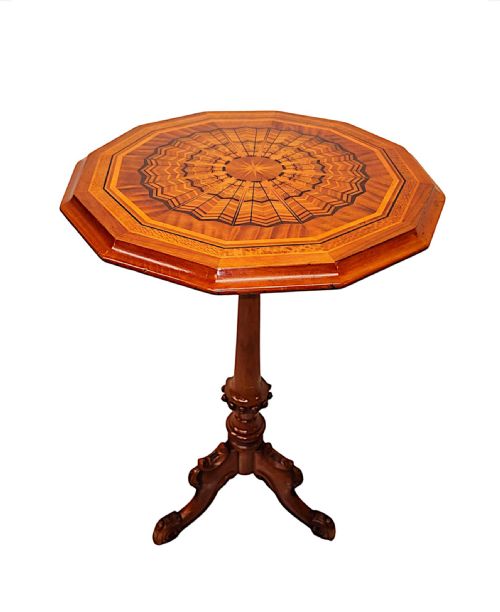
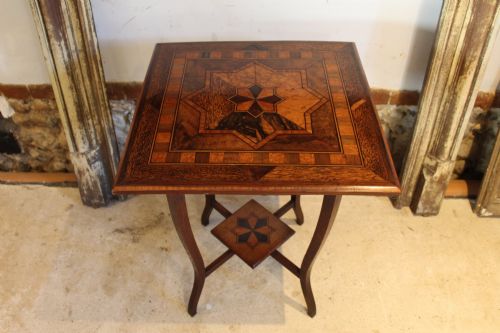
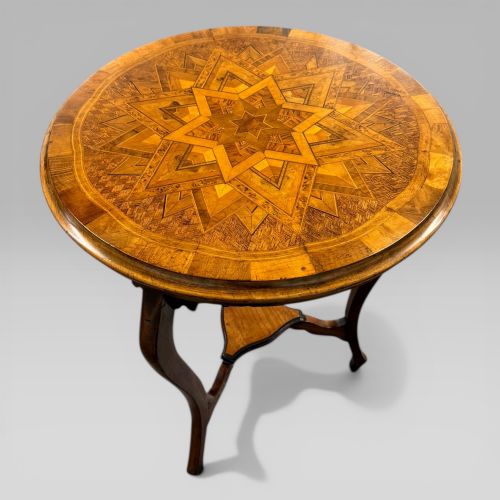
A geometric marquetry accent table combines complex inlaid wood designs with practical forms such as occasional tables, side tables, and pedestal tables. These pieces frequently appear from the nineteenth century onward, spanning Victorian, Edwardian, and Art Deco periods.
Buyers will encounter various structural formats including octagonal, hexagonal, and circular tops supported by wooden bases or pedestals. The visual focus centres entirely on the patterned surface arrangement.
Origins range widely from English workshops and Italian Sorrento production to New Zealand colonial makers utilising native timbers and specimen woods. Each regional style brings distinct timber selections and geometric motifs to the tabletop.
Materials and construction
Craftsmen built these tables using a diverse palette of timbers including walnut, mahogany, rosewood, birch, oak, and satinwood. Native timbers and specimen woods provided contrasting natural colours to form precise geometric patterns.
Marquetry and parquetry techniques involved cutting thin veneers of different woods and fitting them together precisely before gluing them to a solid timber base. Some regional pieces also incorporated materials such as brass or mother of pearl within the inlaid surface.
Some nineteenth-century makers transformed humble tabletops into botanical maps using local firewood.
Assessing quality and execution
The precision of the veneer work dictates the refinement of the piece, where tight joints between contrasting wood pieces show superior workshop skill. Simpler geometric arrangements contrast with complex pictorial or multi-timber specimen tops.
Gillows·Anton Seuffert
The Geometric Marquetry Accent Table Glossary
- Marquetry
- The art of applying small pieces of veneer to a structure to form decorative patterns. This technique creates the detailed surface imagery seen on tabletop designs.
- Parquetry
- Geometric mosaic woodwork arranged in regular patterns like squares or triangles. It forms the repeating geometric layouts characteristic of many accent tables.
- Specimen wood
- Timber selected for its specific natural colour, grain, or rarity rather than general utility. Makers used these varied woods to build contrasting geometric compositions.
- Pedestal table
- A table supported by a central pillar standing on a base. This form frequently carries circular or octagonal inlaid tops.
Geometric Marquetry Accent Table: Frequently Asked Questions
What is a geometric marquetry accent table?
It is a small movable table featuring a decorative tabletop composed of fitted wood veneers arranged in geometric patterns. These tables serve practical surface functions while displaying intricate woodworking.
They appear in various forms including occasional, side, and pedestal tables dating from the nineteenth and early twentieth centuries.
How do I care for an inlaid wood table?
Keep the timber away from direct sunlight and steady heat sources to prevent the veneers from drying out or lifting. Regular dusting with a soft, dry cloth preserves the polished surface.
Avoid placing damp items directly onto the marquetry surface to protect the historic adhesives and wood joints underneath.
Where were these tables made?
Production locations span English cabinet makers, Italian Sorrento workshops, and colonial New Zealand workshops utilising native timbers. Each region contributed distinct geometric styles and wood combinations.
Makers selected regional materials ranging from walnut and mahogany to specialised local specimen woods.
How can I tell the period of the table?
Examine the form of the base, the framing construction, and the specific timber species used in the carcass. Victorian and Edwardian pieces often display different turning and pedestal designs compared to later Art Deco examples.
Stylistic cues such as octagonal tops or mother of pearl inlay point toward specific late nineteenth or early twentieth-century movements.