




Geometric Link Bracelet
A geometric link bracelet is a striking wrist ornament built from clean lines and repeating shapes, prized for its architectural design and period elegance.
Geometric Link Bracelet
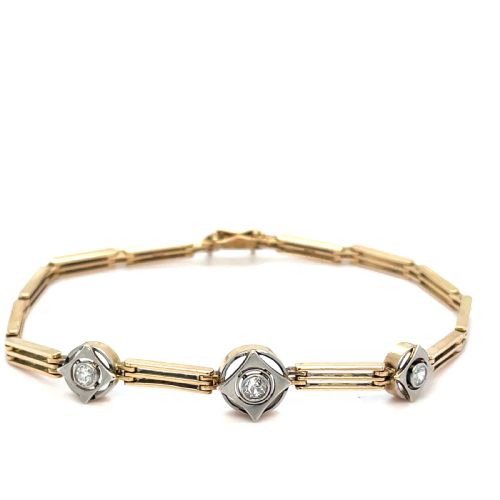
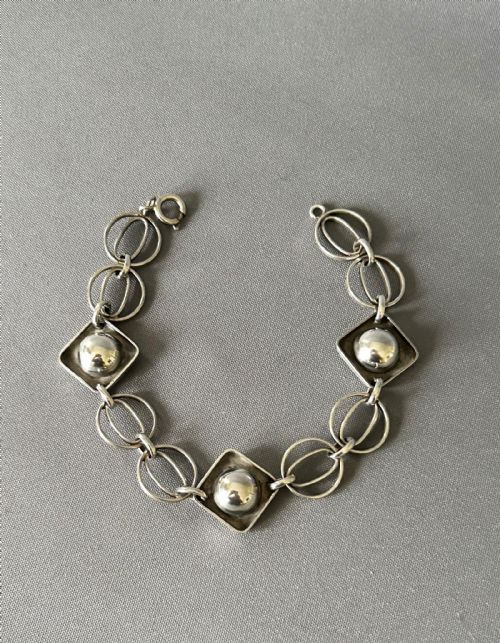
When you search for a geometric link bracelet, you encounter structured wrist ornaments predominantly defined by the clean lines and symmetrical motifs of the Art Deco period. These pieces span from the Edwardian era through the mid-twentieth century, capturing an evolution in design from early twentieth-century silver and gold work to robust mid-century creations.
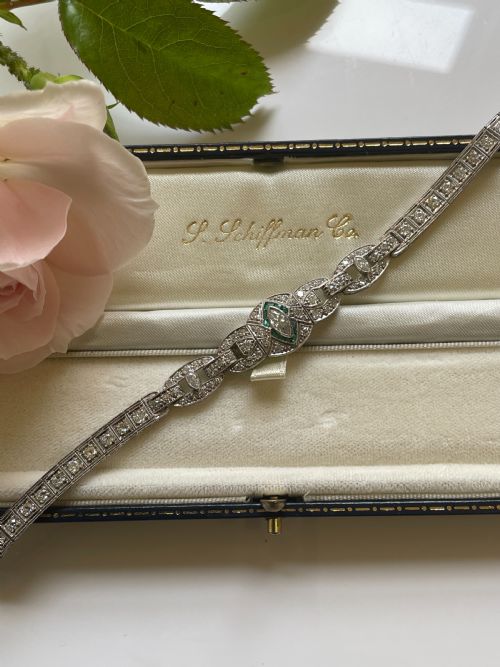
The version you are most likely to meet on this page is an Art Deco panel link or brickwork bracelet, often fashioned in platinum or silver and frequently set with diamonds alongside emeralds or sapphires. Alongside these metal and gemstone compositions, industrial materials such as chrome and enamel appear in striking modernist designs.
Originating from workshops across Britain, France, Austria, Germany, and beyond, these bracelets showcase distinct regional interpretations of linear style. Whether rendered as an engraved tank bracelet in gold or a gem-set platinum creation, each piece relies on modular construction to drape smoothly around the wrist.
Materials and construction techniques
Metals form the structural backbone of these bracelets, utilising platinum, yellow gold, white gold, rose gold, silver, and chrome to support intricate link systems. Precious stones including diamonds, emeralds, sapphires, rubies, turquoise, and pearls are integrated alongside enamel, chalcedony, and marcasite to introduce colour and texture.
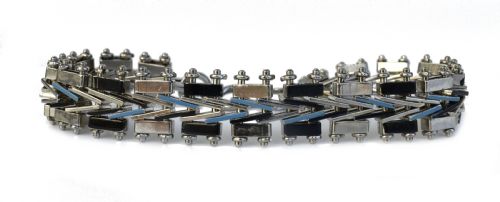
Artisans employed precise metalworking techniques such as engraving, articulation, and panel construction to create flexible geometric patterns. Jakob Bengel pieces demonstrate specialised industrial metalworking involving chrome and enamel, while fine jeweler workshops utilised platinum settings to secure pavé and gemstone layouts.
Some Art Deco bracelets borrow their sturdy brickwork geometry directly from industrial machinery treads.
The spectrum of execution and materials
The upper tier of these bracelets is distinguished by heavy precious metal foundations, predominantly platinum, paired with substantial diamond carat weights and fine gemstones like emeralds and sapphires. Master workshop execution shows in the seamless articulation of links and the precision of hand-engraving.
Lower tiers rely on alternative industrial materials such as chrome, base metal, and enamel, or modest gold and silver weights with smaller gemstone accents. Quality differences manifest in the crispness of the geometric design and the durability of the mechanical joints connecting each link.
Jakob Bengel
The Geometric Link Bracelet Glossary
- Art Deco
- A design style dominant in the 1920s and 1930s characterised by sleek geometric shapes, streamlined forms, and modern industrial influences. It represents a sharp departure from the flowing organic curves of earlier periods.
- Tank bracelet
- A bold, chunky link bracelet style popular in the interwar years, named for its resemblance to the treads of military tanks. These pieces are typically articulated for flexibility on the wrist.
- Platinum
- A dense, durable, and naturally white precious metal widely used in fine jewellery during the early twentieth century. Its strength allowed jewellers to create delicate-looking settings that securely held numerous diamonds.
- Brickwork bracelet
- A specific link pattern resembling alternating rows of masonry, frequently utilised in modernist German metalwork. This construction creates a flexible band with a distinct industrial rhythm.
- Marcasite
- Small, faceted pieces of iron pyrite set into silver jewellery to produce a sparkling, steel-like brilliance. It was a favourite material for adding decorative texture during the Art Deco era.
Geometric Link Bracelet: Frequently Asked Questions
How do I wear an antique bracelet?
Wearing an antique bracelet safely involves matching its clasp security and physical flexibility to your daily activities. Articulated tank bracelets and flexible link bands distribute weight evenly and conform naturally to the wrist.
Because many pieces feature delicate gemstones in platinum or gold settings, avoid exposing them to harsh impacts. Storing them flat protects their hinged connections and structural integrity.
How do I date a geometric bracelet?
Dating a geometric bracelet relies on examining its materials, construction methods, and stylistic hallmarks. Pieces from the Edwardian era and 1910s often feature lighter filigree work, while 1920s and 1930s Art Deco examples showcase sharp lines, platinum settings, and diamond pavé.
Mid-century pieces from the 1950s and 1960s introduce heavier gold weights and broader abstract links. Maker marks and metal hallmarks also provide specific chronological reference points.
Are these bracelets flexible?
Most geometric link bracelets incorporate articulated joints or hinged connections to ensure smooth movement around the wrist. This engineering prevents rigid metal panels from catching or bending under pressure.
Some industrial variations utilise interlocking metal channels that permit fluid motion while maintaining a flat geometric surface. This flexibility is essential for both comfort and the longevity of the metal links.