

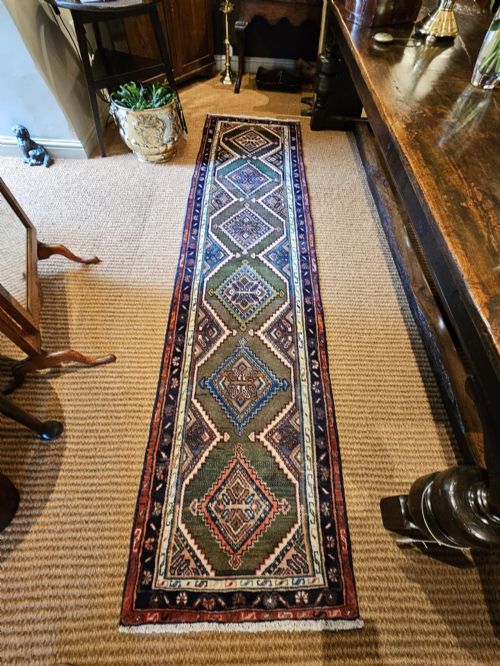




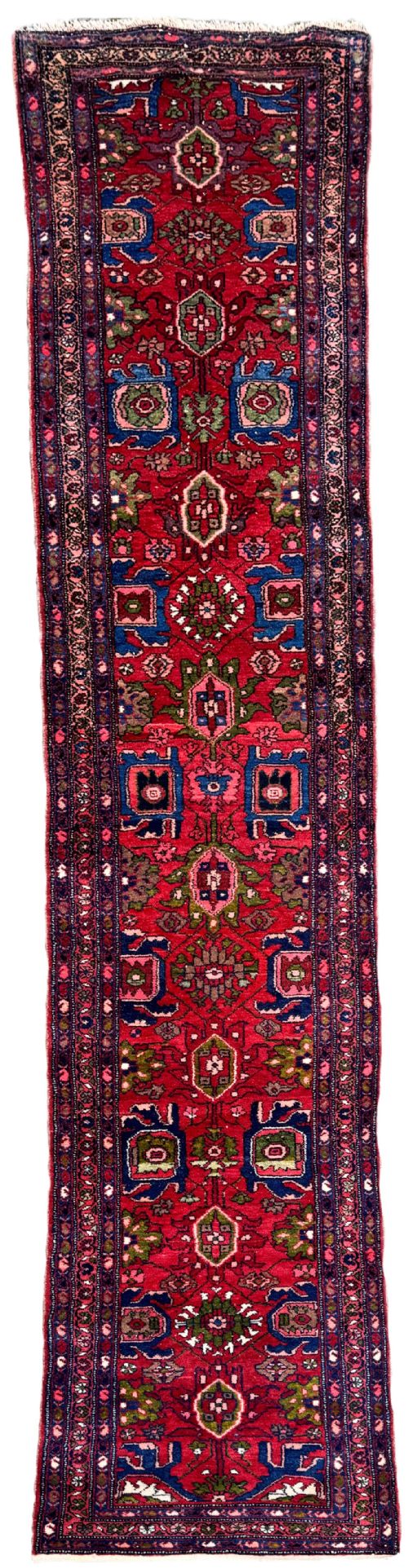
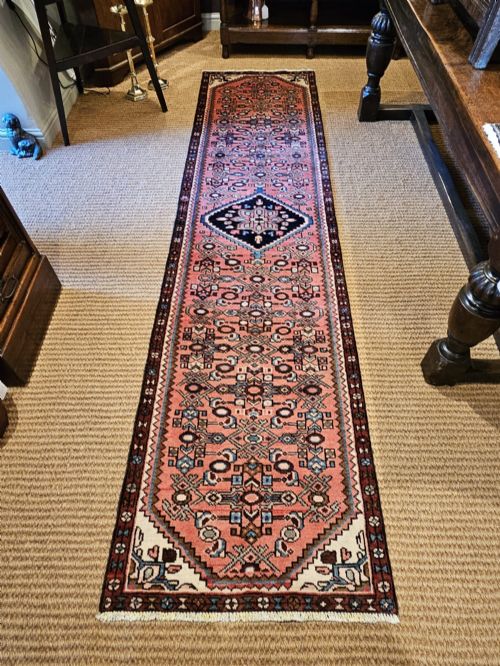
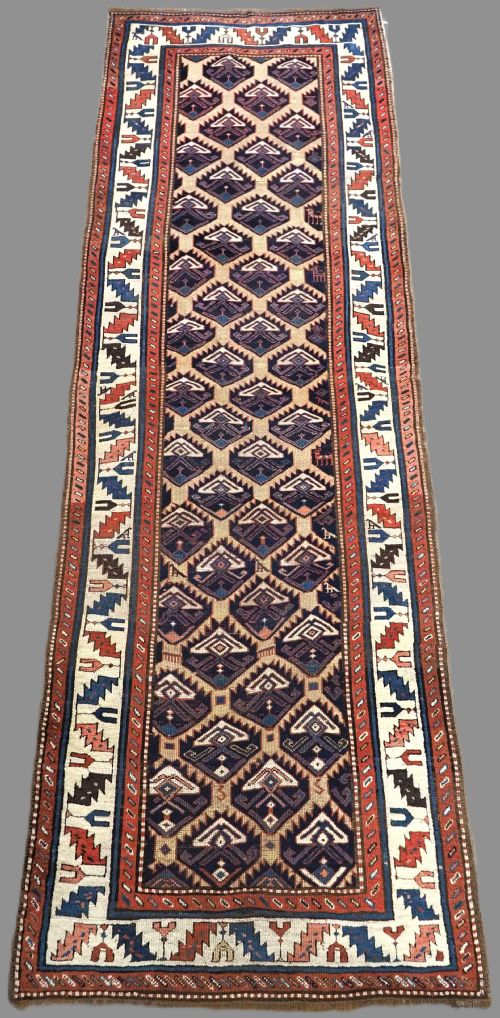
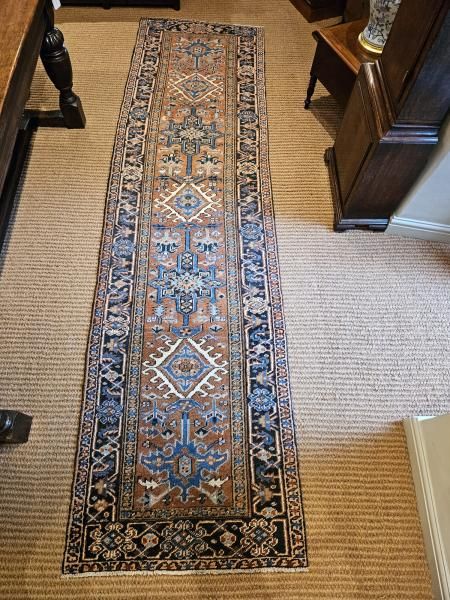
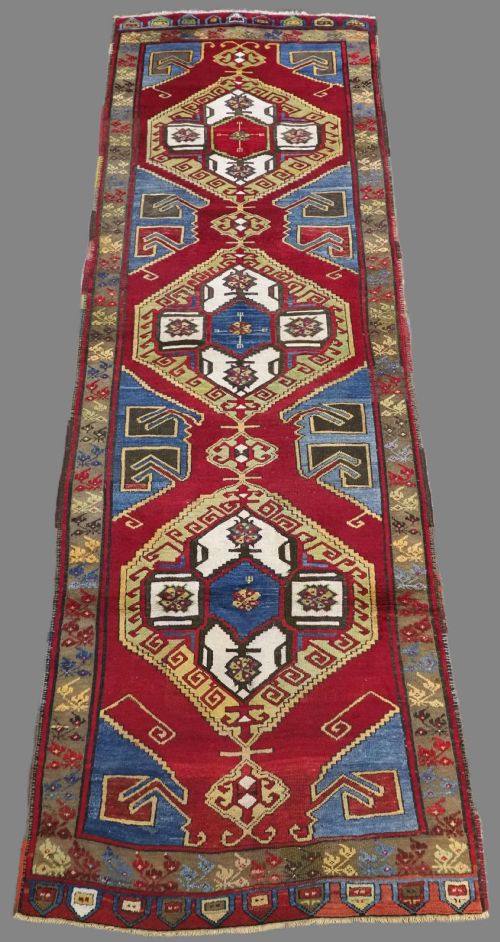
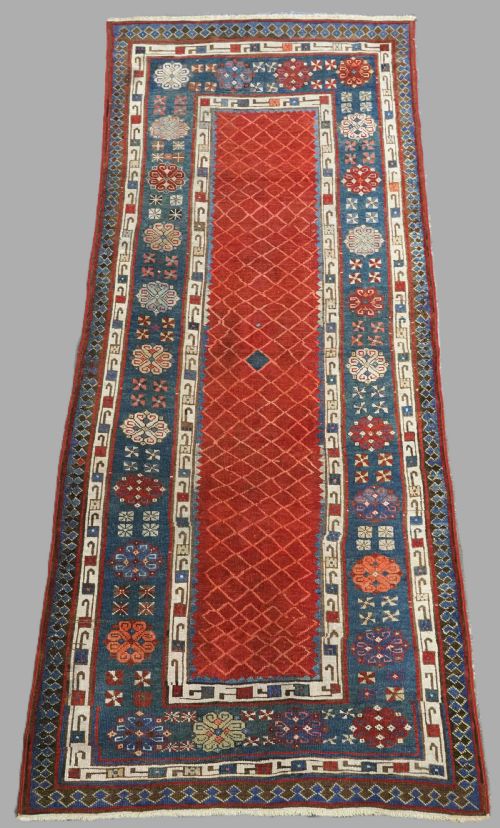
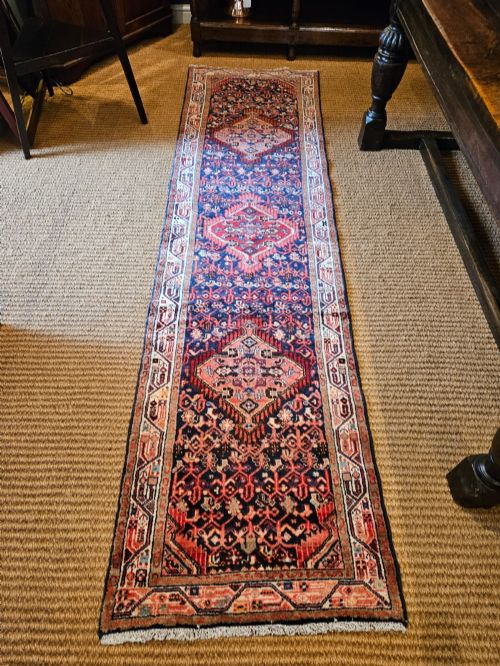

Geometric Hallway Carpet
These antique floor coverings offer linear patterns suited to corridors, bringing traditional weaves from Persian, Caucasian, and Anatolian traditions into domestic spaces.
Geometric Hallway Carpet
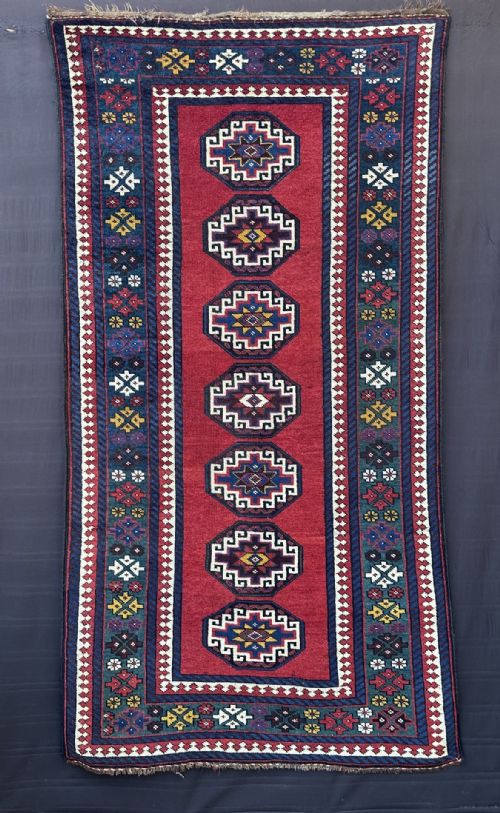
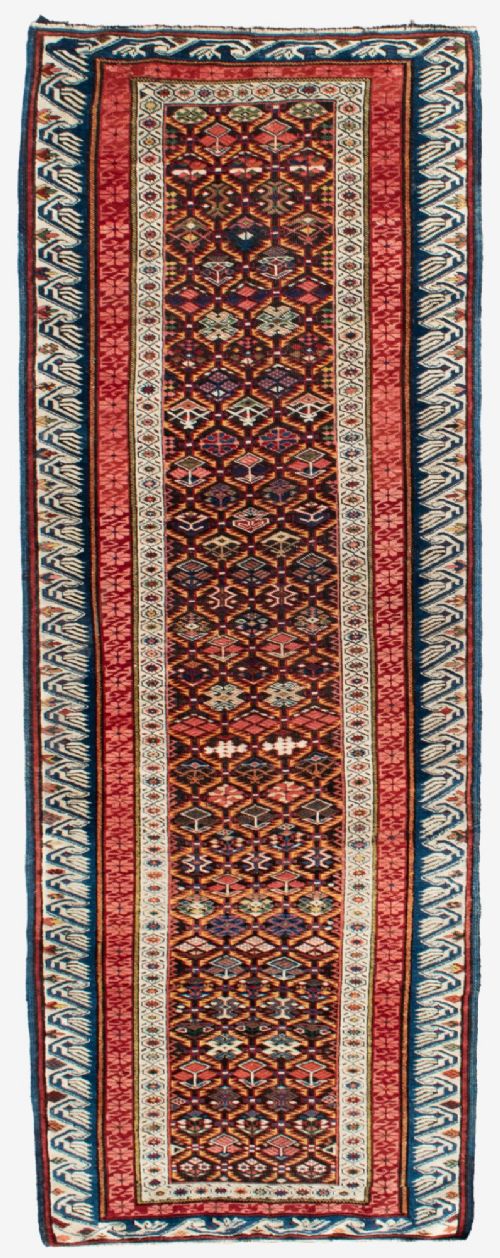
A geometric hallway carpet typically takes the form of an elongated runner or long rug, designed specifically to traverse narrow corridors and passageways. These pieces originate from various regional traditions including Persian, Caucasian, Kurdish, and Anatolian workshops.
The selections span from the late nineteenth century through to the 1930s, encompassing tribal and village productions. Formats range from narrow Moroccan and Malyor runners to substantial Heriz, Hamadan, and Bidjar long rugs.
Materials and construction
These textiles are built primarily from wool and cotton, utilising natural fibres spun by hand for the pile and foundation. The structural weave relies on sturdy cotton warps and wefts paired with dense wool knots that withstand heavy foot traffic.
Weavers employed traditional upright looms to construct these floor coverings, translating tribal motifs and lattice designs directly from memory or local convention. The dyeing methods involve natural pigments derived from plants and minerals, resulting in stable, deep hues over time.
Some antique runners arrive with wonderfully crooked geometry, proving the weaver worked without graph paper or strict rules.
Assessing quality and integrity
Quality rests upon the tightness of the knotting and the resilience of the wool used in the pile, which determines how well the runner retains its structural form under daily use. Finer examples maintain straight borders and consistent pile depth across the entire length of the carpet.
The complexity and execution of the lattice design or tribal motifs dictate the aesthetic merit of the piece. Integrated dye usage and well-balanced palettes separate standard village work from exceptional woven examples.
The Geometric Hallway Carpet Glossary
- Runner
- A long, narrow carpet format specifically proportioned for corridors, hallways, and staircases.
- Pile
- The upright or knotted surface of a carpet formed by the cut ends of yarn.
- Lattice
- A decorative framework of criss-crossing bars or lines forming a repeating geometric grid pattern across the field.
- Warp
- The vertical foundation threads stretched tightly on a loom before the weaving begins.
- Weft
- The horizontal threads passed alternately over and under the warp threads to bind the knots in place.
Geometric Hallway Carpet: Frequently Asked Questions
Where should I place a long runner?
These narrow floor coverings suit high-traffic corridors, entrance halls, and narrow passageways where linear floor space requires definition and acoustic softening.
They also function effectively in long kitchens or alongside large pieces of furniture in reception rooms.
How do I care for an old wool carpet?
Regular gentle vacuuming without a rotating brush roll prevents dust accumulation within the wool pile.
Professional specialist cleaning is recommended periodically to preserve the natural lanolin and dyes within the fibres.
Are these runners made with natural dyes?
Many examples from the nineteenth and early twentieth centuries utilise traditional vegetable and mineral dyes extracted from local plants and insects.
These colourants yield rich, saturated tones that age gracefully with exposure to light.
How do I identify a tribal rug?
Tribal pieces generally display geometric motifs, repeating lattices, and asymmetrical design elements reflecting the nomadic heritage of the weavers.
Unlike formal city workshop carpets, these village productions often show charming irregularities in symmetry and line.