



Geometric Dress Clip
A geometric dress clip brings sharp lines and tailored symmetry to a lapel or neckline, offering a distinct slice of twentieth-century design.
Geometric Dress Clip
A geometric dress clip sits securely on heavy fabrics, translating the rigorous angles and structured forms of the interwar years into wearable metalwork. These pieces emerge primarily from the nineteen twenties, thirties, and forties, showcasing the enduring influence of the Art Deco and Modernist movements.
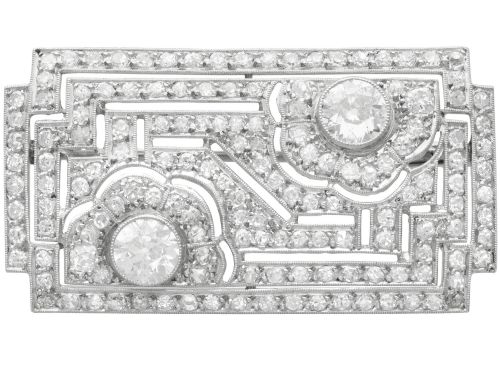
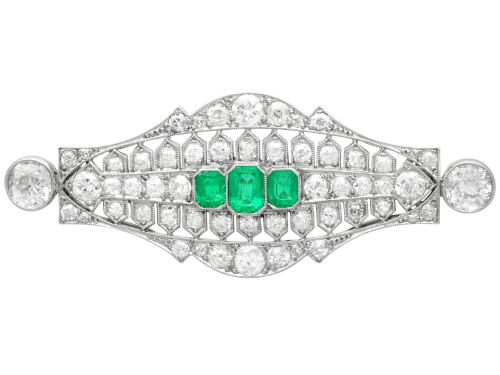
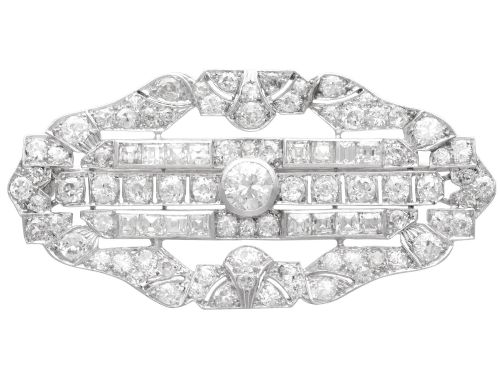
The versions met most frequently on this page take the form of brooches, pins, and convertible double clip pendants. They range from silver-plated and glass novelties to substantial platinum mounts set with old cut diamonds and emeralds.
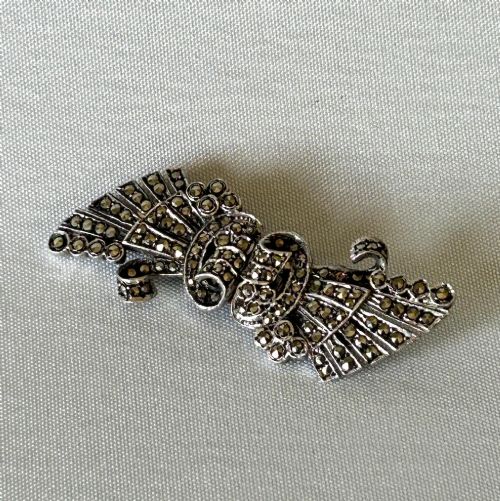
Makers and workshops of the period explored strict symmetry and architectural layouts, ensuring that each geometric dress clip functioned as both a functional fastener and a miniature sculpture. Buyers encounter everything from simple silver and marcasite examples to elaborate multi-stone compositions designed for formal attire.
How they were made
Construction relies heavily on precious metals like platinum and fourteen or eighteen carat gold, which provide the structural rigidity required for intricate stone settings. Silver and silver plating appear alongside alternative substances such as Galalith in more industrial modernist designs.
Lapidary work focuses on old cut diamonds and emeralds shaped to fit rigid channel or pave settings that emphasise straight lines and repetitive motifs. Metal smiths utilised piercing, milling, and soldering to build layered frames that hold glass or synthetic elements securely without excess bulk.
Geometric Dress Clip Retail Price Guide 2026
Typical asking prices for geometric dress clip among the pieces listed under this phrase on Sellingantiques today, from the lower quarter to the upper quarter. They describe what is for sale here now, not the wider market.
Listings feature items spanning the nineteen twenties, thirties, and forties, reflecting the peak years of geometric jewellery production.
What varies in quality
Quality separates simple mass-produced costume pieces from high-end jeweller's work through the choice of materials and the precision of the metal assembly. Platinum mountings set with large, well-matched old cut diamonds represent the upper tier of execution, demanding advanced bench skills.
The integrity of the clip mechanism itself dictates daily usability, where tight springs and robust hinge pins distinguish superior workshop production. Finer items exhibit crisp bevelling and secure stone placement that withstands regular wear without losing alignment.
Jakob Bengel
The Geometric Dress Clip Glossary
- Art Deco
- A design style dominant in the nineteen twenties and thirties characterised by sleek straight lines, geometric shapes, and streamlined forms. It rejects Victorian curves in favour of industrial modernity.
- Galalith
- A semi-synthetic plastic derived from casein and formaldehyde, widely utilised in modernist jewellery during the interwar period. It takes bright colours well and mimics natural horn or tortoiseshell.
- Marcasite
- Small faceted pieces of iron pyrite set into silver mounts to provide a dark, metallic sparkle. It mimics the glitter of cut steel or diamonds in older jewellery.
- Old cut diamond
- A precursor to the modern brilliant cut, featuring a smaller table, higher crown, and open culet. These stones were shaped by hand to catch candlelight rather than electric illumination.
- Duette dress clip
- A versatile piece of jewellery comprising two matching clips locked into a detachable frame to form a single brooch. Each clip can also be worn independently on the lapels of a coat or dress.
Geometric Dress Clip: Frequently Asked Questions
How do you wear a dress clip?
A dress clip fastens directly onto the fabric of a collar, lapel, or neckline using a specialised mechanism on the reverse. They work particularly well on heavier winter coats and tailored wool jackets.
Many styles also attach to a dedicated frame to function as a traditional brooch. This versatility allows the piece to transition easily between different garments.
What is the difference between a clip and a brooch?
A standard brooch relies on a hinged pin and safety catch to pierce and secure through fabric. A dress clip uses a folding double-prong mechanism that clamps firmly onto cloth without requiring a pin.
Clips gained popularity when heavier fabrics and sturdy knits made piercing difficult. Many interwar designs combine both systems into a single transformable piece.
How do you clean vintage platinum and diamonds?
Warm water mixed with mild washing-up liquid and a soft-bristled brush safely removes everyday oils and dust from platinum settings. Avoid harsh chemical cleaners that might damage softer surrounding materials or aged metal finishes.
Dry the piece thoroughly with a lint-free cloth after rinsing. Professional ultrasonic cleaning should be reserved for secure diamond settings inspected by a jeweller.
How can you tell an original nineteen thirties piece?
Original pieces from this decade display authentic construction methods, such as hand-cut gemstones and handcrafted platinum or silver findings. The weight, patina, and style of the metalwork reflect the manufacturing techniques of the interwar period.
Stylistic cues include strict geometric patterns, stepped motifs, and industrial influences unique to the era. Reproductions often lack the subtle hand-finished details found on period examples.