


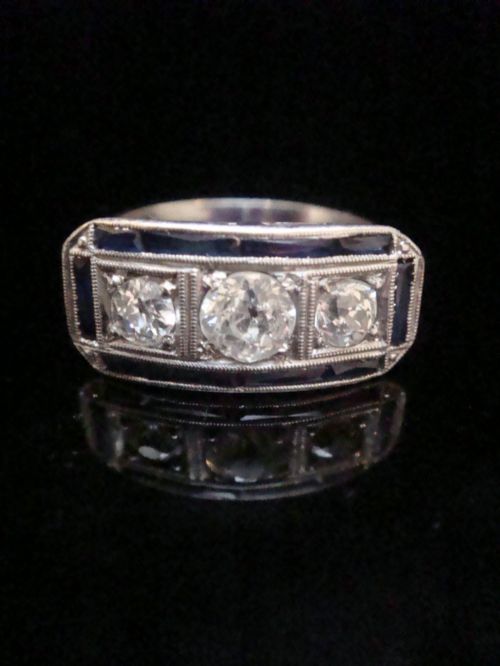


Geometric Diamond Dress Ring
A geometric diamond dress ring delivers striking linear presence on the hand through balanced symmetry and contrasting gemstone facets.
Geometric Diamond Dress Ring
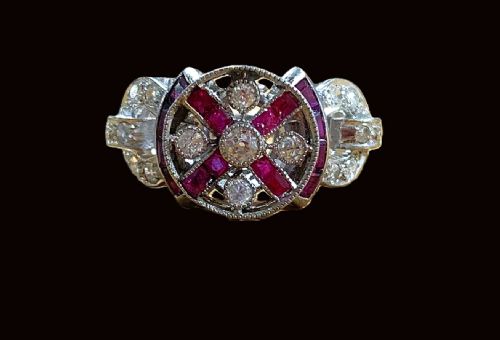
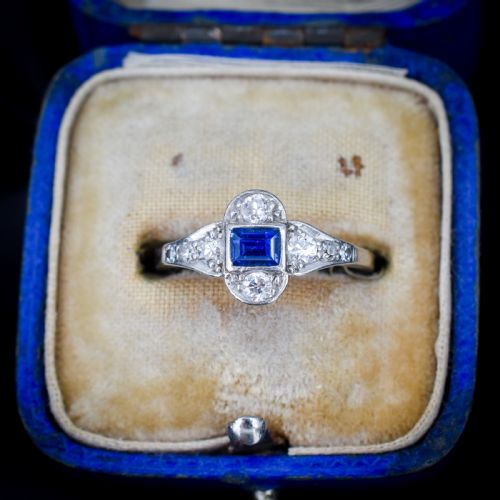
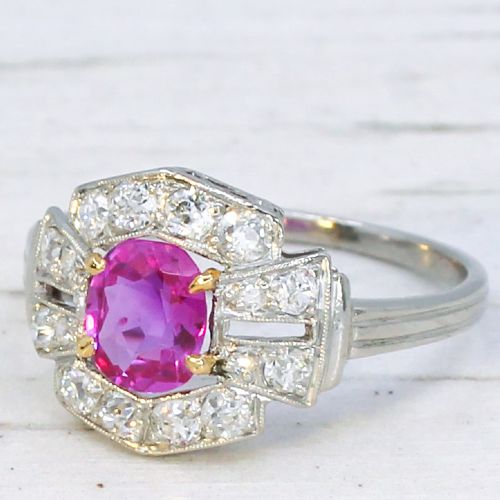
A geometric diamond dress ring combines architectural lines with sparkling stones to create a focal point on the finger. These jewels draw heavily on the Art Deco aesthetic alongside later mid-century revivals.
Most pieces encountered here hail from the 1920s and 1930s, featuring structured platinum or gold settings. Target designs, plaques, and clusters dominate the selection.
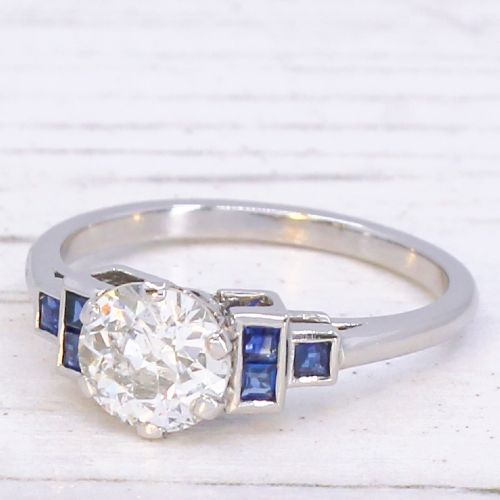
Makers integrated calibrated sapphires, rubies, emeralds, and onyx to accentuate the angular diamond configurations. Such rings served primarily for evening wear and formal social occasions.
Materials and construction methods
Platinum served as the primary metal for securing intricate stone settings without bulk. 18ct white gold and yellow gold also provided robust foundations for complex face designs.
Goldsmiths utilised old cut, transitional cut, and single cut diamonds alongside tightly calibrated coloured stones. Precision cutting allowed gems to fit flush within rigid geometric borders.
Current listings span the Edwardian era through to the 1960s, uniting platinum and gold with sapphires, rubies, and emeralds.
Distinctions in construction and stone selection
The precision of the metalwork defines the upper tier of these jewels. Hand-pierced galleries and sharp, unblemished edges separate master craftsmanship from standard production.
Stone matching dictates overall harmony. Uniform colour saturation in accompanying sapphires or rubies elevates a piece above unevenly matched alternatives.
The Geometric Diamond Dress Ring Glossary
- Calibre cut
- Stones shaped specifically to fit tightly together in a structured row or pattern. This technique creates continuous lines of colour without visible metal spacing.
- Target ring
- A circular design featuring a central stone encircled by contrasting concentric bands of gems. It mimics the appearance of a shooting target.
- Old cut
- A diamond facet style popular before modern brilliant cutting standards emerged. These stones exhibit smaller tables and higher crowns.
- Plaque ring
- A flat, wide face setting that covers the finger with detailed openwork and stones. It offers an expansive canvas for angular motifs.
Geometric Diamond Dress Ring: Frequently Asked Questions
What defines a geometric diamond dress ring?
These rings feature rigid lines, symmetrical patterns, and structured arrangements of diamonds paired with platinum or gold.
Their design language originates predominantly from the Art Deco period, prioritising architectural form over organic curves.
How were these rings worn originally?
Owners wore them as statement pieces on fingers other than the left ring finger for evening events and social gatherings.
They functioned as bold fashion accessories designed to catch candlelight and complement contemporary tailoring.
How do I care for antique platinum settings?
Platinum develops a soft patina over decades of wear, which many collectors prefer to preserve rather than polish away.
Gentle cleaning with warm soapy water and a soft brush maintains the sparkle of the diamonds without straining old claws.
How do I distinguish 1920s pieces from later revivals?
Original pieces from the 1920s and 1930s exhibit specific hand-fabrication traits and authentic wear consistent with age.
Mid-century revivals often utilise heavier casting techniques and distinct cutting styles that reflect the tastes of later decades.