


Antique French Diamond Jewellery
Antique French diamond jewellery brings together historic goldsmithing and brilliant stones across rings, bracelets, and brooches.
Antique French Diamond Jewellery
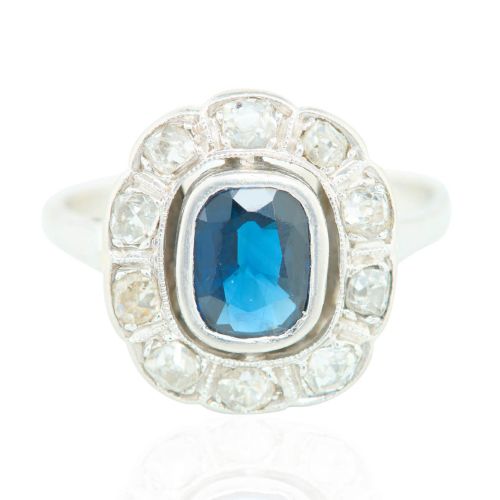
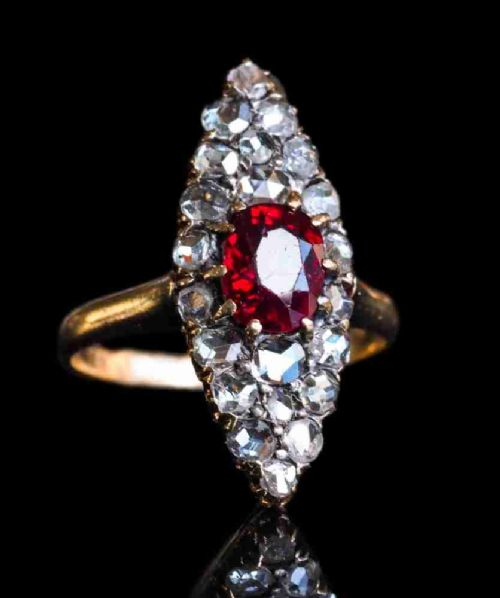
Cluster rings, diamond bracelets, and gemstone cocktail rings form the core of what is available on this page. Pieces frequently incorporate sapphires, rubies, and emeralds alongside central diamonds.
The selection ranges from delicate floral spray brooches of the nineteenth century to geometric platinum cocktail rings of the 1920s and 1930s. Each object reflects the prevailing decorative style of its decade of origin.
How they were made
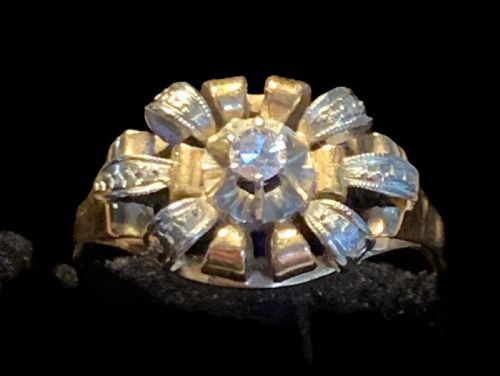
Goldsmiths utilised a combination of precious metals, casting and setting diamonds in platinum, 18ct white gold, 18ct yellow gold, and silver. Older pieces often paired silver-topped gold to enhance the brilliance of early diamond cuts against a dark background.
The stones themselves display historical cutting techniques, predominantly featuring old-cut, transitional-cut, and rose-cut diamonds rather than modern brilliant cuts. Gemstones are secured using precise claw, bezel, and pave settings appropriate to the period.
The listings here feature items set in platinum, 18ct yellow gold, 18ct white gold, and silver, dating from the nineteenth century to the 1960s.
What varies in quality
The standard of workmanship depends upon the precision of the metalwork, particularly in intricate platinum filigree or multi-stone cluster arrangements. Master workshops demonstrated superior handling of delicate gallery wire and secure stone setting.
Quality also rests in the selection of the primary gemstones, such as natural unheated rubies or Ceylon sapphires, balanced with the matching clarity and colour of surrounding diamonds. The integration of maker marks and official French assay stamps adds assurance of composition.
Van Cleef & Arpels·Chaumet
The Antique French Diamond Jewellery Glossary
- Old-cut diamond
- A hand-faceted diamond cut popular before the advent of modern machinery, featuring a smaller table and high crown.
- Navette ring
- A ring featuring a pointed, boat-shaped bezel that stretches along the finger.
- Platinum
- A dense, durable white metal utilised extensively during the Edwardian and Art Deco periods for fine stone settings.
- Toi et moi
- A ring style featuring two main stones placed side by side, translating to you and me.
- Assay mark
- An official stamp struck on precious metal items to guarantee the purity of the gold, silver, or platinum.
Antique French Diamond Jewellery: Frequently Asked Questions
How do I identify French gold marks?
French pieces typically feature tiny punch marks known as hallmarks, such as the eagle head for 18ct gold or dog head for platinum, stamped onto the exterior of the band or mount.
These tiny symbols require a loupe to inspect properly and indicate the specific standard of metal purity mandated by French assay offices at the time of manufacture.
What is the difference between Edwardian and Art Deco diamond jewellery?
Edwardian pieces rely on platinum and yellow gold to create lace-like garlands, bows, and floral motifs using old-cut diamonds.
Art Deco designs shift toward strict geometric shapes, symmetry, and platinum settings that emphasise transitional and old-cut stones in bold configurations.
Are these diamonds certified?
Diamonds in antique items are generally evaluated within their original mounts rather than accompanied by modern laboratory certificates.
Carat weights and stone grades are therefore estimated by dimensions and visual assessment while remaining securely set in their historical pieces.
How should I care for antique diamond jewellery?
Regular cleaning with warm soapy water and a soft brush helps maintain the brilliance of the diamonds and clears oils from the metalwork.
Avoid harsh ultrasonic cleaners, particularly for pieces containing softer gems like emeralds or pearls that require gentle handling.