



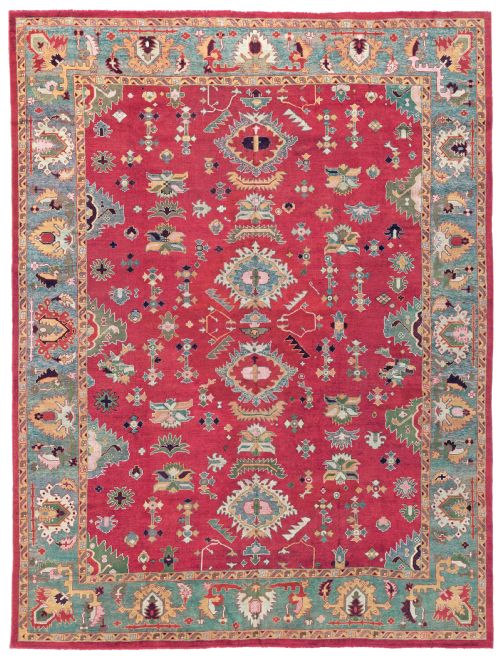


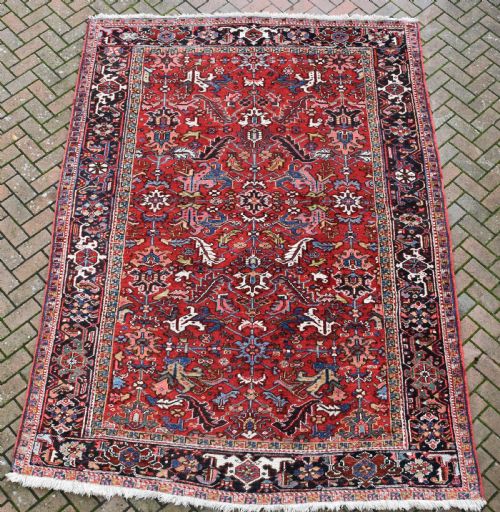


Geometric Border Rug
A geometric border rug brings linear clarity and disciplined pattern to a floor through centuries-old weaving traditions from Persia, the Caucasus and beyond.
Geometric Border Rug
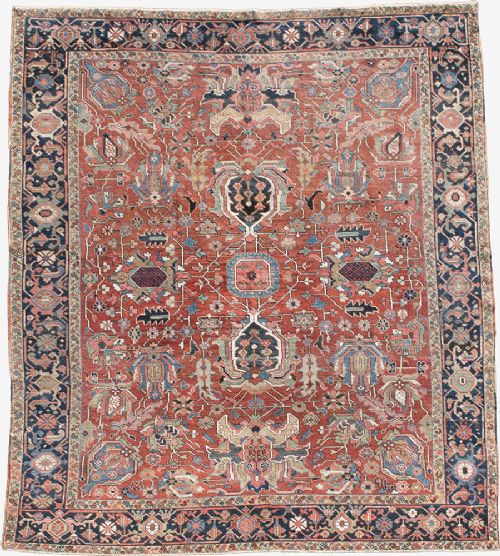
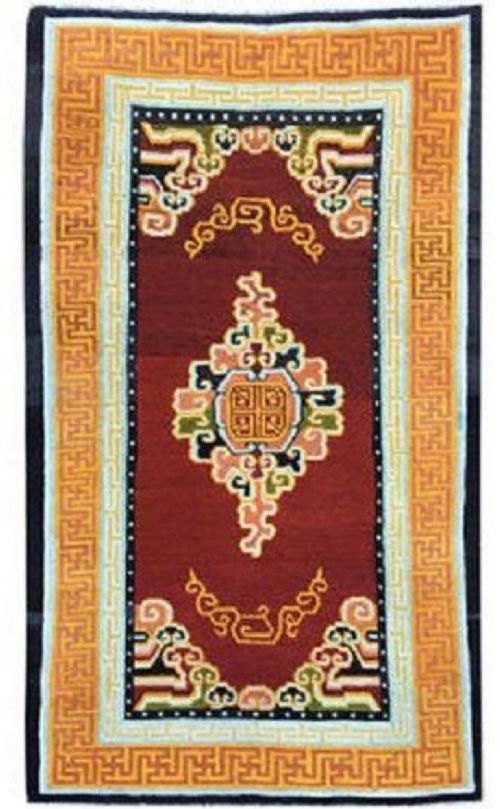
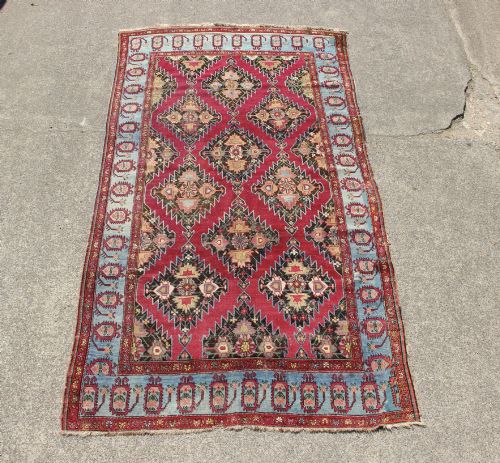
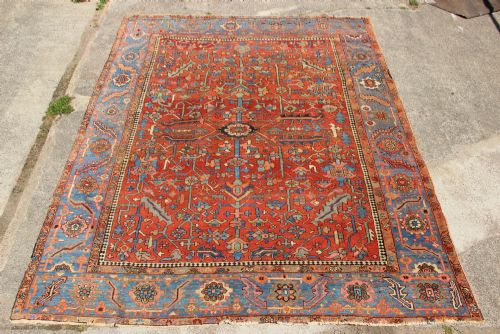
When searching for a geometric border rug, buyers encounter floor coverings structured by linear framing motifs rather than sprawling floral vines. These pieces range from substantial room-sized carpets down to narrow runners and tent bands originating across Western Asia and Inner Asia.
The selections recorded here span periods from the mid-nineteenth century through to the interwar years, predominantly encompassing tribal and village weaving traditions. Heriz, Caucasian, and Kurdish regions supply the majority of these pieces, alongside Tibetan and Anatolian examples.
Formats vary significantly, including long corridor carpets, prayer rugs, and saddle covers. Each type utilises distinct structural frameworks to enclose central fields filled with medallions, lattice networks, or stark geometric symbols.
Materials and construction
Weavers constructed these textiles primarily using wool, cotton, and hand-spun wool, yielding resilient piles capable of withstanding generations of daily footfall. Foundation warps andwefts frequently incorporate cotton or wool, secured with hand-knotted or flatwoven soumak techniques.
Natural dye stuffs generated the saturated palettes observed across the pieces, creating tonal variations within individual borders and fields. Leather elements occasionally appear in supporting structures or repairs, reflecting practical adaptations by regional makers.
Geometric Border Rug Retail Price Guide 2026
Typical asking prices for geometric border rug among the pieces listed under this phrase on Sellingantiques today, from the lower quarter to the upper quarter. They describe what is for sale here now, not the wider market.
Listings feature wool, hand-spun wool, and cotton materials spanning the 1850s to the 1930s.
Judging quality in woven borders
Quality separates along lines of structural integrity, precision in knotting, and the handling of dyestuffs across the field and frame. Superior examples demonstrate tight compaction of the weave, ensuring that the linear motifs maintain their intended angles without distortion.
The nuance of the palette dictates the upper tier of these pieces, where harmonious shifts in hue elevate the visual rhythm of the framing bands. Secondary factors include the crispness of the drawing within the primary and guard borders, distinguishing skilled village workshops from standard commercial output.
The Geometric Border Rug Glossary
- Warp
- The stationary vertical threads stretched upon a loom before weaving begins, forming the foundational skeleton of the textile. Fringe ends typically reveal these parallel strands.
- Weft
- The horizontal strands passed alternately over and under warp threads to bind knots in place. These structural rows determine the firmness of the rug body.
- Soumak
- A flatweaving technique where pattern threads wrap over and under warp strands in a slanted herringbone fashion. This method creates a durable surface without a raised pile.
- Medallion
- A central ornamental motif balanced symmetrically within the main field of the textile. These focal designs often mirror the geometric language found in the surrounding borders.
- Runner
- A long, narrow carpet format designed specifically for hallways, corridors, or staircases. Their elongated proportions emphasise linear border arrangements.
Geometric Border Rug: Frequently Asked Questions
What defines a geometric border rug?
These textiles rely on repeating rectilinear motifs, angular bands, and linear frames to enclose the central field.
Unlike curvilinear floral carpets, their designs draw strength from straight lines, triangles, squares, and stylized strapwork.
Where were these rugs made?
Origins stretch across Persia, the Caucasus, Anatolia, and Tibet, reflecting distinct regional weaving cultures.
Village workshops and nomadic tribes produced the vast majority of these pieces using local materials and traditional designs.
How do I care for an antique rug?
Protect the wool pile by placing a breathable, high-friction underlay beneath the textile on hard flooring.
Vacuum gently without using rotating brush bars, and keep the piece away from direct, prolonged sunlight to preserve natural dyes.
How are different weaving regions identified?
Attribution relies on specific structural characteristics, such as knot type, colour palette, and border construction.
Motifs like Lesghi stars or Heriz medallions provide clear clues to the geographic source and tribal origin of the weaving.