
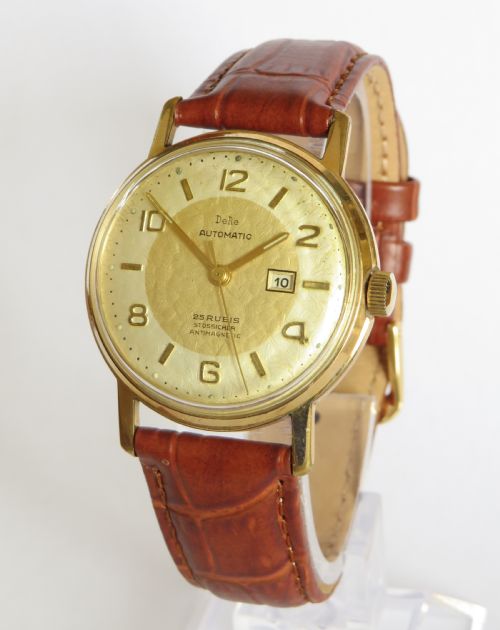
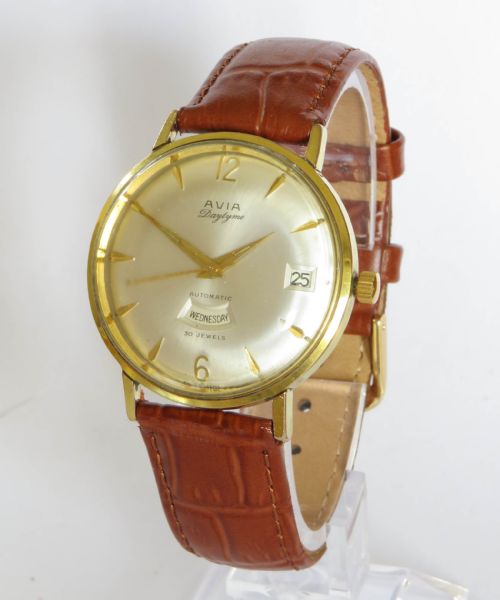
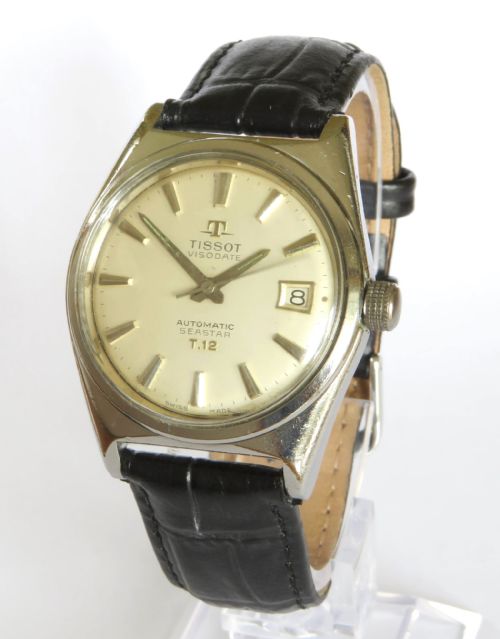
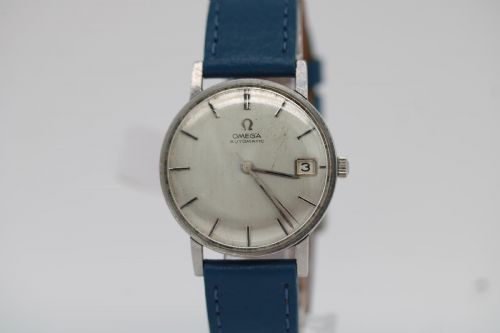
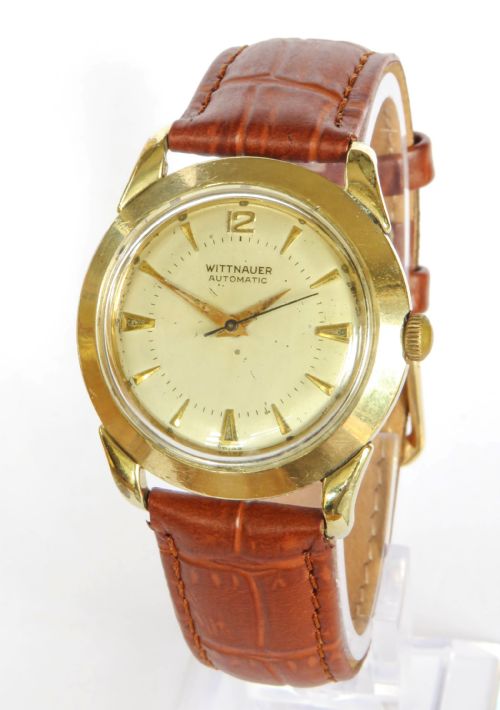


Gents Automatic Wristwatch
A gents automatic wristwatch carries the mechanical heartbeat of the mid-century on the wrist without need for daily winding.
Gents Automatic Wristwatch
A gents automatic wristwatch brings together self-winding mechanical movements and mid-century styling from the nineteen-fifties and nineteen-sixties. These timepieces rely on the natural motion of the wearer to power the internal gears.
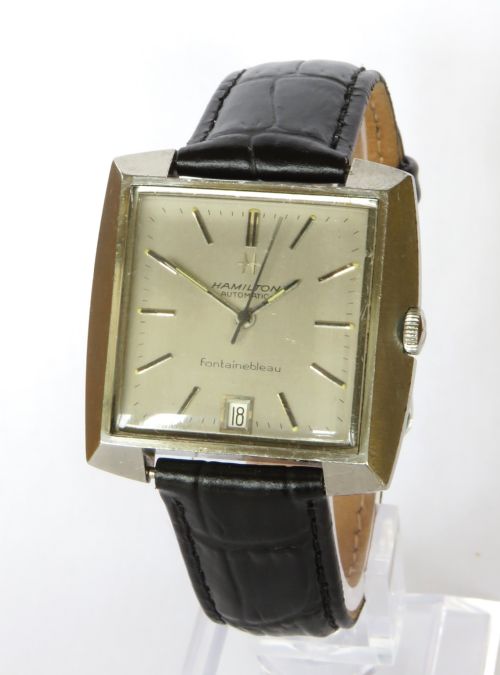
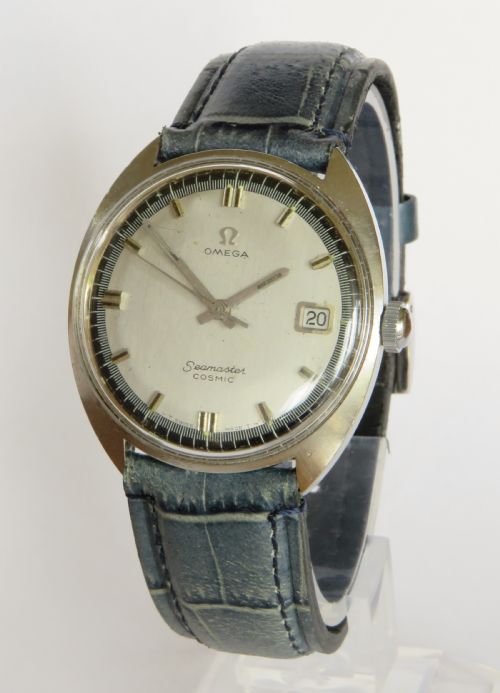
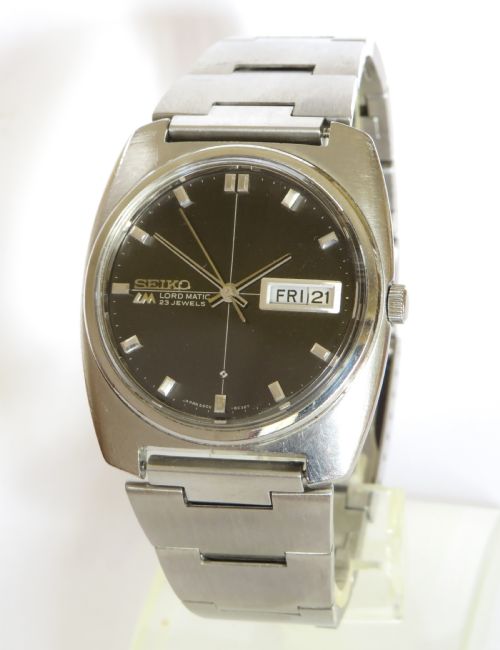
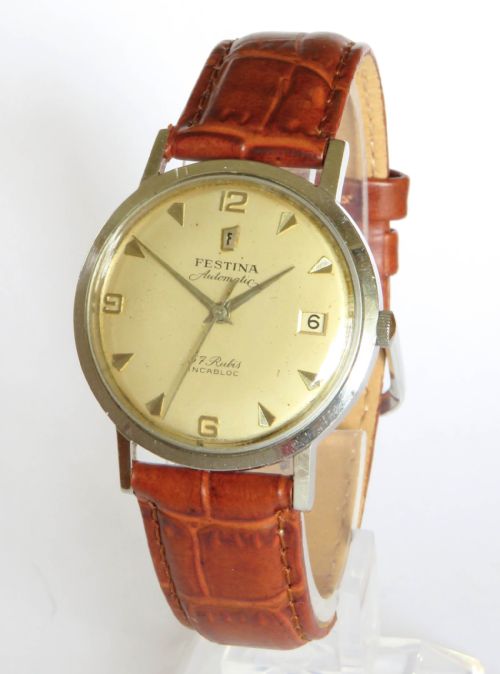
Most examples encountered on this page date from the nineteen-fifties or nineteen-sixties, reflecting the golden era of automatic watch production. Brands such as Omega, Tissot and Seiko dominate the selection, often appearing in classic round or tonneau forms.
The aesthetic spans mid-century modern design and nineteen-seventies retro influences, presenting clean dials alongside robust steel or gold-plated cases. Collectors seek these pieces for their daily wearability and mechanical interest.
How they were made
Cases combine stainless steel, gold plate and gold-plated metal to house the delicate internal mechanisms. These metals provide durability while offering a polished or brushed finish characteristic of the period.
Dials are protected by glass or acrylic glass crystals, sealing the face against dust and moisture. Leather straps complete the assembly, fastened to the lugs with traditional spring bars.
Some vintage movements give a tiny tap against your wrist as they wind themselves, like a tiny heartbeat tucked inside the steel.
What varies in quality
The refinement of the automatic movement dictates the mechanical grade, ranging from standard calibres to chronometer-certified mechanisms designed for high precision. Early bumper movements offer a distinct physical sensation on the wrist compared to full rotor systems.
Case finishing and material choice create distinctions across the range, moving from base metal gold plating to solid nine-carat gold constructions. Original dial condition and the crispness of case geometry also influence the character of each watch.
Hamilton·Omega·Seiko·Festina·Tissot·Wittnauer·Baume·Eterna·Prisma·Consul·Bulova·Colant·Longines·Waltham·Richard
The Gents Automatic Wristwatch Glossary
- Automatic
- A self-winding mechanical movement that uses a weighted rotor to wind the mainspring through natural wrist motion. This innovation removed the need for daily manual winding.
- Bumper automatic
- An early self-winding mechanism where the rotor swings back and forth within a limited arc, striking buffers with a gentle tap. Collectors prize this tactile movement for its vintage charm.
- Calibre
- The specific internal movement designation used by a manufacturer to identify a particular watch mechanism. Different calibres represent varying levels of complication and finishing.
- Acrylic glass
- A lightweight plastic crystal material used to cover the dial during the mid-century period. It can be easily polished to remove surface scuffs.
- Tonneau
- A barrel-shaped watch case design popular during the mid-century modern era. It curves gently to conform to the shape of the wrist.
Gents Automatic Wristwatch: Frequently Asked Questions
What is a gents automatic wristwatch?
A gents automatic wristwatch is a self-winding mechanical timepiece designed for men, powered by the movement of the wearer's arm.
These watches do not require batteries or manual daily winding, relying instead on an internal weighted rotor.
How do I wind an automatic watch?
Automatic watches wind themselves as you wear them throughout the day through normal arm movements.
If the watch has stopped completely, giving the crown a few manual turns will kickstart the movement before putting it on.
What is a bumper automatic movement?
A bumper automatic is an early form of self-winding movement where the weight swings partway and bounces off springs.
You can actually feel the gentle thud of the rotor against the bumpers on your wrist when wearing one.
Are these watches waterproof?
Vintage automatic wristwatches were generally water-resistant for daily use rather than waterproof for swimming.
Gaskets and seals degrade over decades, so exposure to moisture should be avoided unless a watchmaker has serviced and tested the case.