
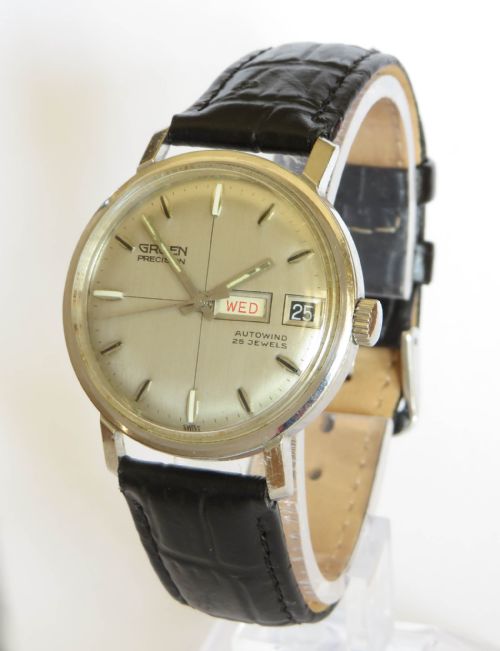
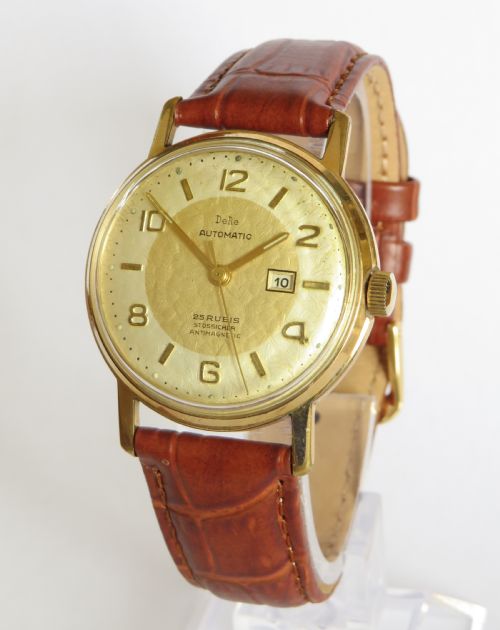
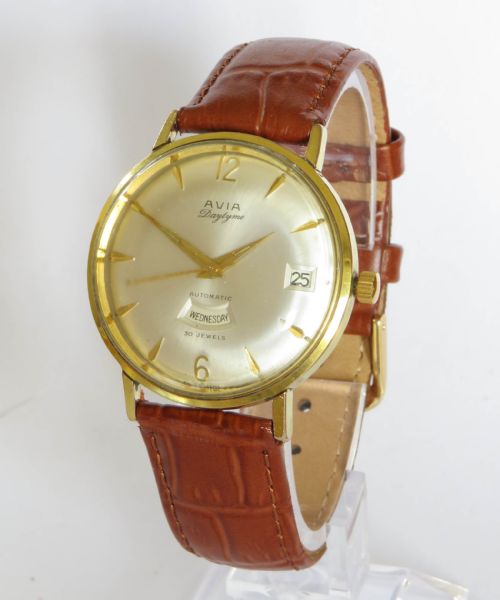
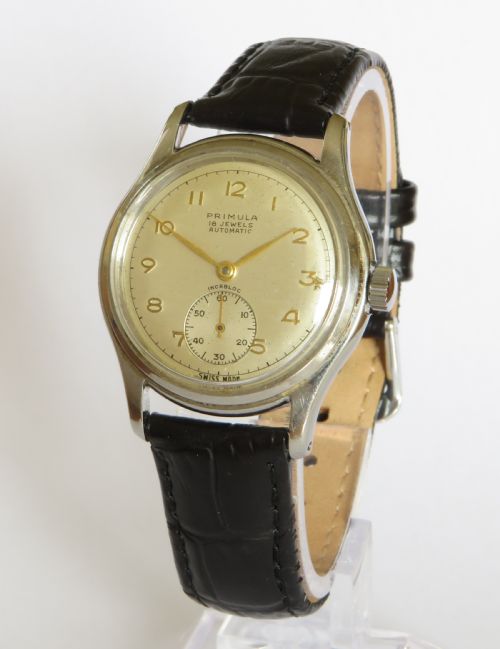
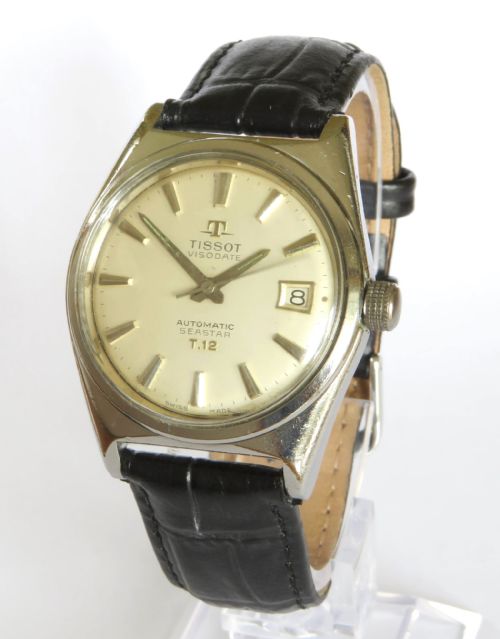
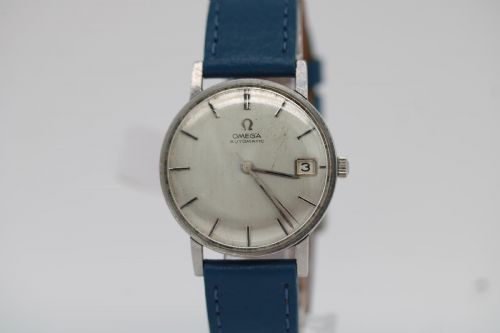
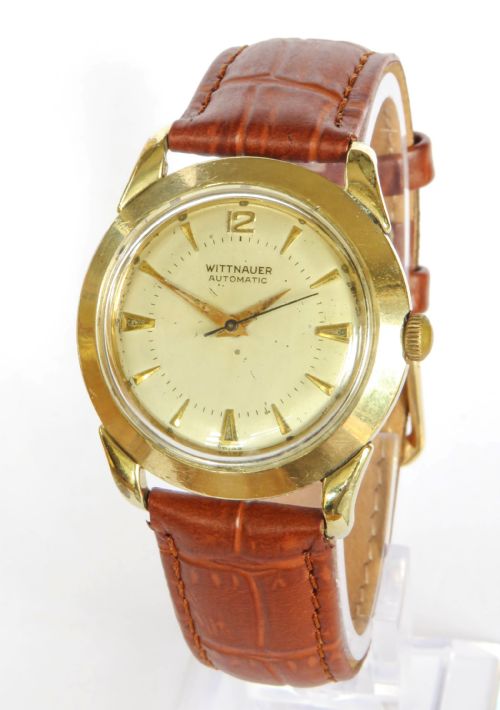


Gents Automatic Wrist Watch
A gents automatic wrist watch delivers mid-century mechanical engineering directly to the wrist.
Gents Automatic Wrist Watch
A gents automatic wrist watch is a self-winding timepiece driven by the natural movement of the wearer's arm, eliminating the need for daily manual winding. These pieces span the 1950s and 1960s, a period defined by mid-century modern design principles applied to horology.
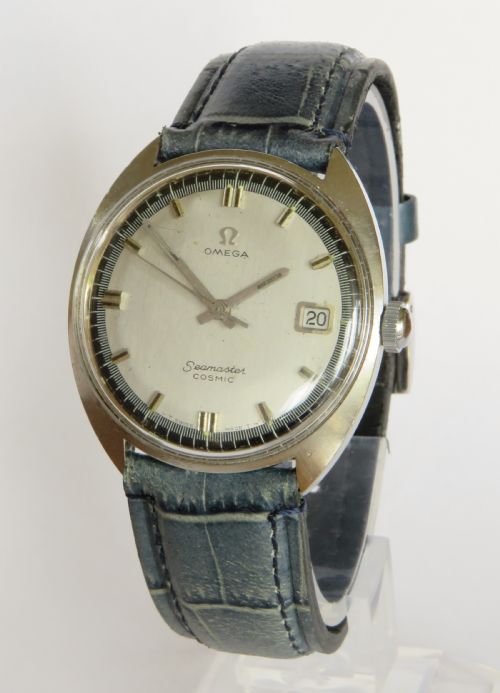
Buyers browsing this selection will frequently encounter classic stainless steel and gold-plated models from established Swiss and international makers. The forms range from robust dress pieces like the Omega Seamaster to everyday timekeepers fitted with leather straps.
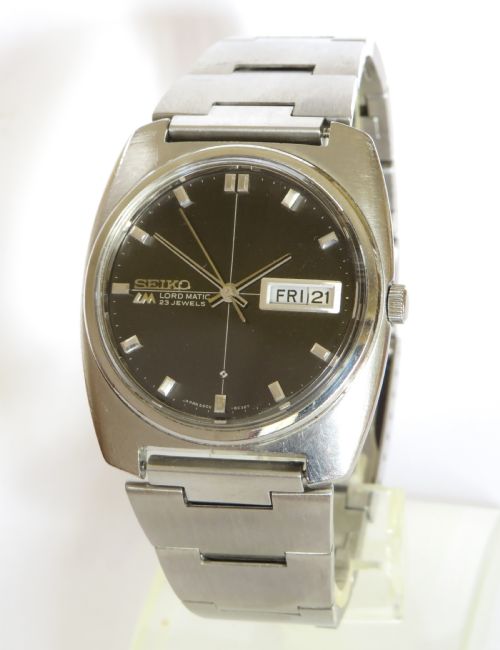
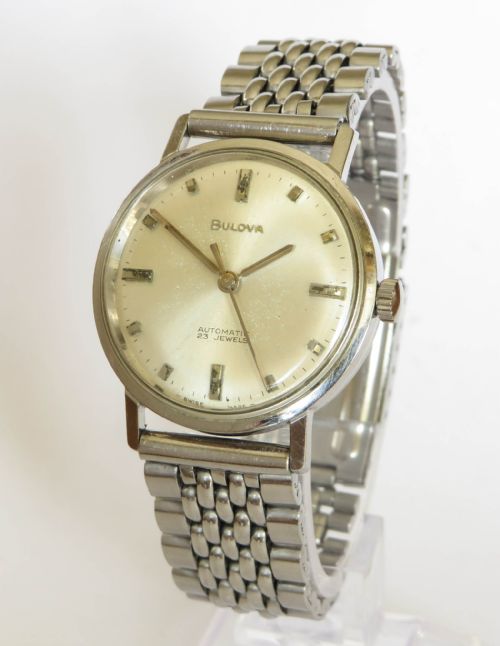
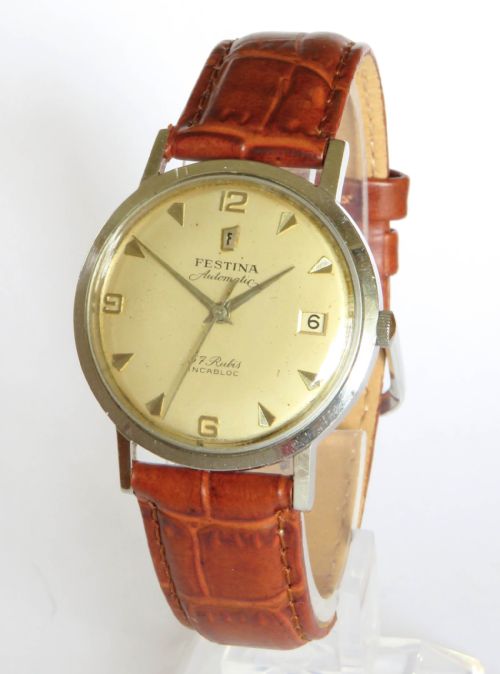
The aesthetic of a gents automatic wrist watch centres on clear dials, minimalist baton markers, and polished metallic cases. Many examples incorporate date apertures or sweep seconds hands, reflecting the practical innovations introduced during the mid-century decades.
Materials and Construction
Cases are formed primarily from stainless steel and gold-plated metal, occasionally complemented by solid gold variants, paired with protective acrylic or acrylic glass crystals over the dial. These metallic housings protect the mechanical movements while offering distinct finishes from polished brightness to brushed textures.
Strap fixings traditionally utilise genuine leather bands that secure the watch comfortably to the wrist. The internal movements rely on rotating rotor weights or bumper mechanisms driven by kinetic motion to tension the mainspring automatically.
Listings feature automatic wrist watches spanning the 1950s and 1960s in stainless steel, gold plate, and leather.
Distinctions in Quality
The hierarchy among these watches rests on the sophistication and finish of the internal movement, such as chronometer certification versus standard calibres. Higher-tier examples often include precision adjustments, complex water-resistant sealing systems, and superior metallurgical finishing on the gear trains.
Case execution and dial preservation also divide the grade of pieces, with crisp case geometry and untouched factory dials commanding greater regard. The distinction lies in the integrity of the original components and the precision with which the mechanical calibre maintains time.
Omega·Seiko·Bulova·Festina·Gruen Precision·Eterna Matic·Tissot·Wittnauer·Baume Bimatic·Prisma·Consul·Longines·Cortebert·Silvana·Royce·Aristo·Helvetia·MuDu·Lanco·Le Phare
The Gents Automatic Wrist Watch Glossary
- Automatic
- A self-winding mechanical watch movement that uses a weighted rotor to wind the mainspring through the wearer's arm movements. This system removes the daily requirement of manual crown winding.
- Bumper
- An early form of automatic movement where the oscillating weight swings back and forth against springs rather than rotating fully through three hundred and sixty degrees. The wearer can often feel the gentle knock of the weight against the bumper springs on the wrist.
- Chronometer
- A high-precision watch movement that has been tested and certified to meet strict accuracy standards over various temperatures and positions. These pieces represent the upper tier of mechanical performance.
- Calibre
- The specific manufacturer's designation for a particular watch movement design and size. Collectors reference the calibre number to identify the exact internal mechanism housed within the case.
- Acrylic
- A lightweight, shatter-resistant plastic material used for watch crystals during the mid-century period. It can be easily polished to remove minor surface scratches.
Gents Automatic Wrist Watch: Frequently Asked Questions
How do automatic watches wind themselves?
An internal weighted rotor spins freely as the wearer moves their arm throughout the day. This rotational energy transfers through a series of gears to tension the mainspring.
Unlike manual-wind pieces, an automatic watch stores power continuously through daily wear, provided it remains active on the wrist.
What is a bumper automatic movement?
A bumper movement represents an early design of self-winding watch where the rotor swings through a partial arc rather than full circle. Springs at either end catch the weight and bounce it back in the opposite direction.
This physical feedback is a distinct characteristic of watches produced during the 1940s and 1950s.
Are these watches waterproof?
Mid-century timepieces were produced with varying degrees of moisture resistance, often designated as water-resistant or dust-proof for the era. However, age degrades the original rubber gaskets and seals.
Modern wearers should avoid submerging vintage watches unless a professional watchmaker has pressure-tested the case with fresh gaskets.