


Gemstone Cluster Necklace
A gemstone cluster necklace brings together vibrant stones and precious metal to frame the collarbone with colour and light.
Gemstone Cluster Necklace
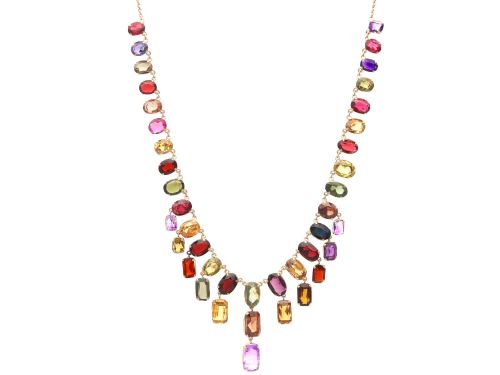
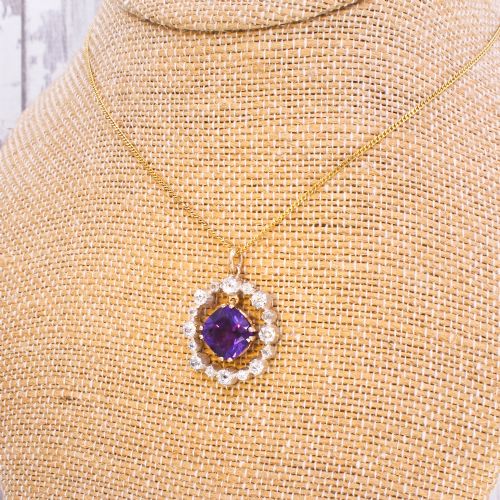
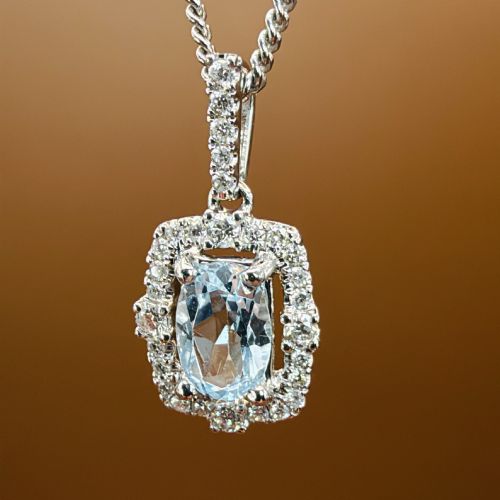
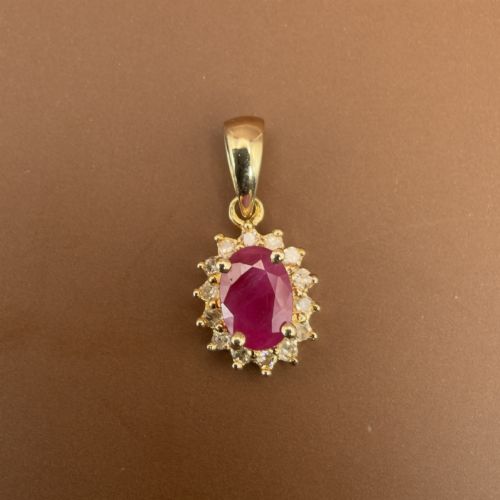
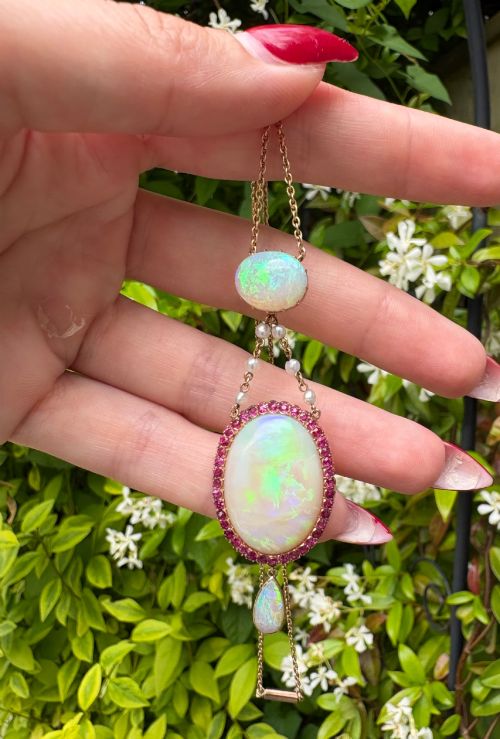
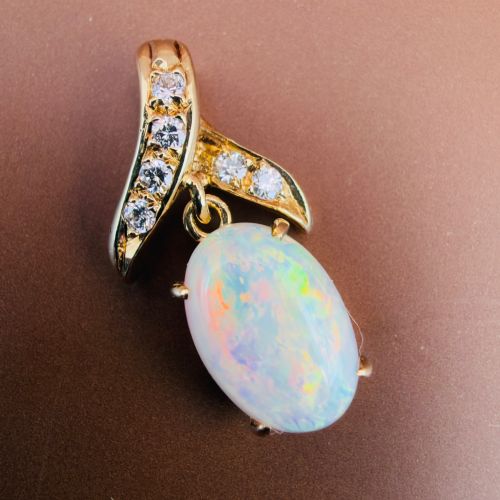
A gemstone cluster necklace groups multiple coloured stones and diamonds around a central focal point, suspended from a chain or collar. These pieces span Victorian, Edwardian, and mid-century eras, reflecting shifts in taste from romantic fringe drops to geometric mid-century designs.
The version most commonly met on this page is a pendant necklace set in gold, featuring combinations of amethyst, ruby, sapphire, or garnet paired with diamonds or seed pearls. These configurations range from delicate Edwardian star motifs to robust nineteen-fifties clusters.
How they were made
Goldsmiths utilised various purities of gold, white gold, and silver to mount these stones, often combining silver with gold in earlier pieces to enhance the brilliance of diamonds. Cabochon and faceted cuts are set into claw, bezel, or closed-back mounts depending on the period of manufacture.
Gemstones such as opals, peridots, and zircons are arranged with meticulous attention to colour balance, supported by seed pearls and small diamonds in traditional cluster formations.
What varies in quality
The distinction between tiers rests upon the saturation and match of the coloured stones, alongside the weight and purity of the metal used in the setting. Pieces displaying well-matched gems with minimal inclusions command greater attention than those with mismatched stones.
The finesse of the metalwork, whether hand-forged scrollwork or precise claw settings, dictates the overall integrity and enduring appeal of the piece.
Dorrie Nossiter
The Gemstone Cluster Necklace Glossary
- Cluster pendant
- A jewellery setting where a central gemstone is surrounded by a ring of smaller stones, typically diamonds or pearls. This arrangement maximises the visual impact and perceived size of the jewel.
- Cabochon
- A gemstone shaped and polished with a smooth, convex surface rather than faceted. This cut is frequently utilised for opals, garnets, and moonstones to display their internal sheen.
- Seed pearl
- A very small, naturally occurring or cultured pearl, often drilled and strung in groups. They appear frequently in Victorian and Edwardian cluster designs as delicate borders.
- Fringe drop
- A style of necklace featuring small, dangling ornaments suspended along the lower edge of the collar. Bohemian garnet examples demonstrate this articulated construction.
- Old cut
- A diamond cutting style prevalent in antique jewellery featuring a small table, high crown, and large open culet. These stones catch candlelight differently than modern brilliant cuts.
Gemstone Cluster Necklace: Frequently Asked Questions
How do I wear a cluster necklace?
These necklaces suit necklines that leave the collarbone bare, allowing the central cluster to rest flat against the skin or fabric without interference from collars.
Pairing a pendant with a simple evening dress or a tailored blouse lets the arrangement of coloured stones become the focal point of an outfit.
Are these necklaces suitable for daily wear?
Durability depends on the hardness of the specific gemstones and the thickness of the metal chain. Harder stones like sapphires and rubies withstand regular use, while softer materials like opals require greater care.
Checking the security of the settings and the condition of the clasp ensures the piece remains safe during frequent use.
How do I date a gemstone necklace?
Dating relies on identifying the cut of the stones, the metal hallmarks, and the manufacturing techniques used in the setting. Victorian pieces often incorporate closed backs and seed pearls, while mid-century examples feature heavier white or yellow gold mounts.
Consulting hallmarks and style characteristics helps place the piece within periods such as the Edwardian era or the nineteen-fifties.
What is the difference between a pendant and a necklace?
A pendant refers specifically to the dangling ornament that hangs from a chain, whereas a necklace includes the chain or collar structure itself. Many listings use these terms interchangeably when the pendant is permanently fixed to the chain.
Some versatile antique examples were constructed to function as both a pendant and a brooch.