



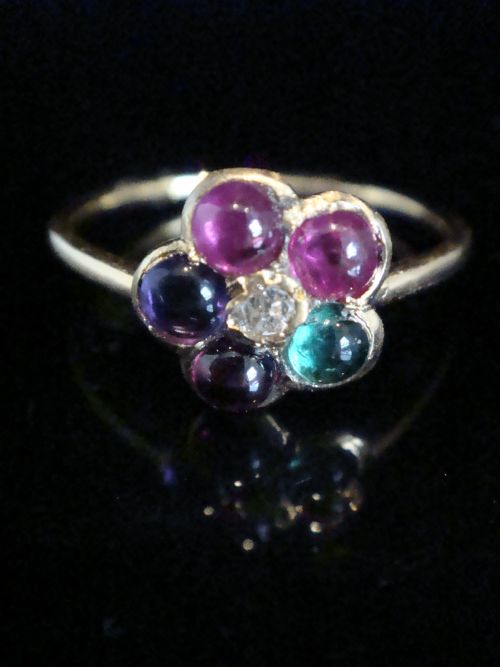


Garnet Cluster Dress Ring
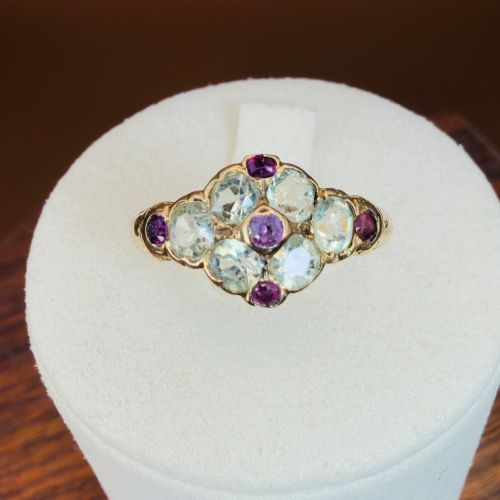
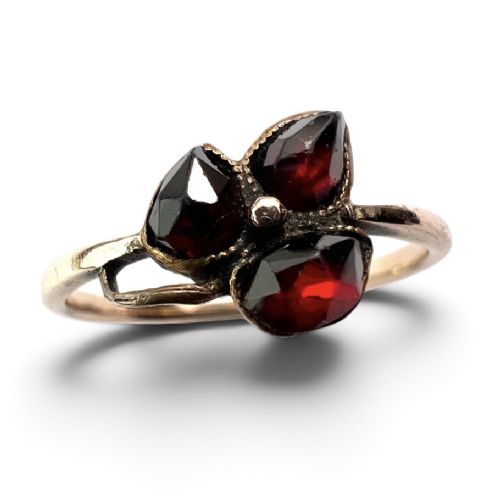
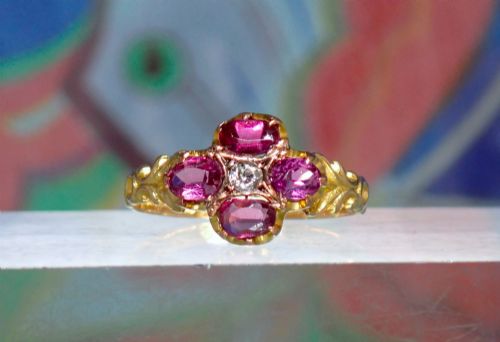
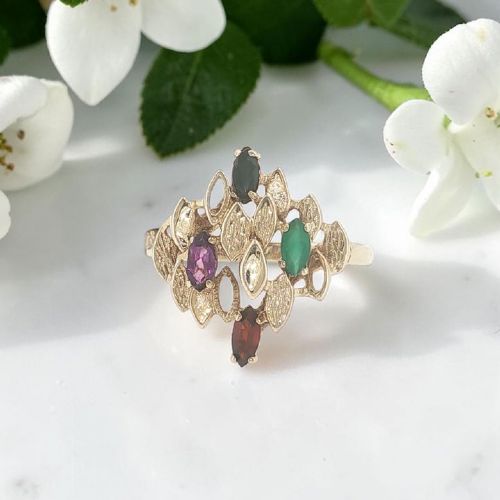
A garnet cluster dress ring draws the eye with deep red stones arranged to catch the light, spanning Victorian floral designs to mid-century gold work.
Garnet Cluster Dress Ring
A garnet cluster dress ring brings together rich red stones in tight configurations designed to maximise colour and presence on the hand. These pieces draw from periods ranging from early Victorian work through to Edwardian, Art Deco, Retro, and mid-century modern eras.
The most common forms on this page pair central garnets with surrounding stones or smaller clusters, often shaped like flowers or geometric arrangements. Metals vary from nine-carat and fifteen-carat yellow gold up to eighteen-carat gold, platinum, and white gold.
Makers across these decades utilised almandine garnets, demantoid garnets, green spinels, and tsavorites alongside supporting gems such as diamonds, rubies, emeralds, and seed pearls. The resulting objects function primarily as striking dress jewellery intended to be worn and admired.
Materials and construction
Garnets are set into yellow gold, white gold, platinum, or fifteen-carat and nine-carat gold mountings that secure the cluster formation. Goldsmiths shaped the precious metals by hand or through early industrial techniques to support multiple stones in close proximity.
Supporting elements like old cut diamonds, seed pearls, and coloured gems are integrated into the cluster framework to enhance the central red stones. Metal settings range from traditional claw mounts to closed backs depending on the Victorian or later period of manufacture.
Garnet Cluster Dress Ring Retail Price Guide 2026
Typical asking prices for garnet cluster dress ring among the pieces listed under this phrase on Sellingantiques today, from the lower quarter to the upper quarter. They describe what is for sale here now, not the wider market.
Listings feature periods spanning early Victorian 1850 pieces up to post-1960 modern items.
Judging quality in cluster rings
The distinction between tiers rests on the saturation and cut of the garnets, alongside the choice of supporting metals such as platinum or eighteen-carat gold. Finer examples display matched stone depths and careful stone-cutting that avoids dark patches within the red hues.
The Garnet Cluster Dress Ring Glossary
- Almandine Garnet
- A deep red variety of garnet commonly found in Victorian and Edwardian cluster rings. This stone provides the characteristic rich colour seen in many antique examples.
- Seed Pearl
- A very small natural pearl utilised in historic cluster rings to frame central gemstones. These delicate pearls add a contrasting texture to the gold and garnet work.
- Cluster Ring
- A ring design featuring a central stone surrounded by a group of smaller gems. This layout maximises visual impact and light reflection.
- Old Cut
- A hand-faceted diamond cut predating modern brilliant standards. These stones exhibit smaller tables and higher crowns suited to antique settings.
Garnet Cluster Dress Ring: Frequently Asked Questions
How do I clean a garnet ring?
Clean your garnet cluster dress ring gently using warm water, mild soap, and a soft brush to remove everyday oils and dust.
Avoid harsh chemical dips or ultrasonic cleaners, especially if the piece contains seed pearls or softer historic metals.
Can I wear a cluster ring daily?
These rings tolerate regular wear provided you remove them during heavy physical tasks, gardening, or sports. Gold and platinum settings hold stones securely, but antique claws benefit from gentle treatment.
Store the ring in a separate compartment or fabric pouch to prevent scratching against other jewellery.
How do I date an antique ring?
Dating relies on stylistic clues such as the stone-setting techniques, metal purities like fifteen-carat gold, and overall design motifs from Victorian or Edwardian periods.
Hallmarks stamped inside the band provide official assay office symbols and date letters where legible.
What is a regad ring?
A REGARD ring uses the first letters of gemstones - Ruby, Emerald, Garnet, Amethyst, Ruby, Diamond - to spell out a sentimental message. These multi-gem cluster configurations date predominantly to the Victorian era.
The arrangement combines symbolic meaning with the visual appeal of a colourful gemstone cluster.