


Garden Conservatory Bistro Table
A garden conservatory bistro table brings utility and character to an outdoor space or sunroom, crafted from sturdy metals and classic stone.
Garden Conservatory Bistro Table
A garden conservatory bistro table is a compact surface designed for morning coffee, intimate dining or supporting decorative plants. When exploring these items, a buyer encounters pieces originating from the nineteenth century, the Edwardian era, and the nineteen-twenties, alongside pieces reflecting French provincial and Victorian styles.
The versions most commonly met on this page combine robust metal framework with smooth tabletops, taking the form of round garden tables, console tables, and occasional tables. These examples bridge the boundary between interior conservatories and open gardens, fulfilling practical needs while adding period charm.
How they were made
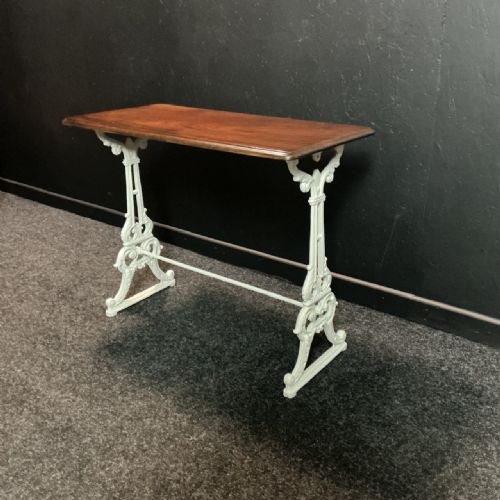
Makers constructed the structural frames of these tables primarily from cast iron or wrought iron, utilising metalworking techniques to produce ornate scrollwork and sturdy legs. These metal bases frequently feature painted finishes or aged patinas developed over decades of exposure.
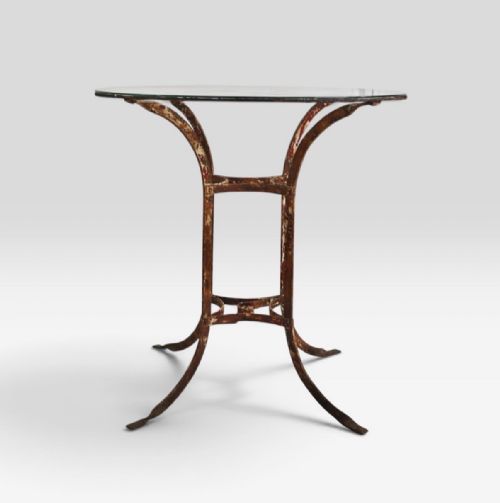
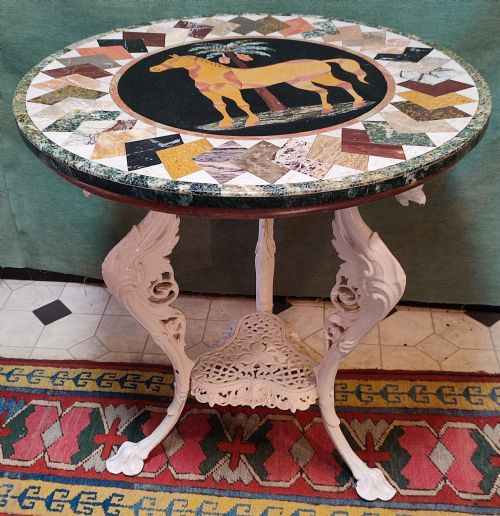
Tabletops paired with these metal frames typically consist of white or specimen marble, cedar wood, glass, or steel. The combination of heavy stone or wood set atop a rigid iron foundation created durable furniture suited to both sheltered conservatories and open gardens.
Strapp work framing on vintage tables provides unexpected industrial resilience disguised as delicate ribbon-like metal geometry.
What varies in quality
Quality in these tables rests upon the crispness of the cast iron scrollwork and the selection of materials used for the top, such as multi-toned specimen marble versus plain painted surfaces. Superior examples display finer casting detail and heavier gauge ironwork that remains rigid over time.
The integration between the top and the base dictates stability and longevity, with well-fitted marble slabs or solid cedar planks demonstrating superior craftsmanship compared to later replacements. Original painted surfaces or patinated metal add desirability through genuine age.
The Garden Conservatory Bistro Table Glossary
- Cast iron
- A strong alloy poured into moulds to create intricate scrollwork and rigid table bases. It forms the structural foundation for many nineteenth-century examples.
- Specimen marble
- A decorative tabletop composed of various coloured marble pieces arranged in geometric or geometric patterns. This material elevates the visual interest of Edwardian and Victorian tables.
- Britannia table
- A specific nineteenth-century table type featuring a heavy cast iron pedestal base, frequently paired with a round wooden top. They were originally used in public houses and gardens.
- Scrollwork
- Ornamental architectural or furniture design featuring spiral scroll motifs. This technique defines the aesthetic of Victorian and Edwardian iron table bases.
Garden Conservatory Bistro Table: Frequently Asked Questions
Can I leave my table outside all year?
Most of these pieces combine cast iron with marble or wood, meaning prolonged exposure to severe winter frost can damage stone or accelerate metal corrosion.
Storing the table in a conservatory or shed during harsh weather protects the materials and preserves the original finish.
How do I clean a marble top?
Wipe the surface with a soft, damp cloth using mild soap, avoiding acidic cleaning agents that etch the polished stone.
Thoroughly drying the marble prevents water rings and maintains the natural lustre of the material.
Are these tables heavy to move?
Tables featuring solid cast iron bases and marble tops possess considerable weight to ensure stability on uneven garden ground.
Two people are usually required to lift and relocate these pieces safely without damaging the legs or the floor.
How do I identify a Victorian example?
Victorian tables typically display heavy cast iron framing with distinct scrollwork, Britannia pedestals, or nineteenth-century French styling.
Examining the construction methods, fastener types, and wear patinas helps distinguish genuine period pieces from later reproductions.