
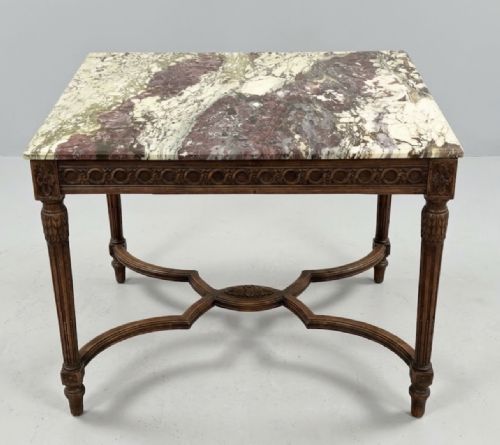
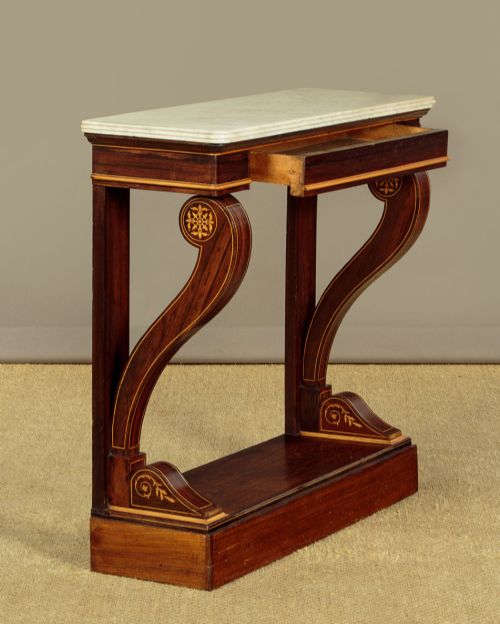
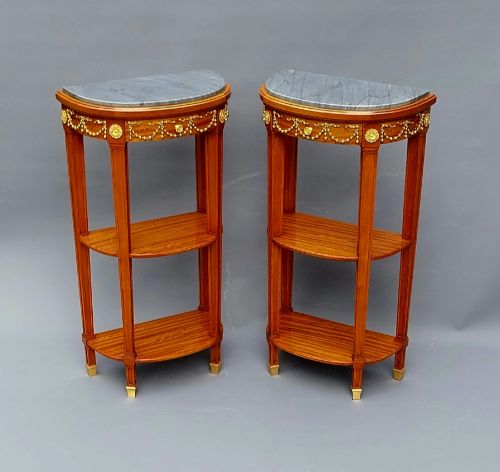
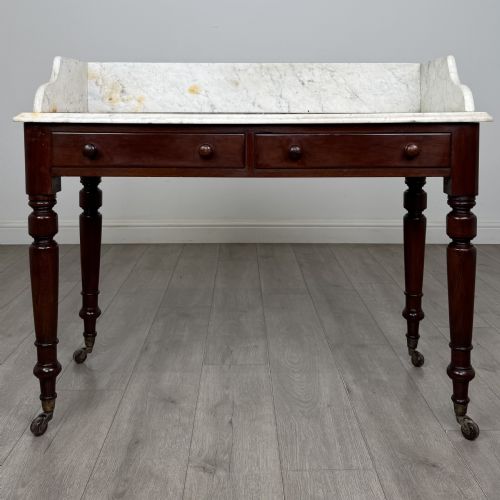
Marble Topped Side Table
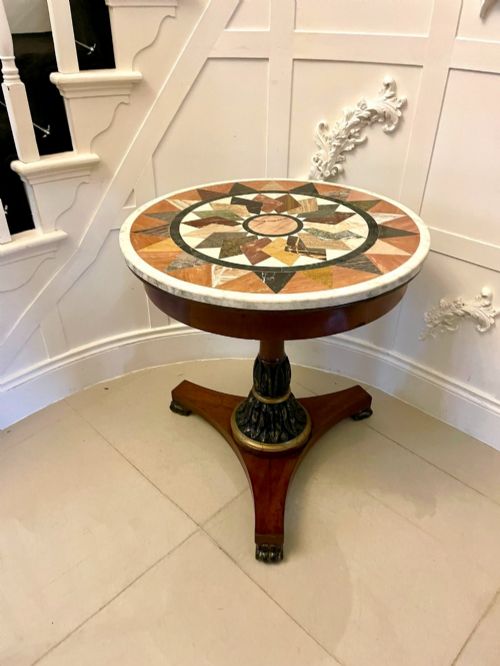
When you select a marble topped side table, you introduce a functional surface that combines cool stone with timber, metal or giltwork.
Marble Topped Side Table
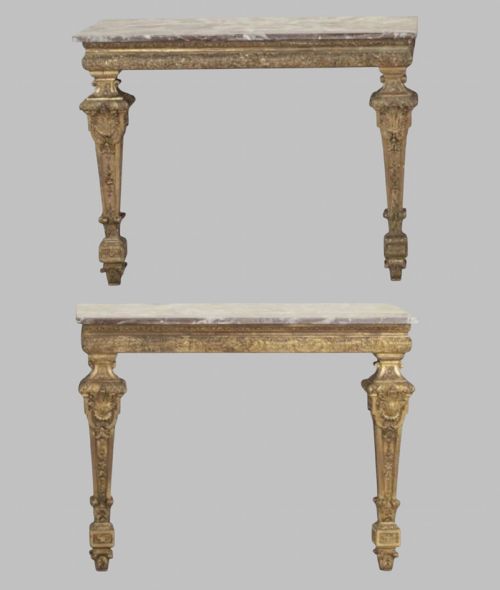
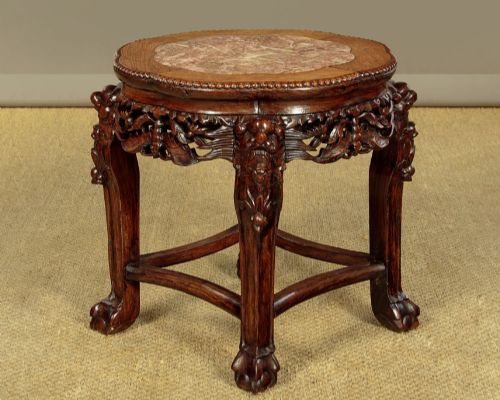
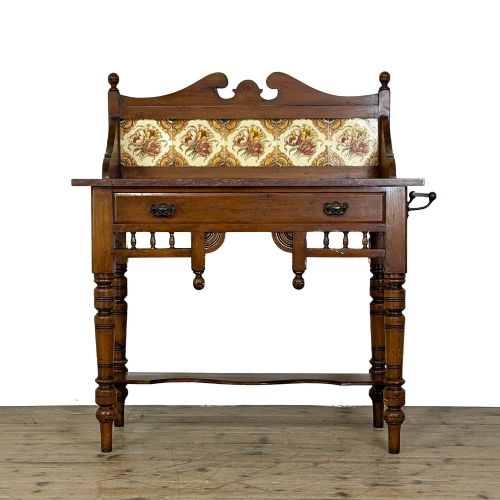
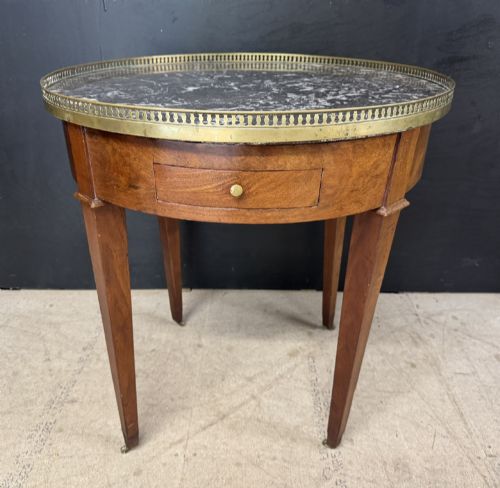
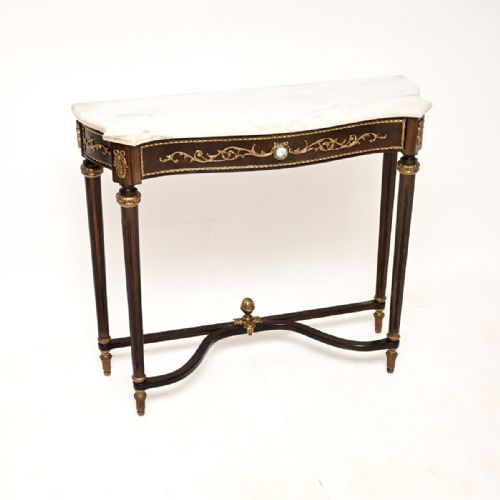
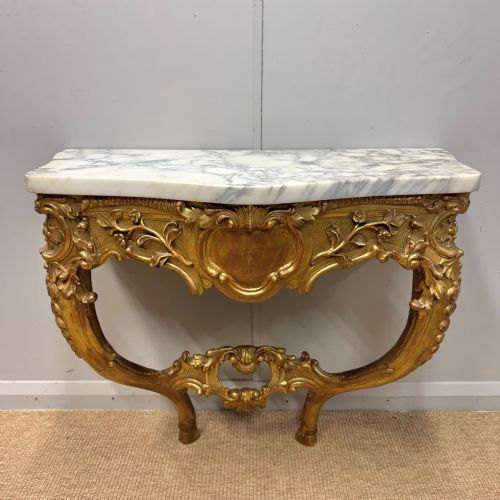
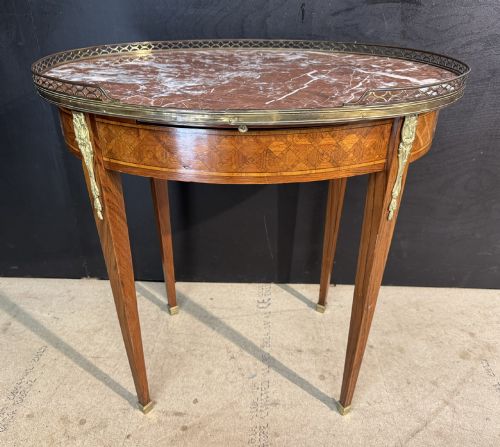
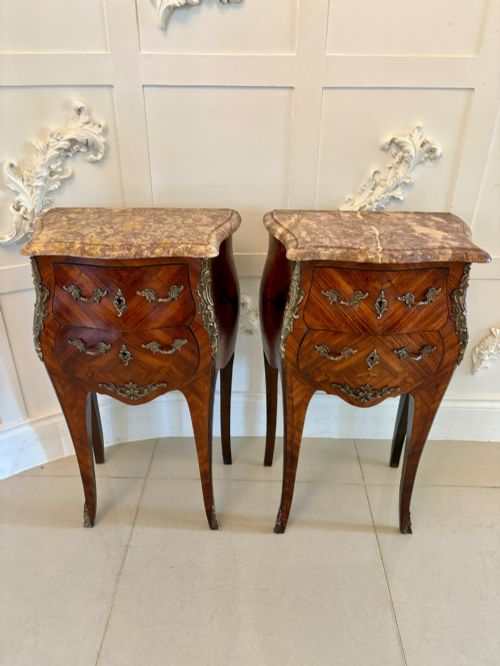
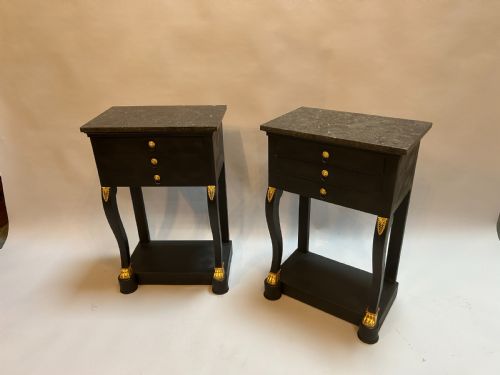
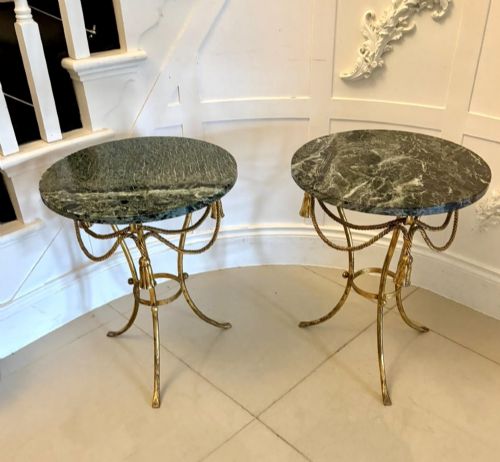
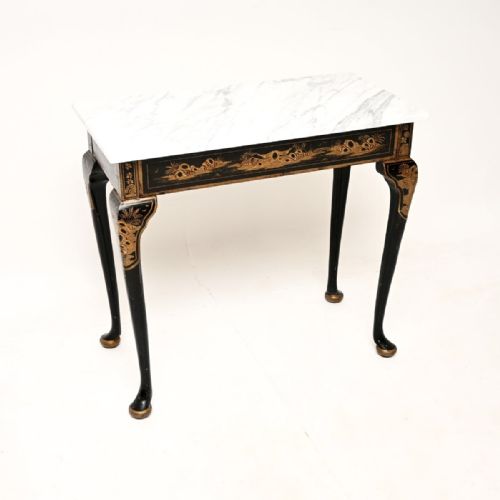
A marble topped side table appears across numerous historic periods, ranging from eighteenth-century console tables to Victorian bedside cabinets and twentieth-century occasional pieces. The selection includes console tables, gueridons, bedside tables and plant stands designed for drawing rooms, hallways and bedrooms.
The version most commonly encountered on this page is the nineteenth-century French gueridon or bedside cabinet, though English mahogany examples and eighteenth-century Italian giltwood console tables also feature regularly. Pieces span styles from French Empire and Rococo to Neoclassical, Victorian and Art Deco.
Makers recorded in the archive include François Linke, Maison Millet, and Johnstone & Jeanes of London, demonstrating the high calibre of cabinet-making associated with these forms. Whether freestanding in the centre of a room or placed against a wall, these tables serve as durable and decorative additions to an interior.
Materials and construction
Makers employed dense hardwoods such as mahogany, walnut, kingwood, satinwood and oak for the frames and carcases, frequently enriching them with marquetry, parquetry or brass inlay. Ormolu mounts, giltwood carvings and painted finishes provide decorative contrast to the timber structures.
The defining stone surface consists of heavy slab marble, sometimes featuring distinct veining or specific types like rouge or breche d'alep. Wrought iron and brass also appear extensively in the construction of bases, stands and frames, particularly in French and twentieth-century designs.
Several bedside cabinets secretly double as miniature architectural monuments complete with veined stone roofs.
Standards of craftsmanship
Quality rests upon the precision of the timber joinery, the crispness of carved giltwood or ormolu mounts, and the selection of the stone slab. Superior examples display tightly fitted marquetry, original fire-gilded bronze mounts and marble tops selected for colour and grain.
Finer pieces incorporate secondary timbers of high grade, careful hand-cut dovetailing in drawers, and balanced proportions that reflect the specific design vocabulary of periods like French Empire or Louis XVI Revival.
François Linke·Maison Millet·Johnstone and Jeanes
The Marble Topped Side Table Glossary
- Gueridon
- A small circular table on a pillar and tripod base, frequently topped with marble and originating in seventeenth-century France.
- Ormolu
- Gilt-bronze mounts applied to furniture, highly characteristic of fine French cabinet-making from the eighteenth century onward.
- Console table
- A table designed to be fixed against a wall or supported by brackets, often featuring elaborate carved giltwood or mahogany frames.
- Marquetry
- Decorative patterns formed by the insertion of different woods, veneers or mother-of-pearl into a solid wood carcase.
- Breche d'alep
- A distinctive type of multi-coloured figured marble frequently utilised for high-status eighteenth and nineteenth-century furniture tops.
Marble Topped Side Table: Frequently Asked Questions
Where should I place a marble topped side table?
These tables suit hallways as console surfaces, sitting rooms as lamp or centre tables, or bedrooms as bedside cabinets. Their stone surfaces provide durable landing spaces for daily items.
Ensure the scale matches your room, as heavy console tables require wall support or solid placement, while circular gueridons work well freestanding.
How do I clean the marble top?
Wipe the stone surface regularly with a soft damp cloth using neutral soap if necessary. Avoid acidic cleaners, vinegar or citrus liquids that etch marble.
Dry the surface thoroughly after cleaning to maintain the polish and protect the natural finish of the stone.
Are the marble slabs removable?
Many nineteenth-century and earlier marble slabs rest unattached on top of the timber frame under their own heavy weight. This design allowed easier transport of large furniture pieces.
Exercise caution when moving these tables by lifting from the wooden base rather than sliding or gripping the stone edge.
How do I distinguish French styles?
French Empire pieces feature classical bronze mounts and mahogany, while Rococo and Louis XVI Revival styles show curved serpentine lines and giltwood carvings. Art Deco examples introduce simpler geometric forms with teak or walnut.
Examine the construction methods and secondary timbers underneath to confirm the period of manufacture.