





Galle Floral Cameo Glass
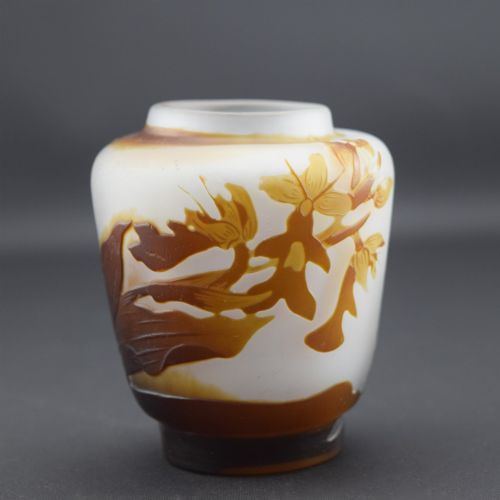
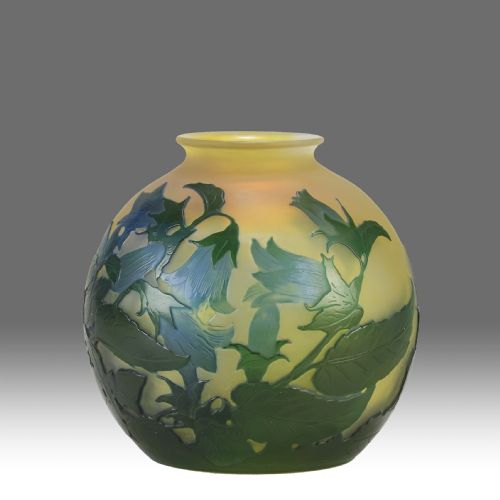
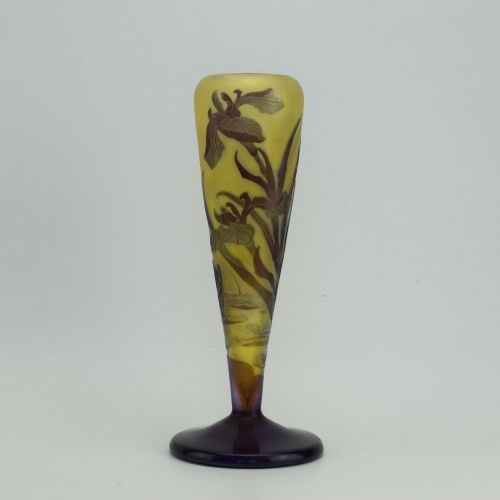
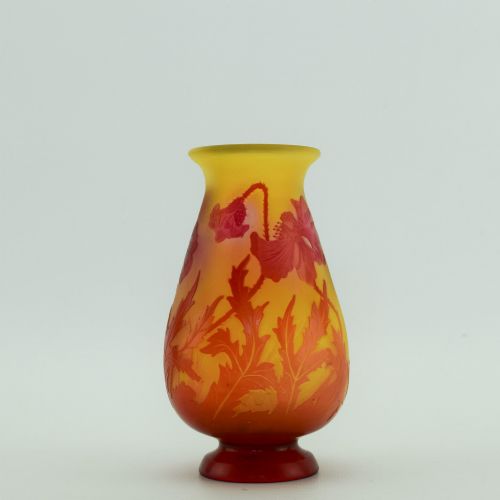
Gallé floral cameo glass brings botanical Art Nouveau into a room through layered glass forms that collectors prize.
Galle Floral Cameo Glass
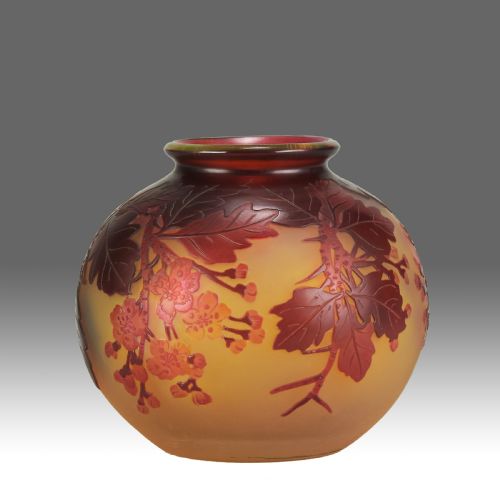
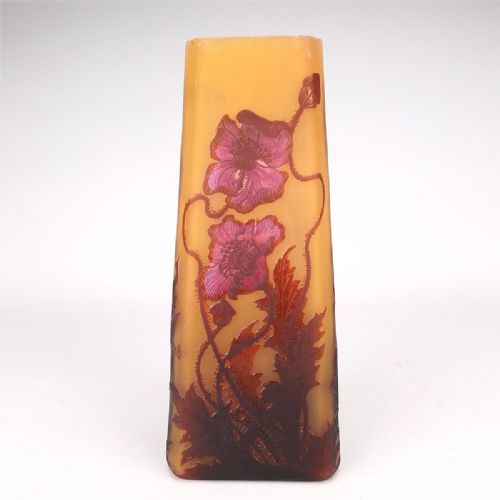
When you search for gallé floral cameo glass, you examine French Art Nouveau vases shaped by botanical motifs from the early twentieth century. The selections available range from 1900 to 1930, capturing floral designs across distinct periods.
Vases dominate the object types, featuring specific botanical subjects like poppies, cornflowers, hydrangeas, begonias, and ferns. These pieces emerge in diverse forms including banjo vases, footed vessels, and tall profiles.
The style remains firmly rooted in the Art Nouveau movement, utilising coloured layers to depict natural subjects. Buyers encounter pieces from 1900 through 1930, reflecting the enduring output of this workshop.
Materials and Manufacture
Makers utilised blown glass as the foundational structure, layering different colours of glass to build depth for the subsequent carving process. Frosted glass frequently provides a contrasting background texture.
Acid-etched glass techniques cut away the outer layers to reveal the floral design in relief. This chemical and mechanical removal defines cameo glass production across the recorded pieces.
Galle Floral Cameo Glass Retail Price Guide 2026
Typical asking prices for galle floral cameo glass among the pieces listed under this phrase on Sellingantiques today, from the lower quarter to the upper quarter. They describe what is for sale here now, not the wider market.
Listings span from 1900 to 1930, featuring cameo glass, frosted glass, acid-etched glass, and blown glass.
Assessing Quality
Quality rests in the precision of the acid-etching and the subtlety of shade transitions across the floral motifs. Vases exhibiting delicate tonal control in subjects like honeysuckle or clematis demonstrate superior execution.
The complexity of the glass structure also separates examples, particularly when souffle or blow-out techniques create three-dimensional forms. Greater depth in the layered cameo relief distinguishes the finer pieces.
Emile Gallé
The Galle Floral Cameo Glass Glossary
- Cameo Glass
- Glass vessels created with multiple layers of contrasting colours, where portions of the outer layers are carved or etched away to leave a raised design. This technique allows for detailed pictorial effects.
- Acid-Etched Glass
- Glass decorated by applying acid to eat away exposed surfaces while protected areas retain their original form. This method achieves the precise outlines seen in floral ornamentation.
- Frosted Glass
- Glass treated to create a textured, translucent surface that diffuses light. It often serves as a muted background for sharper coloured cameo decoration.
- Art Nouveau
- An international style of art and architecture prominent around 1900, characterised by intricate linear designs and flowing motifs inspired by natural forms. Floral subjects are central to this aesthetic.
- Blown Glass
- Glass formed by inflating molten glass on the end of a blowpipe. This foundational method shapes the primary body of the vase before etching begins.
Galle Floral Cameo Glass: Frequently Asked Questions
What is Gallé cameo glass?
Gallé cameo glass refers to decorative glass vessels created in France during the early twentieth century. These pieces use layered coloured glass shaped by acid-etching to display botanical subjects.
Collectors prize them for their distinct Art Nouveau aesthetic and sophisticated treatment of natural forms like irises and poppies.
How do I date these vases?
Dating relies on recorded periods spanning from 1900 to 1930 within the early twentieth century. Stylistic shifts and specific floral subjects help situate individual pieces.
Archival records show production continuing across multiple decades under the influence of the workshop.
What motifs appear on these vases?
The listings show a wide variety of floral and plant subjects. Common examples include campanula, poppies, cornflowers, apple blossoms, honeysuckle, hydrangeas, begonias, clematis, and ferns.
Aquatic iris and blue flowers also feature prominently among the decorative choices.
How should I display them?
These vases require stable placement where natural light can pass through the layered and frosted glass. Good illumination highlights the depth of the acid-etched cameo relief.
Positioning them away from high-traffic edges protects the blown glass structure while allowing full appreciation of the Art Nouveau forms.