





Fruitwood Elbow Chair
A fruitwood elbow chair brings warmth and grain to a room through local woods shaped by country hands.
Fruitwood Elbow Chair
A fruitwood elbow chair provides a sturdy seat with armrests, taking forms from the Georgian, Regency, and Victorian periods. Buyers search this phrase to find regional British seating that moves beyond formal mahogany into the rich tones of native timbers.
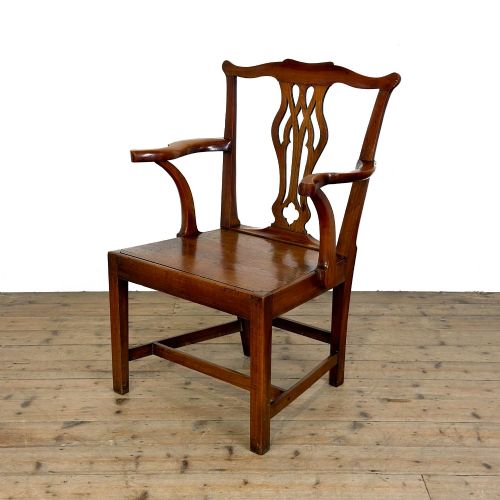
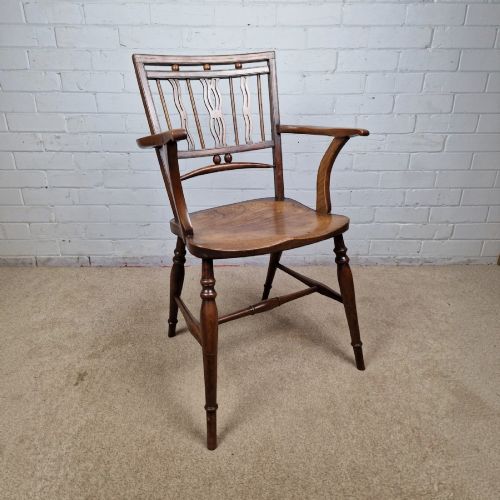
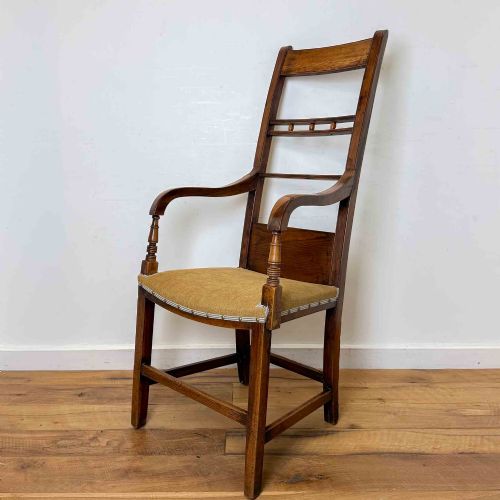
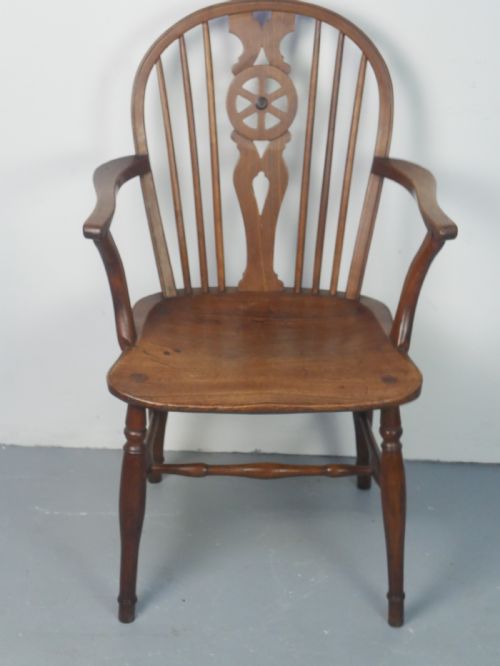
You are most likely to meet regional Windsor chairs, Mendlesham styles, and Chippendale interpretations made in the eighteenth and nineteenth centuries. These pieces range from high-back farmhouse carvers to low primitive desk seats.
Makers in English country workshops built these armchairs to endure, combining armrests with spindles, comb backs, and solid plank seats. They serve well at a desk, in a hallway, or beside a hearth where timber texture matters.
How they were made
Country joiners built a fruitwood elbow chair using a mix of local woods such as elm, yew, ash, beech, and laburnum alongside fruitwood. Seats often consist of a thick carved elm plank shaped to fit the body, while spindles and arms rely on flexible ash or bent fruitwood.
Construction methods combine traditional turning, steam bending, and wedged tenon joints to secure the legs and uprights. Surfaces show the marks of drawknives and spokeshaves, leaving tactile textures across the arms and crest rails.
Fruitwood Elbow Chair Retail Price Guide 2026
Typical asking prices for fruitwood elbow chair among the pieces listed under this phrase on Sellingantiques today, from the lower quarter to the upper quarter. They describe what is for sale here now, not the wider market.
Object types span armchairs, carvers, and desk seats built in regional vernacular and Chippendale styles.
What varies in quality
Quality in a fruitwood elbow chair rests upon the harmony of the mixed timbers and the crispness of the turning on the legs and spindles. Pieces that combine yew, elm, and laburnum with fruitwood show greater ambition than those made from a single stained timber.
Proportion and structural honesty separate ordinary examples from exceptional ones, particularly in the sweep of the arm bow and the rake of the legs. Original surface patination and minimal replacement parts maintain the integrity of the piece.
The Fruitwood Elbow Chair Glossary
- Elbow chair
- An armchair designed with supportive rests for the arms, often used as a desk or carver seat. It provides a comfortable intermediary between a dining chair and a lounge seat.
- Windsor
- A chair style featuring a solid wooden seat into which the legs and back spindles are directly inserted. This construction method creates a resilient, unified frame.
- Spindle back
- A chair back formed of vertical turned or shaved wooden rods rather than a solid splat. This lighter construction gives the piece an airy profile.
- Carver
- A traditional term for an armchair that matches a set of smaller dining chairs. It usually sits at the head of a dining table.
- Vernacular
- An object made by local artisans following regional traditions rather than metropolitan fashion. These pieces reflect the specific materials available in a particular county.
Fruitwood Elbow Chair: Frequently Asked Questions
How do I date a fruitwood armchair?
Dating relies on examining construction marks, timber combinations, and the style of the turning on the legs and arms. Georgian examples often feature simpler, heavier turnings, while Victorian versions can display more complex spindle work.
Tool marks left by drawknives and pit saws also help identify the period. Regional variations provide further clues to when and where the chair was constructed.
Where were these chairs made?
These armchairs were made in regional workshops across England, with specific styles emerging from counties like Suffolk and the Thames Valley. Local cabinet makers utilised whatever native timber grew nearby.
This regional independence means no two chairs are identical. Each maker adapted standard forms to suit local toolkits and available materials.
How do I care for a fruitwood chair?
Care involves keeping the wood away from direct heat sources and sudden humidity changes to prevent timber splitting. Applying a light coat of natural beeswax helps nourish the grain.
Avoid harsh modern cleaning sprays that can strip the historic surface finish. Gentle dusting with a dry cloth keeps the patina intact.