

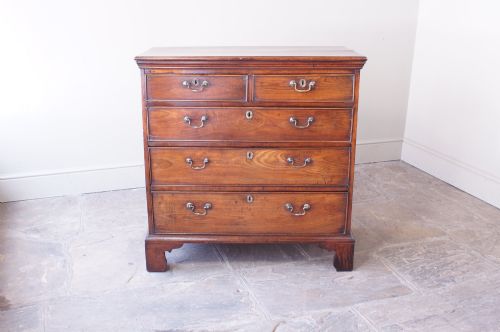
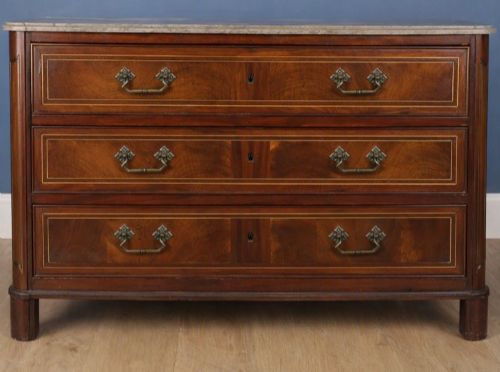
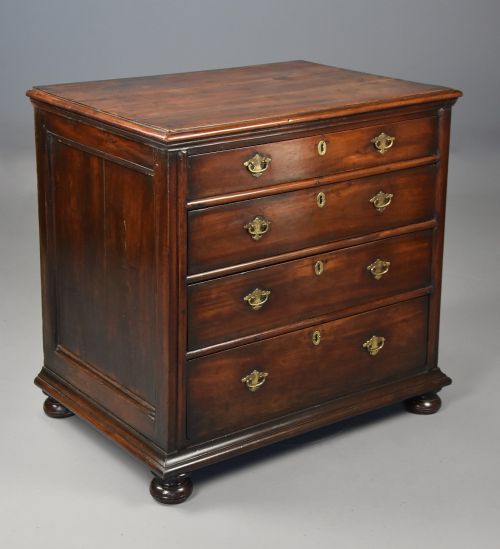

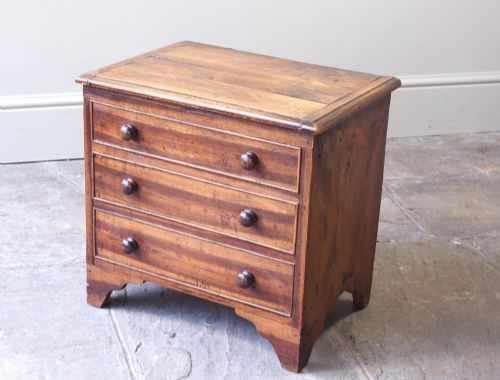

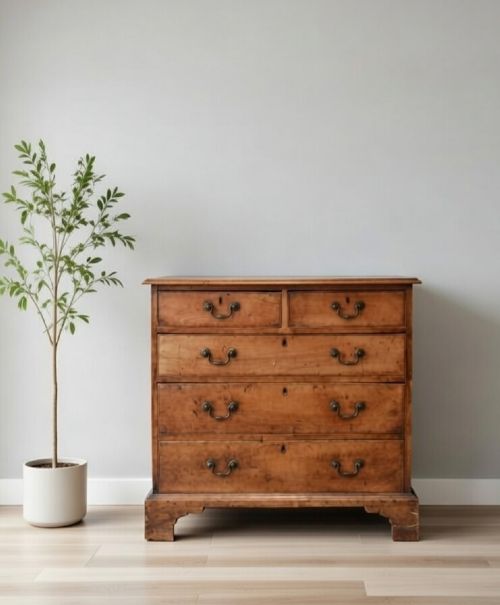


Fruitwood Commode Chest
These fruitwood commode chest examples span centuries of timber craftsmanship, offering warmth and practical storage for the home.
Fruitwood Commode Chest
A fruitwood commode chest combines the functional drawer storage of traditional chest of drawers forms with the decorative presence of a commode. Buyers exploring these pieces encounter examples ranging from the seventeenth century through to the nineteenth century, reflecting diverse regional tastes.
Forms extend beyond standard drawer configurations to include close stools and bombe profiles. Olive wood, plumwood, and walnut frequently appear alongside primary fruitwood timbers, often enhanced by wood inlay.
How they were made
Cabinetmakers utilised dense timbers such as fruitwood, plumwood, and olive wood, often combining them with walnut frames and secondary woods. Boards were selected for figure and colour, then joined using traditional cabinetmaking techniques suited to each period.
Surface ornamentation relied on meticulous wood inlay and contrasting ebonised wood details rather than heavy applied carving. Selected examples incorporate marble tops, requiring precise structural support within the upper carcase to bear the weight.
Fruitwood Commode Chest Retail Price Guide 2026
Typical asking prices for fruitwood commode chest among the pieces listed under this phrase on Sellingantiques today, from the lower quarter to the upper quarter. They describe what is for sale here now, not the wider market.
Some seventeenth-century ancestors of these chests doubled as indoor plumbing solutions, proving that even fine woodwork had to answer the call of nature.
What varies in quality
Quality rests in the selection of the timber and the crispness of the serpentine or bombe contours. Finer commodes display harmonious grain matching across the drawer fronts and well-preserved brass hardware that complements the tone of the wood.
The integrity of the structural joinery and the subtlety of the inlay distinguish standard provincial production from finer workshop pieces. Proportions remain balanced, ensuring the drawers operate smoothly within the carcase.
The Fruitwood Commode Chest Glossary
- Commode
- A low chest of drawers or cabinet developed in the seventeenth and eighteenth centuries. These pieces typically stand on short legs and serve both decorative and practical functions in domestic interiors.
- Serpentine
- A front outline that curves outward in the centre and inward at the sides. This contour requires advanced woodworking skill to shape accurately from solid timber.
- Bombe
- A swelling, convex outward curve found on the sides and front of certain case furniture. It is characteristic of sophisticated cabinetmaking traditions, particularly during the eighteenth century.
- Close stool
- An eighteenth century box-like chest of drawers enclosing a commode seat or chamber pot. They demonstrate fine cabinetmaking disguised as standard domestic furniture.
- Fruitwood
- Timber sourced from fruit-bearing trees such as pear, apple, or cherry. Cabinetmakers valued it for its fine grain and warm, mellow colour.
Fruitwood Commode Chest: Frequently Asked Questions
How do I date a fruitwood chest?
Dating relies on examining the construction methods, timber selection, and overall style of the piece. Seventeenth century examples often display heavier carcase construction and walnut framing, whereas eighteenth century versions frequently adopt serpentine fronts and delicate inlay.
Hardware styles, secondary woods, and regional decorative traits also help narrow the period of manufacture. Comparing the joinery inside the drawers provides further clues regarding age.
Where were these commodes made?
Surviving examples originate from various European centres, with strong representation from French provincial workshops and Georgian Britain. Italian makers also produced sophisticated inlaid and serpentine versions utilising olive wood and fruitwood.
Regional cabinetmakers adapted prevailing continental fashions to suit local timber supplies. This resulted in distinctive provincial interpretations of mainstream styles like the Rococo.
How do I care for fruitwood furniture?
Fruitwood furniture requires stable indoor humidity levels away from direct heat sources and strong sunlight to prevent timber movement. Gentle cleaning with a soft, dry cloth preserves the polished surface and natural patina of the wood.
Avoid using silicone-based polishes or harsh chemical cleaners which can damage the historic finish. Professional wax application helps nourish the timber over time.