




Frosted Shade Table Lamp
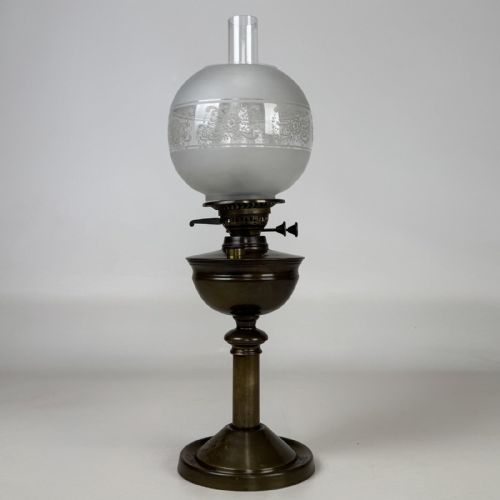
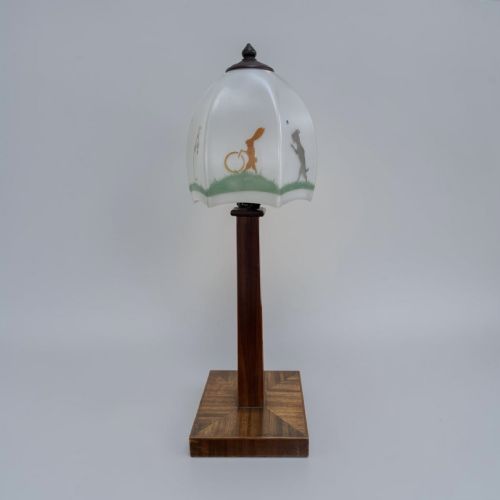
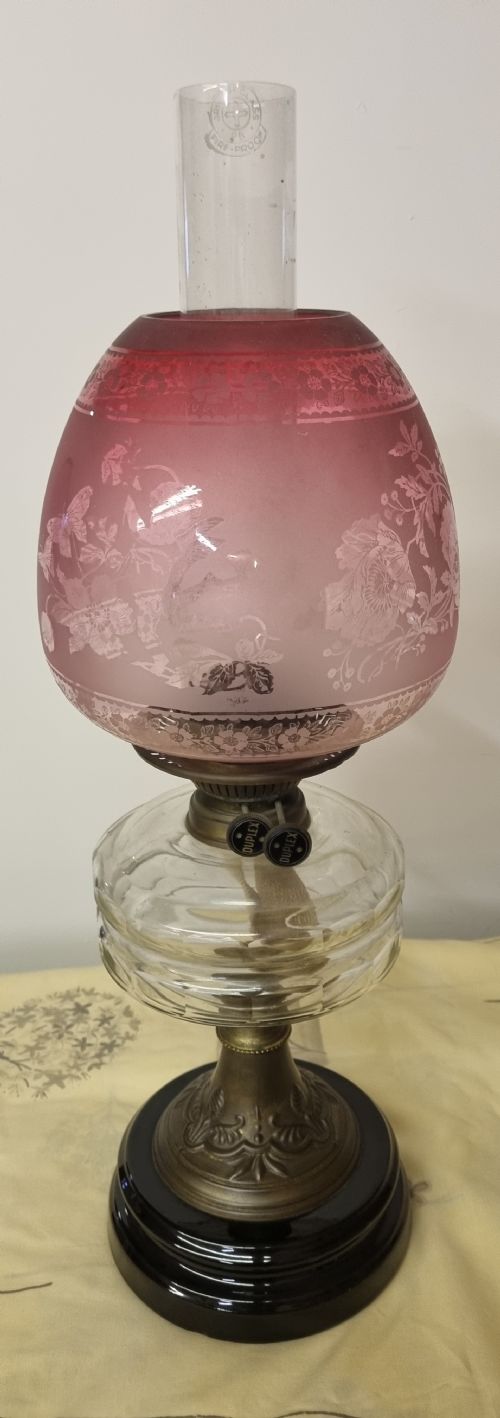
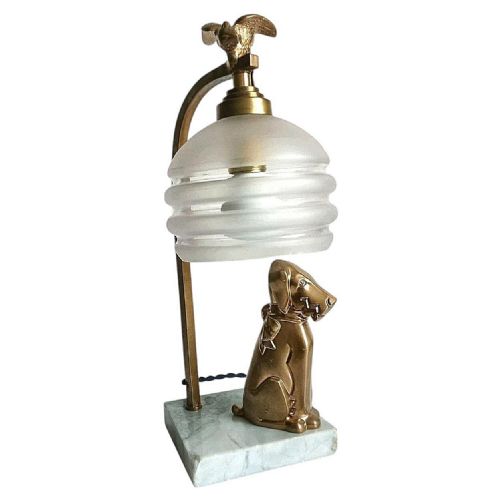
A frosted shade table lamp brings a soft, diffused glow to a room, combining period metal bases with textured glass.
Frosted Shade Table Lamp
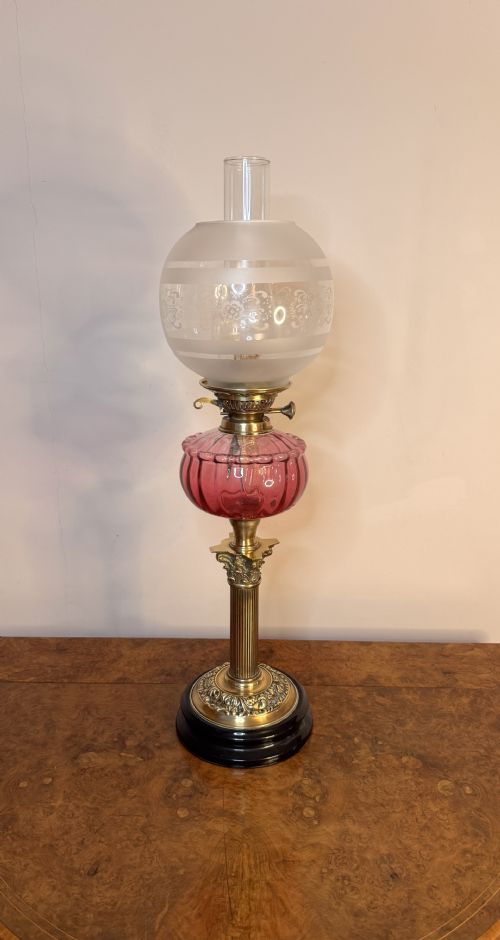
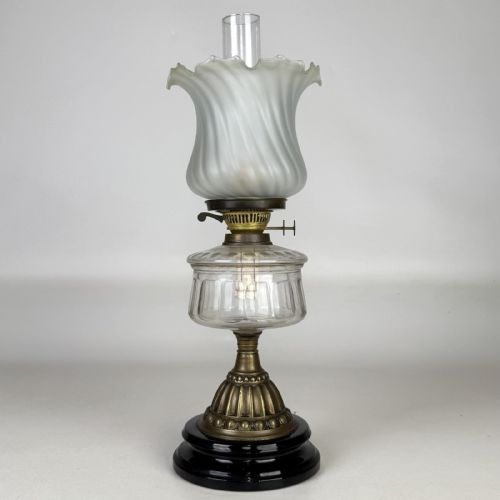
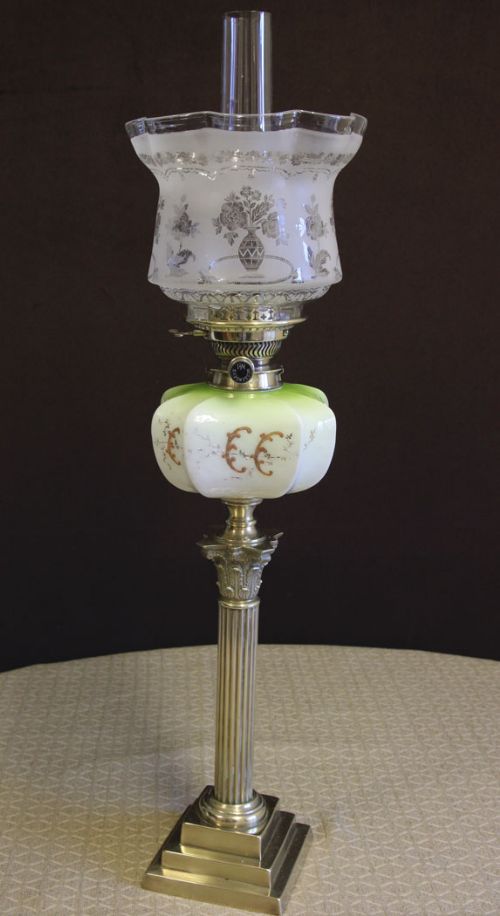
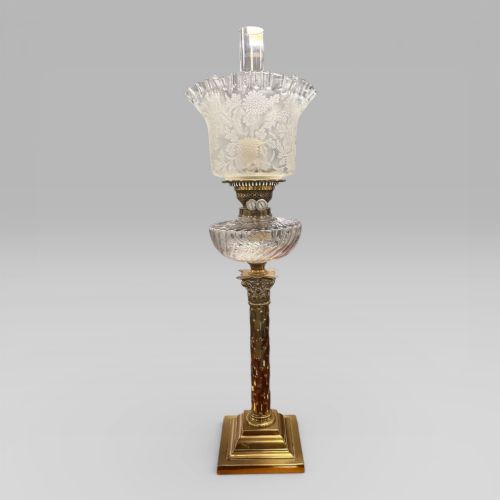
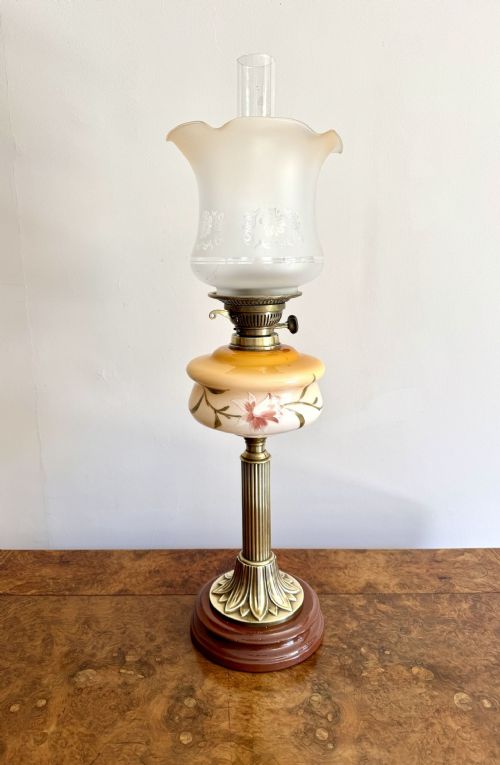
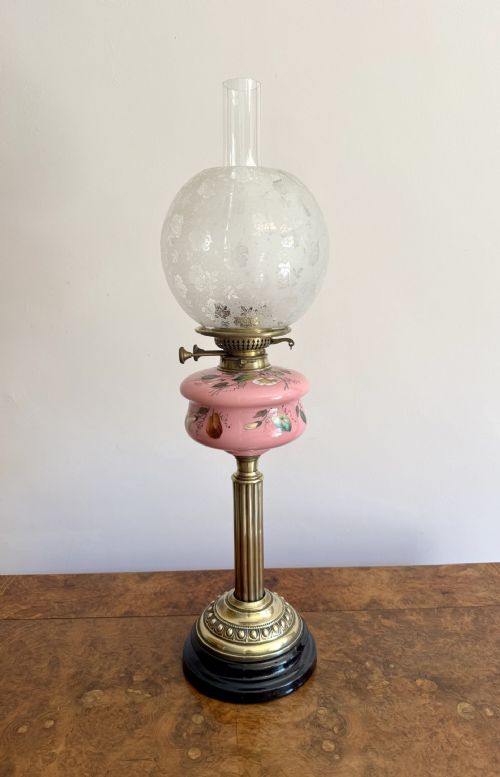
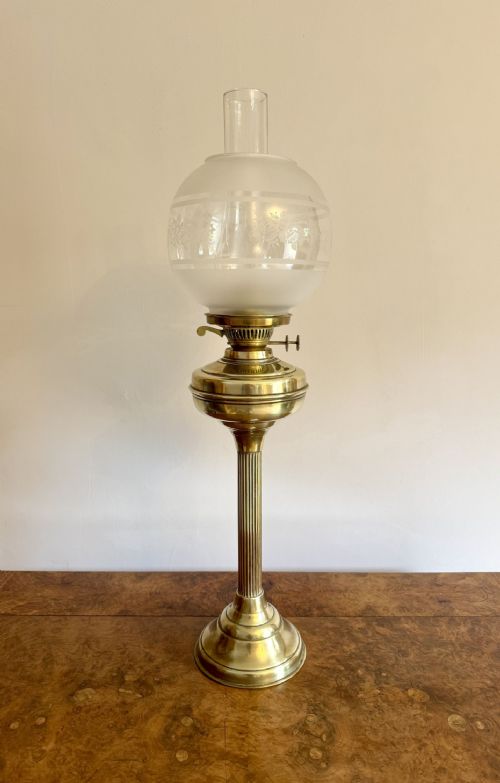
When you search for a frosted shade table lamp, you encounter a selection spanning the Victorian, Edwardian, and Art Deco periods, alongside French Neoclassical and English Regency designs. These pieces range from converted oil lamps featuring brass reservoirs and ceramic fonts to geometric chrome and wrought iron creations from the nineteen-twenties and thirties.
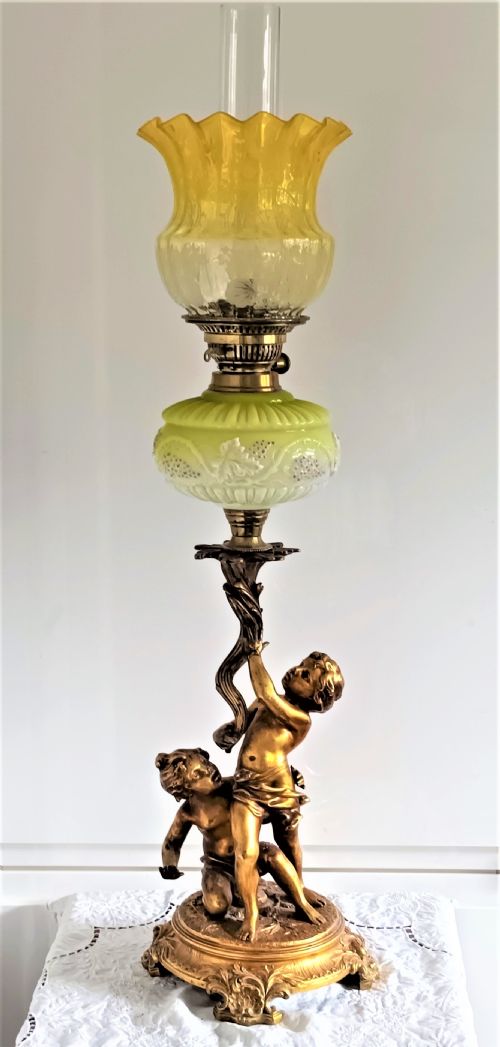
The version you are most likely to meet on this page is a Victorian brass oil lamp adapted for electricity, or an Art Deco table lamp pairing frosted glass with metal work. Formats vary from simple desk lamps and swan neck profiles to figural bases depicting animals, human figures, or architectural columns.
Origins stretch across England, France, and Germany, incorporating specialised glass houses alongside standard domestic brassware. Whether housing a simple bulb or replicating earlier paraffin burners, these lamps serve as functional task lighting and decorative room accents.
Materials and construction methods
Makers utilised cast and spun brass, bronze, and chrome-plated metals to form the structural bodies and weighted bases of these lamps. Columns often featured reeded detailing, telescopic mechanisms, or figural casting, whilst oil lamp variants incorporated ceramic or coloured glass fonts to hold fuel before conversion.
Shades were produced using pressed, moulded, or acid-etched glass to achieve the characteristic frosted finish that softened harsh light sources. Specialised glass houses executed graduated colour tones, relief moulding, and figural designs, which were then fitted to standard brass galleries or bolted directly to the lamp body.
Frosted Shade Table Lamp Retail Price Guide 2026
Typical asking prices for frosted shade table lamp among the pieces listed under this phrase on Sellingantiques today, from the lower quarter to the upper quarter. They describe what is for sale here now, not the wider market.
Listings feature brass, bronze, glass, ceramic, chrome, marble, and spelter across Victorian, Edwardian, and Art Deco periods.
Evaluating standard and design
The distinction between standard commercial production and finer examples lies in the weight of the metal casting and the crispness of the chasing. Superior pieces display heavier gauge brass, substantial marble or bronze mounts, and secure structural joints that prevent wobble in tall or telescopic columns.
Glass quality distinguishes the upper tier, where frosted shades exhibit even density, deliberate thickness, and well-defined moulded motifs rather than flat, uniform opacity. Maker attribution on both the metal base and the glass shade elevates the standing of an individual lamp.
Muller Bros·Degue·Baccarat·Sitzendorf·Messengers·Harrods·Walther and Sohne
The Frosted Shade Table Lamp Glossary
- Duplex burner
- A double-wick mechanism found on nineteenth-century oil lamps that produced a brighter flame. Many surviving examples retain this brass fitting alongside their glass shade when converted to electricity.
- Font
- The oil reservoir section of a lamp, positioned above the base and beneath the burner. They appear in clear glass, coloured glass, porcelain, and matching brass.
- Spelter
- A zinc alloy used as a less expensive alternative to bronze for figural lamp bases during the nineteenth and early twentieth centuries. It is typically painted or electroplated to simulate bronze or brass.
- Swan neck
- A flexible or curved metal arm on a desk lamp that allows directional adjustment of the light source. This profile is frequently seen on Edwardian brass examples.
- Telescopic
- A multi-section metal column that adjusts in height via a sliding mechanism and locking screw. This construction allowed Victorian oil lamps to serve various lighting requirements across a room.
Frosted Shade Table Lamp: Frequently Asked Questions
Can I replace a broken frosted shade safely?
Replacement frosted glass shades can be sourced to match period fittings, provided you measure the fitter gallery diameter accurately.
Traditional galleries require specific shade base widths to sit securely within the brass prongs or screw holders.
Are these lamps wired for modern use?
Many period lamps on this page have been converted or rewired to comply with modern electrical standards over time.
It remains advisable to have any antique lighting checked by a qualified electrician before daily domestic use.
How do I distinguish Victorian from Art Deco lamps?
Victorian models typically feature heavy brass columns, reeded stems, or ceramic fonts associated with nineteenth-century oil lighting.
Art Deco examples lean towards geometric chrome, nickel, wrought iron, and moulded frosted glass popular in the nineteen-thirties.
What is a figural lamp base?
A figural lamp base incorporates sculpted human figures, animals, or mythological subjects into the structural support of the light.
These are cast in bronze, spelter, or ceramic, often paired with contrasting frosted glass shades.