

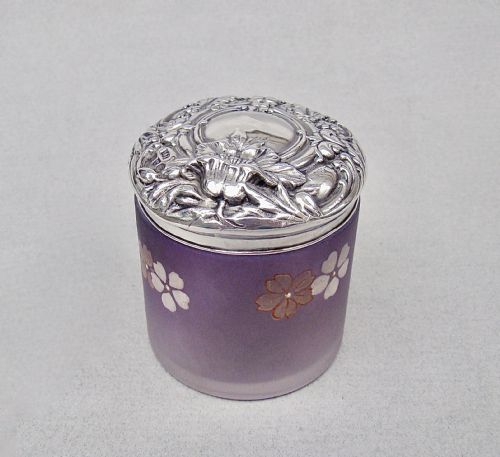


Frosted Glass Vanity Bottle
A frosted glass vanity bottle brings tactile texture and subtle translucency to a dressing table, combining decorative craft with daily utility.
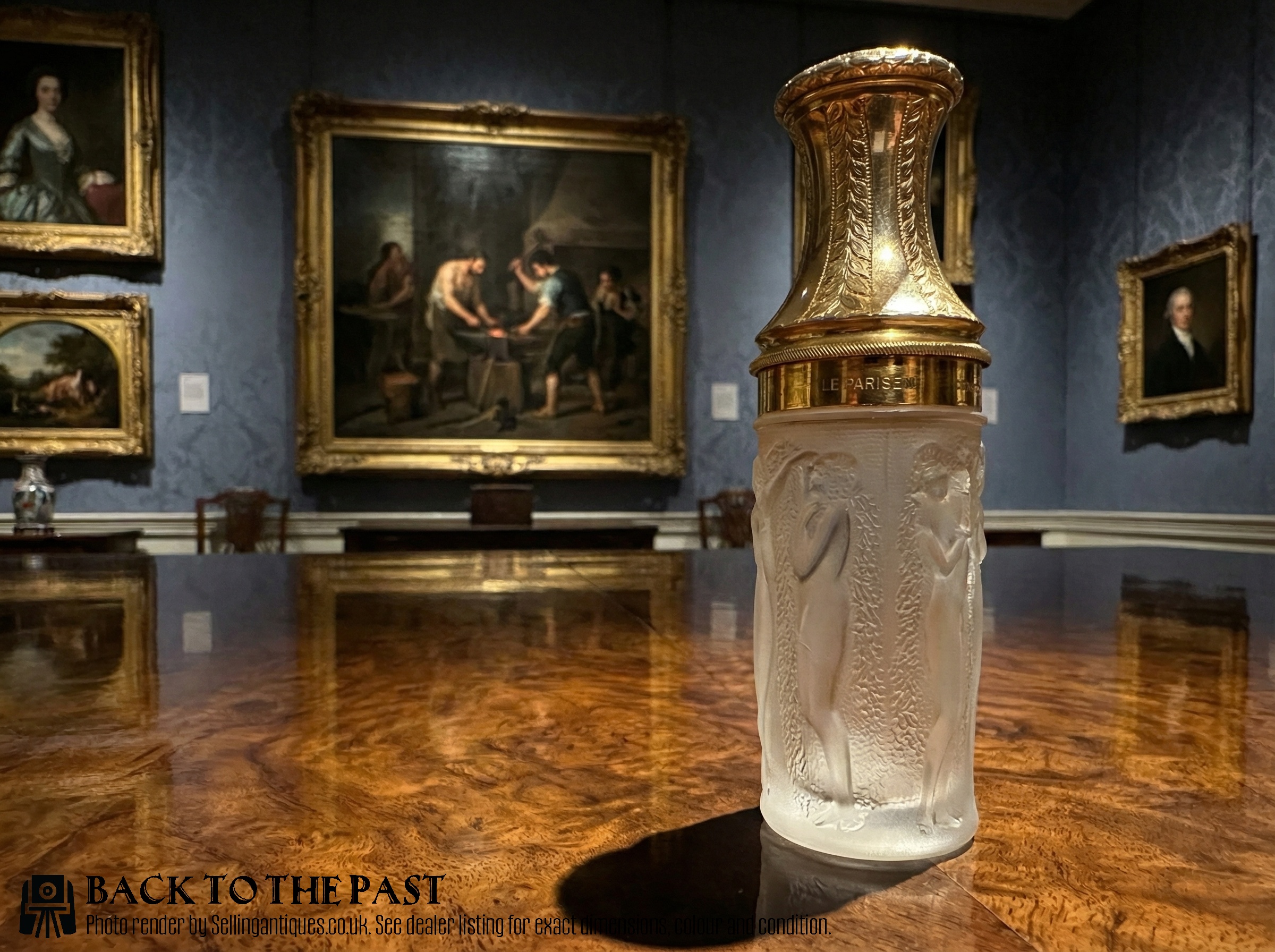
Frosted Glass Vanity Bottle
When you search for a frosted glass vanity bottle, you are looking at dressing table accessories, scent bottles, and atomisers designed to hold perfume or powder. The pieces on this page span the early twentieth century, taking in both the flowing lines of Art Nouveau and the geometric geometry of Art Deco.
You will most commonly meet items originating from French and European makers, particularly associated with periods from nineteen ten through to nineteen thirty. Forms range from lidded dressing table jars to sculptural perfume bottles featuring moulded or opalescent glass.
The selection here encompasses specific named designs as well as decorated vessels enhanced with silver lids, enamel, or coloured staining. Each object reflects the vanity culture of its era, serving as both a functional container and a small display sculpture.
How they were made
The primary material is glass, frequently manipulated through moulding, frosting, and opalescence to catch the light in different ways. Makers utilised techniques that created tactile relief surfaces, often highlighting details with coloured staining or enamel work.
Mounts and lids required complementary metalworking skills, incorporating sterling silver hallmarked in locations such as Chester alongside chrome elements. Glass bodies were sometimes combined with contrasting components like blue stained glass to heighten the visual impact.
Frosted Glass Vanity Bottle Retail Price Guide 2026
Typical asking prices for frosted glass vanity bottle among the pieces listed under this phrase on Sellingantiques today, from the lower quarter to the upper quarter. They describe what is for sale here now, not the wider market.
Some bottles carry red staining in their thorns, proving that even vanity jars can look dangerously dramatic.
What varies in quality
Quality rests in the crispness of the moulded relief and the depth of the opalescent or frosted finish achieved by the maker. The harmony between the glass body and any metal lid, such as a fitted sterling silver mount, demonstrates the standard of the original workshop production.
Design complexity also sets examples apart, distinguishing simple utilitarian vessels from sculptural works bearing distinct stylistic motifs of the Art Nouveau or Art Deco periods.
Rene Lalique·Rudolf Hlousek·Karl Palda·Sabino
The Frosted Glass Vanity Bottle Glossary
- Opalescent glass
- Glass that diffuses light with a milky, milky-blue, or pearlescent appearance. This effect changes tone depending on the angle of illumination.
- Atomiser
- A perfume spray bottle mechanism designed to disperse liquid in a fine mist. These often feature bulb pumps or metal hardware.
- Dressing table jar
- A small container with a fitted lid used historically for creams, pins, or powder on a vanity. Lids are frequently made of hallmarked sterling silver.
- Moulded glass
- Glass shaped by being pressed into a metal or wooden form while hot. This technique allowed makers to repeat complex raised decorative patterns.
Frosted Glass Vanity Bottle: Frequently Asked Questions
What is the difference between art deco and art nouveau pieces?
Art Nouveau pieces, produced around the turn of the twentieth century, favour flowing organic lines, floral motifs, and natural asymmetry. They reflect a naturalistic approach to ornamentation.
Art Deco items from the nineteen twenties and thirties lean towards geometric rigidity, symmetrical patterns, and streamlined modern forms. This shift represents a transition from plant-based curves to industrial angles.
Are stoppers usually original to the bottle?
Original stoppers are hand-ground to fit specific bottle necks tightly, making them unique to each individual vessel. Match of colour, frosting style, and maker marks helps confirm authenticity.
Replacements can sometimes be found, but collectors prefer pieces retaining their matching factory components.
Can I still use these bottles for perfume?
Many collectors prefer to display these items dry to protect interior residue from altering the historic glass or staining porous frosted surfaces. Modern perfumes can also degrade old stoppers or remaining inner linings.
If you do use them, fill them sparingly and empty them after use to prevent sticky build-up inside narrow necks.