
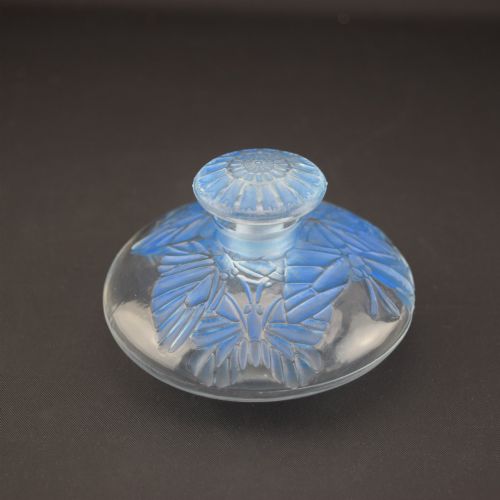


Lalique Perfume Bottle
A lalique perfume bottle brings the sculptural refinement of early twentieth-century glassmaking into a small, tactile form that collectors prize.
Lalique Perfume Bottle
When you search for a lalique perfume bottle, you encounter small glass vessels designed to hold scent, originating primarily from the Art Nouveau and Art Deco periods. These pieces include perfume atomisers and scent bottles produced across the decades, reflecting the changing aesthetic movements of the early twentieth century.
You are most likely to meet pieces dating from the nineteen-tens, nineteen-twenties, and nineteen-thirties. The forms range from simple stoppers to elaborate designs featuring butterflies, florals, and animal motifs.
Many of these containers were created for notable fragrance houses of the era, serving both functional vanity purposes and as decorative objects of display. The surviving examples demonstrate how utilitarian items were elevated through artistic glass design.
How they were made
Makers utilised glass as the primary medium, shaping it through moulding techniques to achieve complex, relief-carved designs. Frosted glass, opalescent glass, and clear glass appear frequently across the pieces, often combined to create depth and contrast within the surface patterns.
Additional surface treatments involve enamel and patinated glass, alongside red staining used to accentuate the recessed details of the decoration. Paper elements also accompany certain examples, preserving original packaging context from the period of manufacture.
Listings feature pieces spanning three distinct decades: the nineteen-tens, nineteen-twenties, and nineteen-thirties.
What varies in quality
The sophistication of the moulded relief and the complexity of the glass body determine the distinction between standard production and exceptional examples. Pieces incorporating delicate elements like butterflies, serpents, or intricate floral motifs demand high technical precision in the glass house.
The presence of original patination, staining, or accompanying boxes contributes to the integrity of a piece. Variations in the treatment of frosted and clear surfaces alter the visual impact of the design.
Rene Lalique·Roger And Gallet·Coty·Arys
The Lalique Perfume Bottle Glossary
- Frosted glass
- Glass treated to have a textured, matte surface finish that diffuses light and highlights relief decoration. This technique contrasts sharply with clear sections.
- Opalescent glass
- Glass that displays a milky, iridescent quality, shifting in tone depending on the light source. It adds luminous depth to moulded motifs.
- Patinated glass
- Glass treated with pigment or staining in the recessed areas to emphasise fine lines and sculptural details. Red staining is a notable instance of this method.
- Perfume atomiser
- A vessel fitted with a spray mechanism designed to disperse liquid scent. These differ from standard stoppered bottles in their mechanical function.
- Art Deco
- The dominant design style of the nineteen-twenties and nineteen-thirties, characterised by geometric discipline and stylised symmetry. It succeeds the organic curves of Art Nouveau.
Lalique Perfume Bottle: Frequently Asked Questions
How do I date a lalique perfume bottle?
Dating relies on stylistic markers shifting from Art Nouveau organic lines toward Art Deco geometry, alongside archival records of specific fragrance commissions.
Changes in signature styles and the introduction of distinct motifs across the nineteen-tens and nineteen-thirties also assist in establishing a timeline.
What is the difference between a scent bottle and an atomiser?
A scent bottle typically relies on a glass stopper to seal the contents, requiring the user to dab the liquid manually.
An atomiser incorporates a mechanical spray apparatus to create a fine mist of fragrance when depressed.
Why do some bottles have coloured staining?
Coloured staining was applied by makers to accentuate the moulded relief details, creating strong visual contrast against frosted glass.
Pigments or stains settle into the recessed carved lines of motifs like flora and fauna to make them stand out.
How should I display these glass bottles?
These pieces require stable surfaces away from direct, harsh sunlight and areas prone to accidental knocks or vibrations.
Proper lighting from the front or side helps reveal the subtle textures of frosted and opalescent glass without causing thermal stress.