

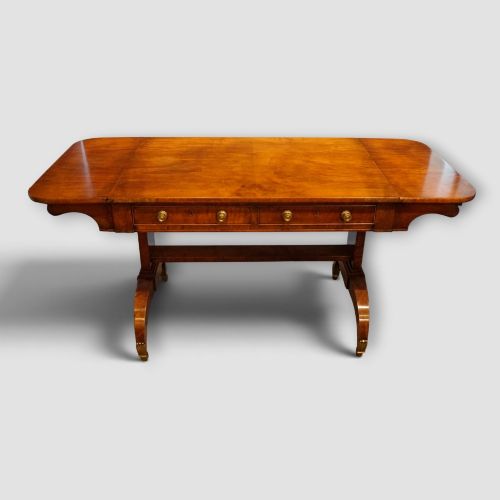
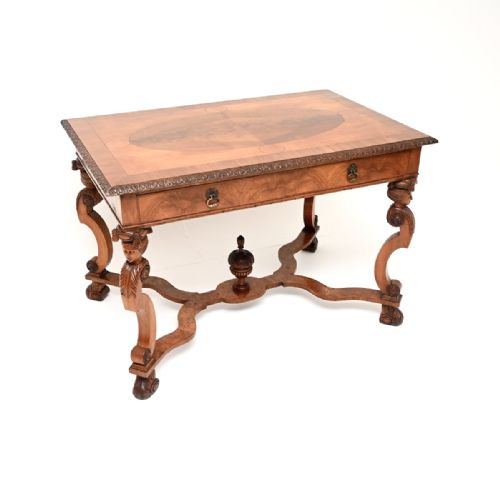
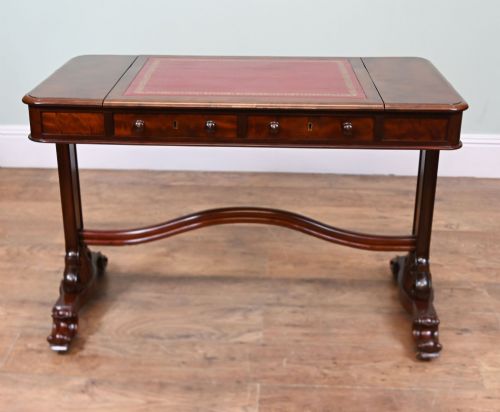
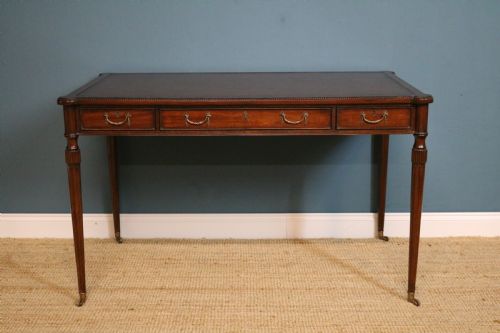


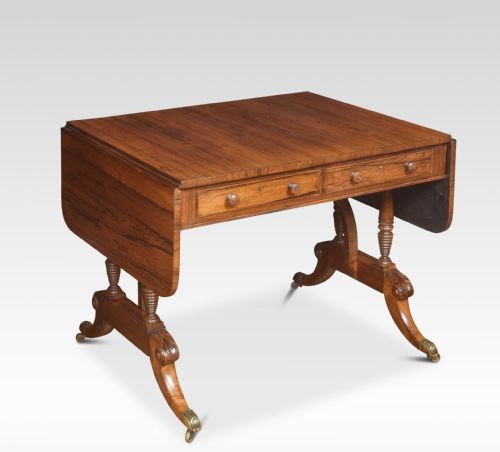

Frieze Drawer Library Desk
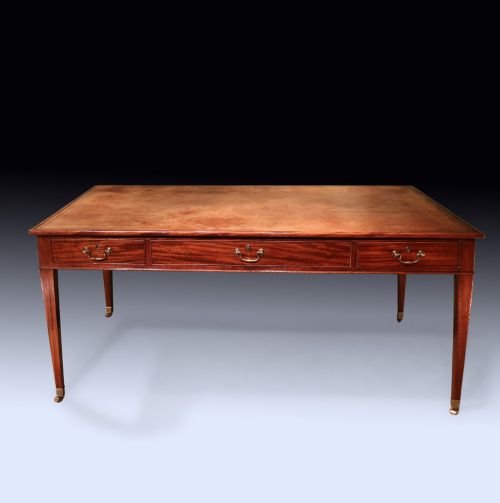
A frieze drawer library desk offers practical workspace coupled with period character, providing a traditional writing surface fitted with storage directly beneath the top.
Frieze Drawer Library Desk
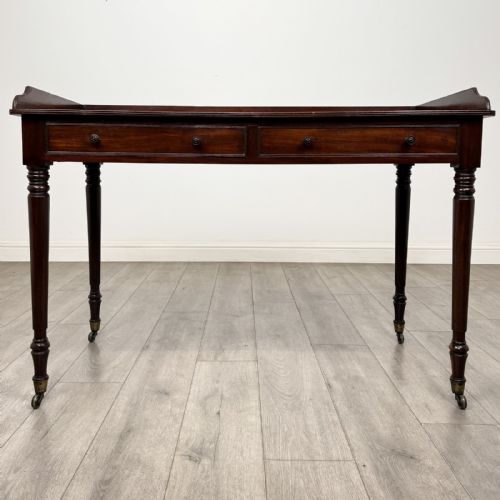
A frieze drawer library desk brings together writing tables, partners desks and library tables equipped with integrated drawer storage within the main frame. Pieces span the eighteenth, nineteenth and early twentieth centuries, encompassing Georgian, Regency, William IV and Victorian periods alongside revival styles.
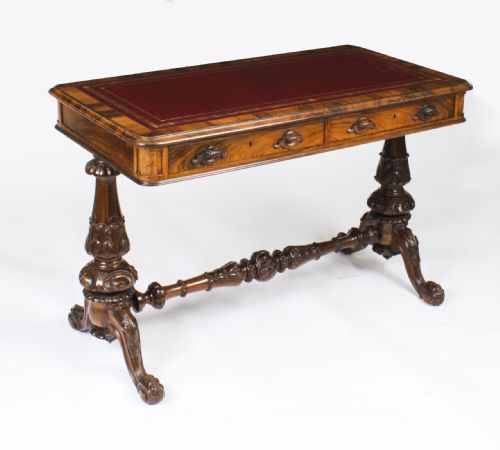
The version most frequently met on this page is the nineteenth century mahogany or rosewood writing table, often featuring inset leather surfaces and one or more drawers built into the frieze. These tables function equally well as freestanding centre pieces or against a wall, reflecting their original purpose in studies and libraries.
Makers such as Gillows of Lancaster, Edwards & Roberts, and Whytock & Reid appear among these desks, demonstrating the standard of cabinet work found in higher grade examples. Simpler vernacular pieces in oak or walnut also feature, showing the broader range of utilitarian writing furniture from the period.
Materials and construction
Timbers such as mahogany, rosewood, oak, walnut and padouk form the primary structure of these desks, frequently enhanced by crossbanding, parquetry or inset leather writing panels. Cabinet makers utilised solid woods alongside finely figured veneers to achieve both structural stability and decorative depth.
Brass fittings, including castors, drawer pulls and occasional locks, complement the timber work, while traditional joinery methods secure the frieze drawers beneath the writing surface. The construction relies on solid framing to support heavy use in a library or study environment.
Frieze Drawer Library Desk Retail Price Guide 2026
Typical asking prices for frieze drawer library desk among the pieces listed under this phrase on Sellingantiques today, from the lower quarter to the upper quarter. They describe what is for sale here now, not the wider market.
Several desks manage to double as laptop stations, proving that nineteenth century library furniture accommodates modern technology without complaint.
Gradations in quality
The distinction between standard and superior pieces rests on timber selection, such as highly figured rosewood or finely matched mahogany veneers, and the sophistication of the carving or parquetry. Maker attribution to workshops like Gillows or Edwards & Roberts signals a higher tier of design and execution.
Integration of secondary woods, the crispness of brass mounts and the retention of original fitted leather inserts further separate exceptional examples from simpler utilitarian desks.
Edwards and Roberts·Donald Ross·Whytock and Reid·W Priest·William Trotter·Gillows of Lancaster
The Frieze Drawer Library Desk Glossary
- Frieze drawer
- A drawer integrated into the horizontal band immediately beneath the top of a table or desk. This feature provides discreet storage for writing materials without altering the classical proportions of the piece.
- Partners desk
- A large double sided desk designed for two people to work face to face, typically featuring frieze drawers on both sides. These substantial pieces often served in institutional libraries or boardrooms.
- Crossbanded
- A border technique where thin strips of veneer are laid across the grain of the primary wood. This creates a contrasting decorative frame around the perimeter of the desk top.
- Parquetry
- Geometric mosaic woodwork used to pattern surfaces with contrasting timbers. It adds intricate visual texture to the writing surface or frieze.
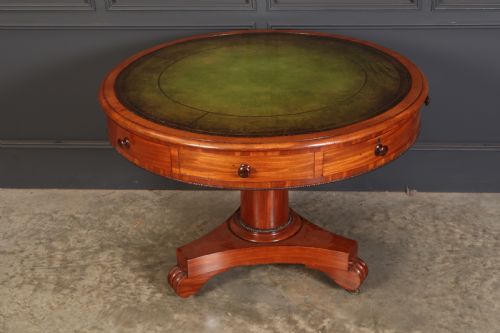
- Drum table
- A circular library table containing a deep frieze fitted with alternating drawers and dummy drawers. These tables often rotate on a central pillar base.
Frieze Drawer Library Desk: Frequently Asked Questions
How do I identify a library table?
A library table is a freestanding piece designed to be viewed from all sides, frequently fitted with frieze drawers and finished on the back as well as the front.
These tables often feature inset leather writing surfaces and substantial timber construction suitable for central placement in a room.
Where were these desks placed?
These desks were historically positioned in the centre of libraries, studies or drawing rooms rather than pushed directly against a wall.
Their finished backs and freestanding design allowed them to occupy prominent positions in large domestic interiors.
How do I date a nineteenth century desk?
Dating relies on stylistic markers such as Regency curves, William IV scrolling supports, or Victorian proportions, alongside construction techniques and timber choices.
Maker stamps or attribution to firms like Gillows also help narrow the period of manufacture.
Can I use an antique desk daily?
These pieces were built for active use in studies and libraries, making them robust enough for modern tasks such as writing or laptop work.
Careful placement away from direct heat sources helps preserve the polished timber and leather surfaces.