
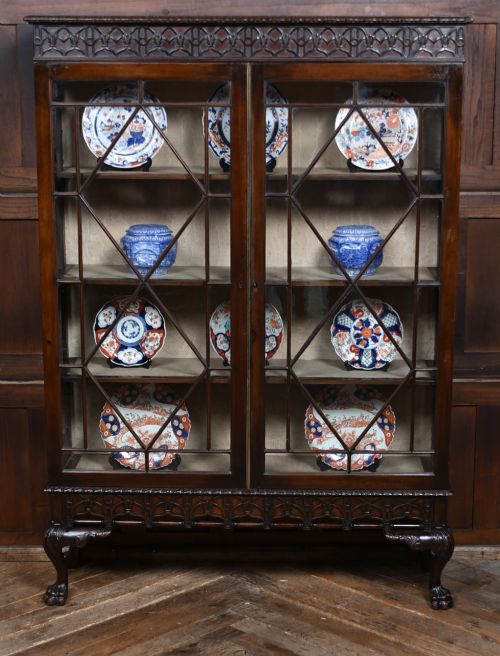


Fretwork Mahogany Cabinet
A fretwork mahogany cabinet brings together rich dark timber and intricate pierced carving, offering a refined way to display books and treasured objects.
Fretwork Mahogany Cabinet
A fretwork mahogany cabinet represents a sophisticated tradition of cabinet-making that spans from the eighteenth century into the Edwardian era. These pieces combine the deep red-brown tones of mahogany with delicate pierced woodwork, creating visually striking furniture designed to showcase belongings.
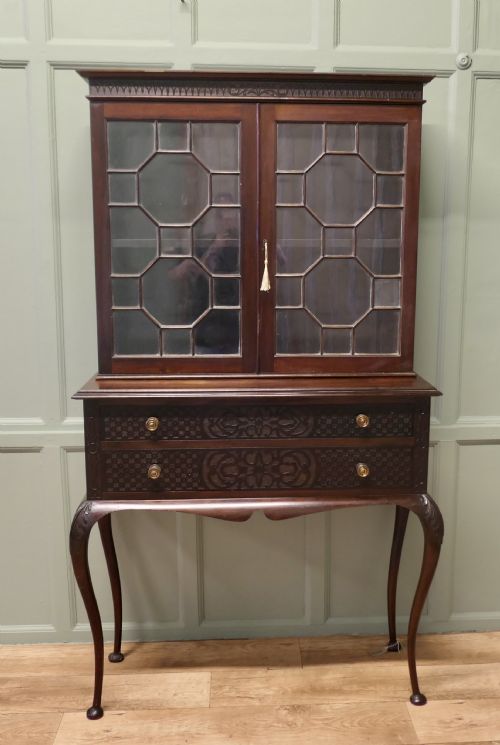
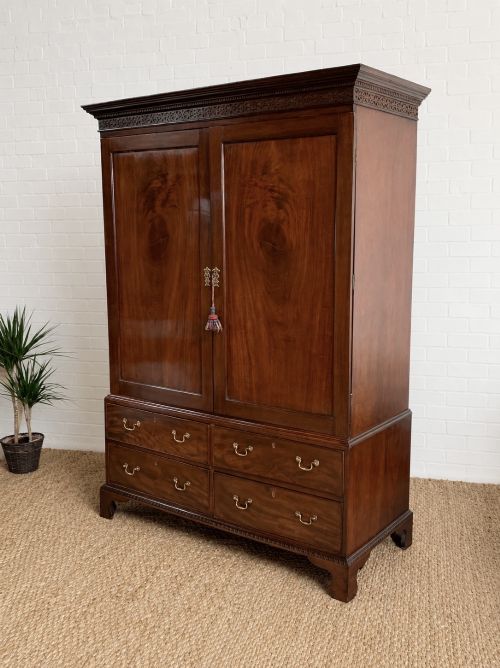
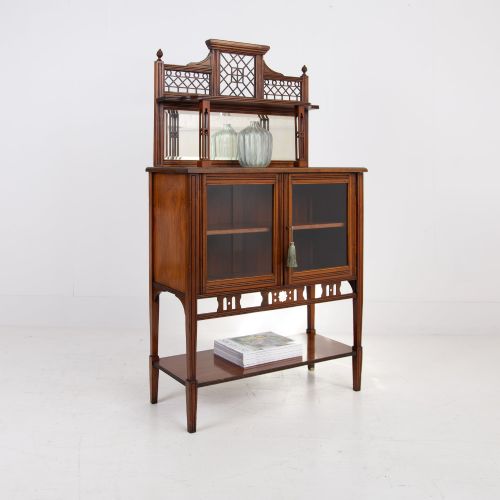
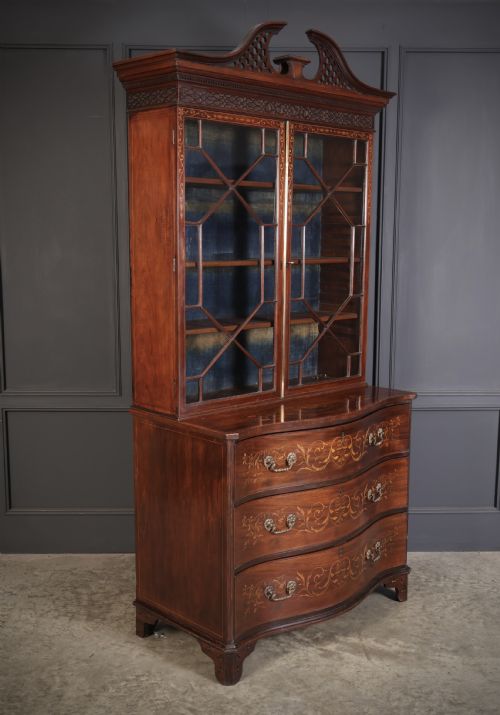
Buyers seeking this style frequently encounter revival interpretations, particularly from the Victorian and Edwardian periods, alongside authentic Georgian originals. Common forms range from tall display bookcases and cabinets on stands to smaller side tables and wall-mounted shelves incorporating pierced decoration.
The aesthetic borrows heavily from Chinese Chippendale and later revival movements, meaning many examples feature intricate geometric or lattice patterns within the woodwork. These items suit rooms needing a focal point that balances architectural structure with lighter, open ornamental detail.
Materials and construction
Makers relied on solid and veneered mahogany as the primary structural and visual timber, prized for its durability and grain. This was frequently combined with glass panels for display doors and brass for handles, hinges, or decorative key escutcheons.
Fretwork itself was produced by piercing thin sheets of wood or assembly pieces using fretsaws, creating complex interlocking patterns without adding excessive weight to the structure. Additional decorative enhancement often arrived through satinwood inlay, marquetry, and mirrored backs.
Joinery techniques followed traditional cabinet-making standards of the period, allowing tall display cases and delicate tables to support the intricate fretwork cornices and galleries safely.
Listings feature items spanning the Georgian, Victorian, and Edwardian periods, incorporating mahogany, brass, glass, and marquetry inlay.
Distinctions in quality
Quality rests significantly on the precision and crispness of the pierced fretwork itself, where sharper edges and tighter geometric joints distinguish finer examples from simpler production. The choice of mahogany also plays a part, with denser grain patterns and richer natural colour indicating superior timber selection.
Construction methods reveal the hand of the maker through dovetailed drawer linings, neatly fitted glass panels, and the integration of secondary woods. Revival pieces benefit from the same meticulous attention to proportion and proportioned scale found in eighteenth-century originals.
Robert Strahan·E W Godwin
The Fretwork Mahogany Cabinet Glossary
- Fretwork
- Ornamental woodwork perforated with a fretsaw to create a flat, patterned design. This technique is often applied to cornices, friezes, and galleries.
- Astragal
- A moulding profile attached to glass doors to divide panes into smaller geometric sections. It provides both structural support and visual elegance.
- Marquetry
- The art of applying pieces of veneer to a structure to form decorative patterns and pictures. It frequently incorporates lighter woods like satinwood against mahogany.
- Cornice
- The decorative horizontal moulding capping the top of a cabinet or bookcase. On these pieces, it often houses the blind fretwork carving.
Fretwork Mahogany Cabinet: Frequently Asked Questions
How do I date a fretwork mahogany cabinet?
Dating relies on examining construction methods, timber characteristics, and stylistic cues such as revival influences versus original Georgian design elements. Secondary woods and hardware fastenings also help narrow down the period of manufacture.
Later Victorian and Edwardian revival pieces often display machine-assisted precision in their fretwork, whereas older examples show the subtle irregularities of hand-tooling.
Where should I place a display cabinet?
These cabinets need positioning away from direct sunlight to protect the mahogany timber and any interior fabric linings from fading. Placing them on stable, level flooring ensures the tall frames and glass doors remain properly aligned.
Because the pierced fretwork is delicate, rooms with moderate foot traffic help prevent accidental knocks to the decorative cornices or open stands.
What is Chinese Chippendale style?
This style draws inspiration from traditional Chinese architecture and lattice patterns, interpreted through eighteenth-century British furniture design. It is characterised by intricate pierced fretwork, pagoda motifs, and angular structural frames.
Revival versions produced during the nineteenth century embraced these exact motifs, applying them to display cabinets, tables, and hanging shelves.
How do I maintain mahogany furniture?
Maintenance involves dusting regularly with a soft, dry cloth to prevent dirt accumulation within the intricate crevices of the fretwork. Treating the timber occasionally with appropriate wax helps preserve the natural sheen of the wood.
Avoid using silicone-based sprays or placing the furniture near direct heat sources, which can cause the timber to dry out and split over time.